1966 Bristol 409
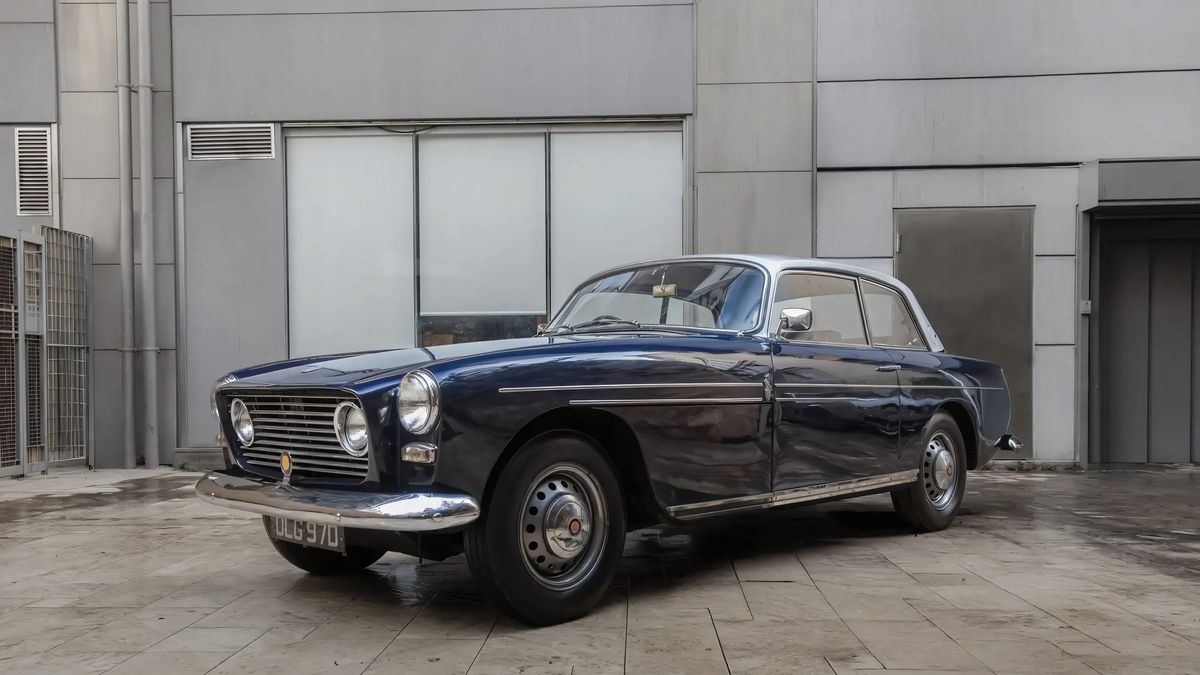
If you wanted to buy a Bristol in 1966, the car didn't come to you - you came, by appointment, to the small showroom at Kensington High Street, where the proprietor Tony Crook might personally assess whether you were the sort of person deserving of one. That singular, faintly aristocratic transaction is the perfect lens through which to understand the Bristol 409: a motor car that existed entirely on its own terms, indifferent to fashion, dismissive of convention, and quietly certain of its own worth.
Bristol Cars had been making automobiles at Filton since 1946, growing directly from the car division of the Bristol Aeroplane Company. The thinking that built Bristol fighters and Brabazon transports pervaded everything the company touched on four wheels - wind tunnel testing of body shapes, meticulous attention to aerodynamic drag, a philosophy that mass and compromise were the enemies of excellence. By the time the 409 arrived in 1965, that heritage was working through its third generation of Chrysler-powered saloons, the 407 and 408 having already established the formula of marrying American muscle to British bespoke craftsmanship. The 409 refined that formula further, and in doing so produced the most resolved version of a car that was, by any objective measure, already an anachronism - and all the better for it.
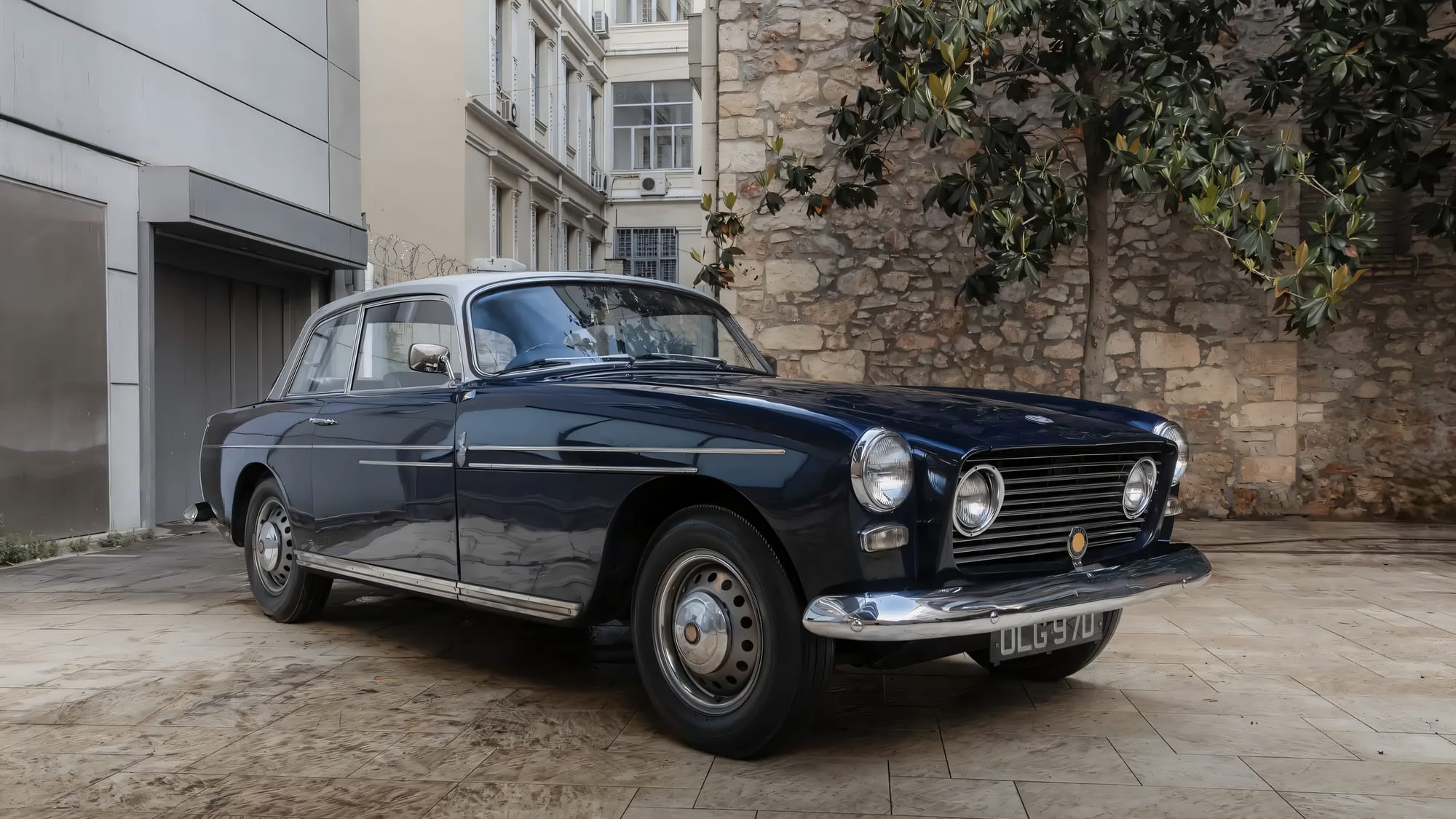
It was, in commercial terms, a modest nameplate. Some 74 examples left the Filton atelier over roughly two years, each one essentially hand-assembled and hand-trimmed to individual order. The 409 sat squarely in the territory of Aston Martin, Bentley, and Jaguar, priced at around £3,500 in Britain and nudging $11,265 when sold in America - a figure that required serious wealth and, more importantly, a certain disposition. Bristol did not advertise in the conventional sense, did not court journalists with press fleets, and did not particularly care whether the press loved or ignored them. The clientele - lawyers, surgeons, industrialists, the occasional racing driver - had a tendency to return, model after model, decade after decade. That loyalty said something.
The engineering heart of the 409 was the 5,211cc Chrysler 318 cubic-inch 'Poly' V8, a pushrod iron-block unit fed by a single Carter four-barrel carburettor and breathing through 9.0:1 compression to produce 250 brake horsepower at 4,400 rpm. It was not, in absolute terms, a sophisticated engine - no twin overhead camshafts, no exotic alloy construction - but it was monumentally robust, and Bristol's adoption of the improved 318 unit over the earlier 313 that the 407 had used represented a genuine step forward in both power delivery and long-term reliability. The transmission was Chrysler's own Torqueflite 727, a three-speed automatic of such mechanical integrity that it earned a reputation for surviving almost indefinitely. The gear selection was accomplished via a row of typewriter-style push-buttons mounted on the dashboard, a feature that would not survive to the 410 and which lent the 409's cabin an endearingly futuristic quality that belonged, somehow, to both the Jet Age and a gentleman's club.
Several specific engineering revisions distinguished the 409 from its immediate predecessor. Bristol softened the suspension springs substantially compared to the 407 and 408, a deliberate shift in character toward long-distance comfort rather than crisp response. The company also replaced the traditional DC dynamo with an alternating-current alternator - following Chrysler's own pioneering work in this area - which solved the persistent difficulty of charging at high engine speeds. The braking system migrated to Girling after Dunlop closed its brake manufacturing division; Bristol adapted without drama, and the four-wheel disc setup that resulted was well-suited to the car's weight and performance. The 409 was also the first Bristol to offer power steering, initially as a cost-option from ZF, and later standardised mid-run; before that, the heavy turning lock of an unladen Bristol was a characteristic that required some acclimatisation.
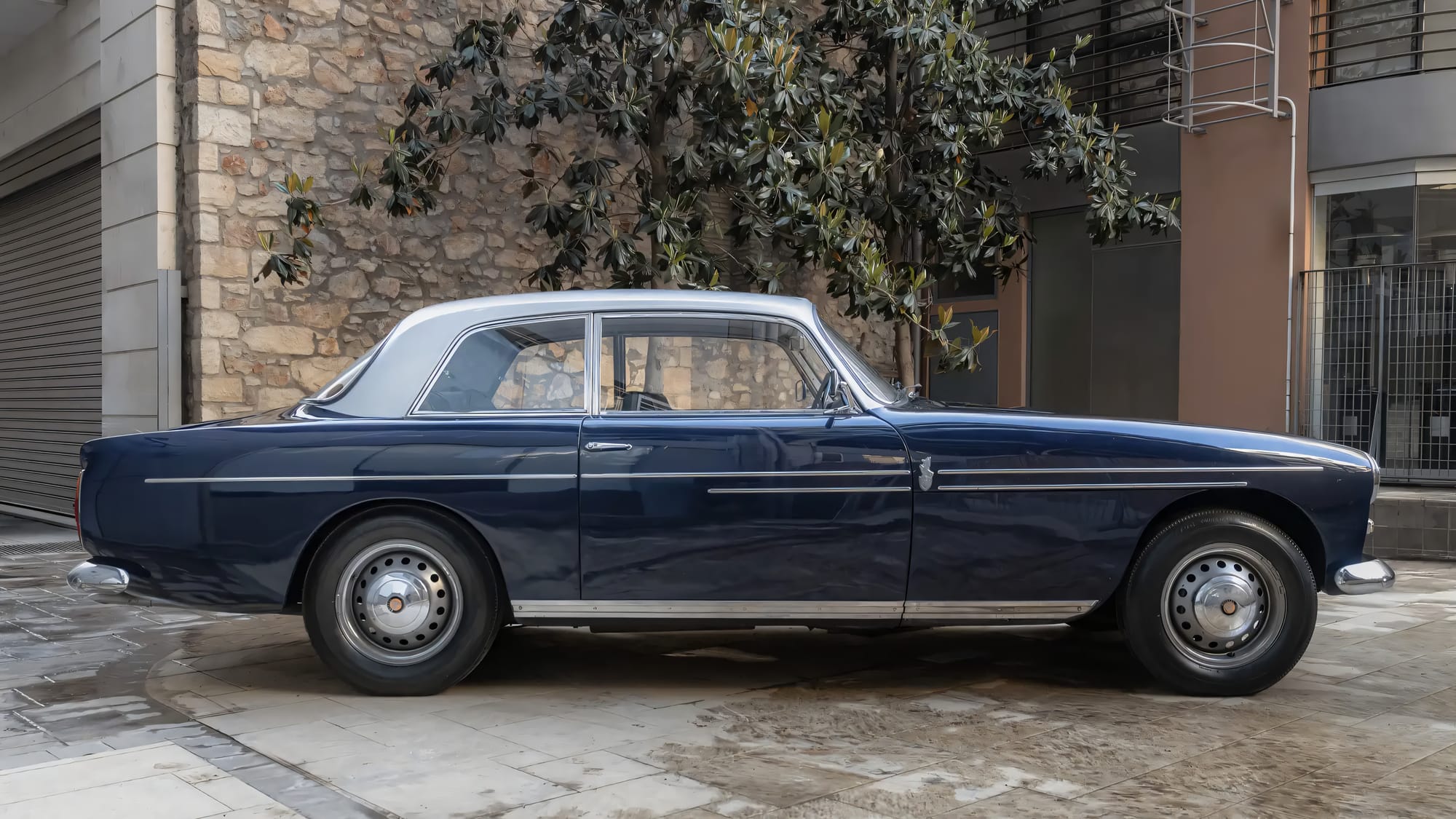
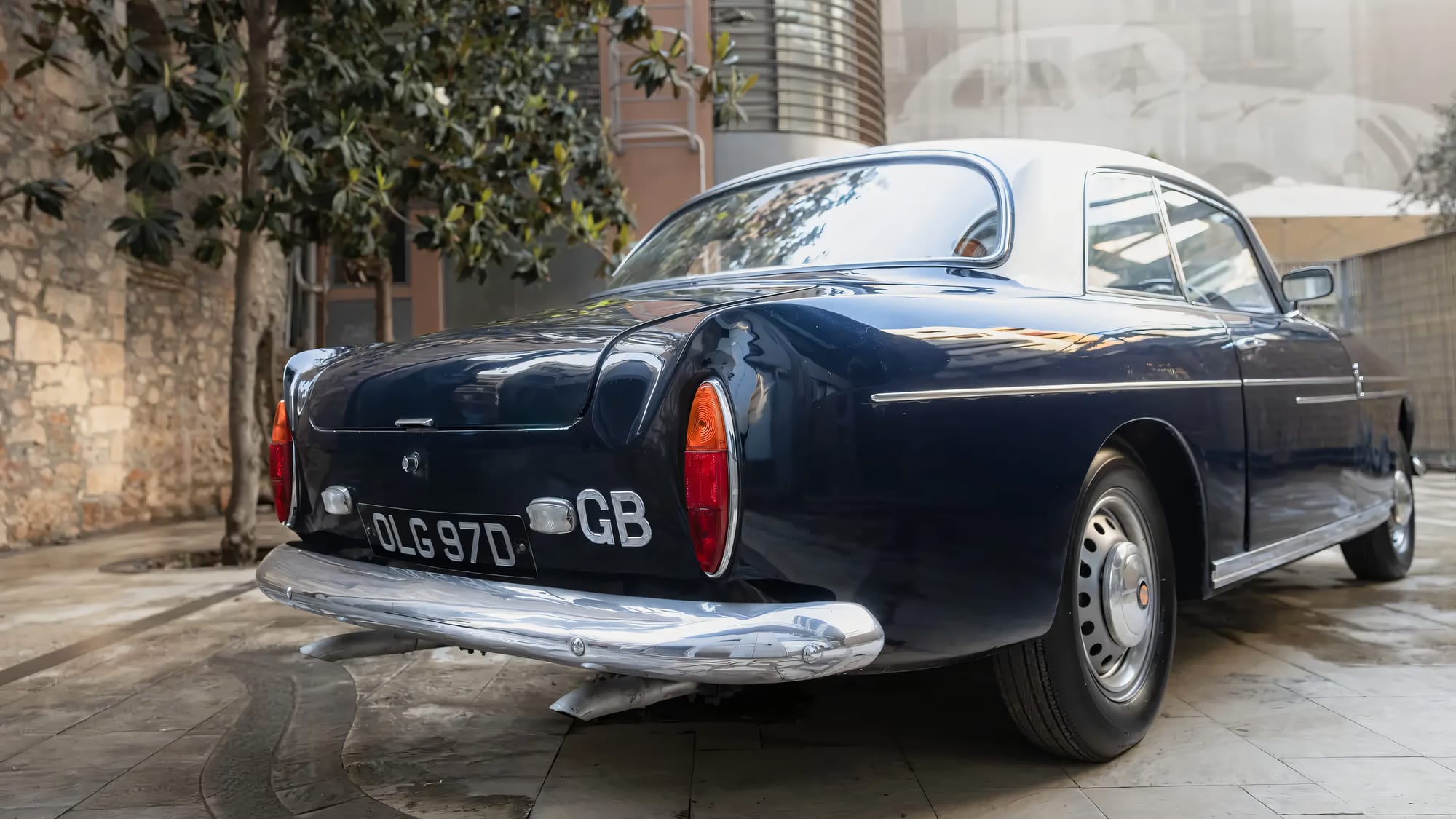
Aesthetically, the 409 was evolutionary to the point of near-stasis. Dudley Hobbs, responsible for the 409's minor styling revisions, essentially took the trapezoidal grille opening of the 408 and rounded it slightly, thickened the kick plates, adjusted a few details, and called it done. The result was a body that traced its lineage all the way back to the Beutler-inspired 406 of 1957 - a beautifully proportioned two-door saloon with a long, flat bonnet, a glasshouse that sat high and commanding over the road, and flanks of almost monastic restraint. No chrome baroque, no fashionable swoops, no concession to whatever was happening at the Turin Motor Show. Inside, the specifications that buyers typically chose - burled walnut facia, deep leather upholstery, a generally hushed and ordered environment - reinforced the sense of a motor car designed by people who had spent their careers thinking about cockpit ergonomics.
On the road, the 409 delivered a character that was genuinely unusual. The Chrysler V8's torque - vast, low-rev, unstressable - meant that progress was effortless in a way that few contemporary European rivals could match. A top speed of 132 mph was formidable in 1966, but more impressive was the manner in which it arrived: the TorqueFlite changing smoothly, the V8 pulling strongly without drama from barely above idle, the whole car settling into its cruise with the air of something that could sustain this pace indefinitely. The softened suspension that Bristol adopted for the 409 made it genuinely comfortable over long distances, the 16-inch wheels and generous wheelbase of 114 inches absorbing road surfaces without the harshness that afflicted some rivals. The twin Kenlowe electric fans that kept the V8 cool were innovative in concept but not entirely reliable in practice - a known weakness that owners managed rather than resolved.
What the 409 did brilliantly was blend capability. A genuine 130-mph saloon in 1966 was not common company. That it was also a car in which you might arrive at a hotel after four unbroken hours of motorway genuinely refreshed, wearing nothing more than the composed expression of a man who had been adequately transported, placed it in a very small category. Bristol understood the grand-tourer brief at an almost molecular level - not racing performance, not showroom glamour, but effortless, sustained, dignified velocity.
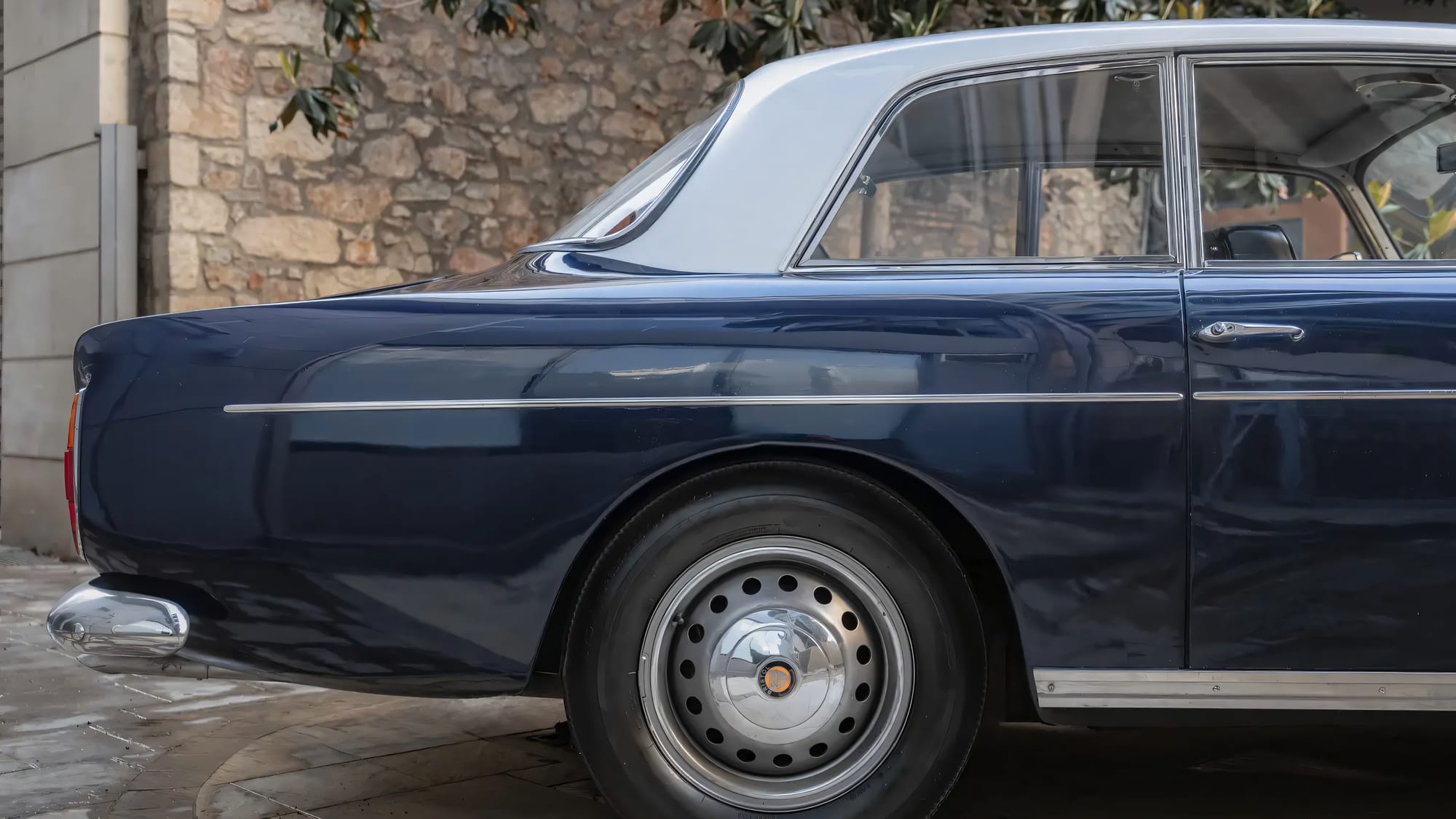
The honest criticisms, though, were real. By 1966, the 409's fundamental architecture was old in a way that was increasingly difficult to dismiss. The massive, pre-war-derived ladder chassis, the live rear axle, the pushrod V8 from Detroit - in the same year that Lamborghini unveiled the Miura and the world was rewriting the rulebook, Bristol was still essentially building a car designed along 1950s principles. Some contemporary buyers found the steering, even with the optional ZF assistance, lacking the precision of the earlier six-cylinder Bristols or the Jaguar XK-based cars they might otherwise have considered. And the styling, praised for its timelessness, was also candidly accused of being stale: the body had been in continuous production for nearly a decade by the time the last 409 rolled out, and no amount of minor revision could entirely disguise that. At the price Bristol was asking, the competition had moved forward.
The cultural position the 409 occupied was nonetheless distinct and durable. Bristol had forged a type of customer who did not want to be seen, who was not buying status so much as capability, who found the discretion of an understated saloon from a small Filton manufacturer more appropriate to their self-image than the louder proclamations of the obvious alternatives. That constituency was small - the production numbers confirm it - but it was consistent, and it kept Bristol alive through decades when more conventional manufacturers collapsed around them. The 409 sits in the middle of a lineage that ran from the 407's initial Chrysler conversion through to the magnificent 411, generally regarded as the apex of this generation, and it occupies that position as the most mature, most considered iteration before the 411's greatly enlarged engine changed the character again.
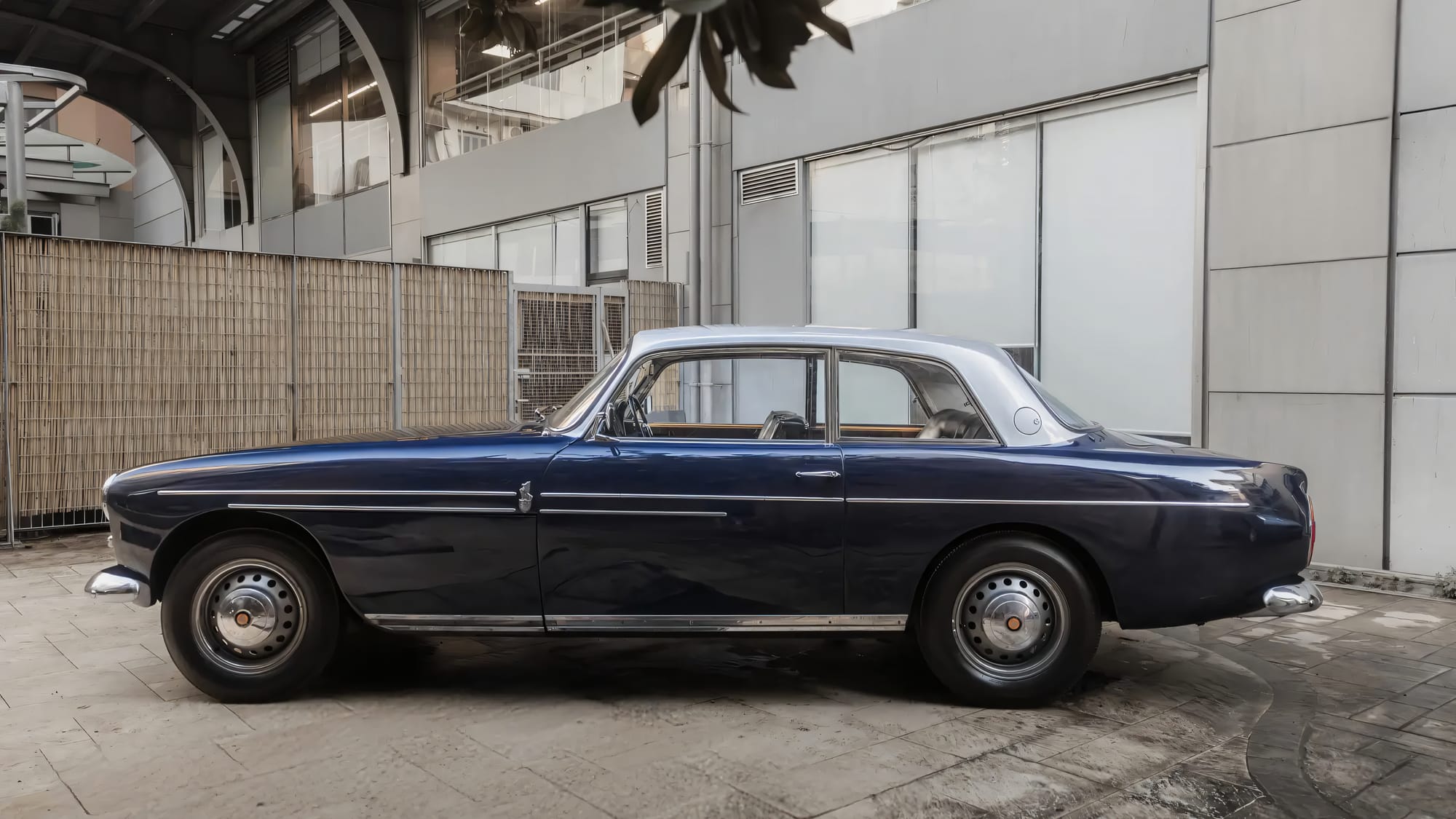
Press reception, what there was of it, tended toward respectful puzzlement. Testers acknowledged the extraordinary performance - a genuine sub-nine-second 0–60 time was well ahead of many rivals - and the refinement of the package, while struggling to reconcile the technical conservatism with the asking price. Classics & Sports Car, reflecting on this generation of Bristol in later years, understood it better from distance: the 409 and its siblings were not engineering statements in the manner of the Jaguar E-Type or Ferrari 275, but transportation philosophy - a complete, integrated answer to a specific question about how a serious person should travel.
The 409 was superseded by the 410 in 1967, which brought a more streamlined nose, a conventional floor-mounted gear selector in place of the dashboard buttons, and continued the steady refinement that Bristol applied to each successive model. The push-button TorqueFlite died with the 409, a small loss that enthusiasts have mourned ever since - there was something characteristically Bristol about selecting Drive with the press of a square button, quiet and confident and entirely unlike anyone else. That instinct for doing things the right way regardless of whether it matched the contemporary consensus is exactly what the 409 was, in total. In a year when the world was being urged to look forward at almost everything, Bristol built 74 cars that looked mainly at the road ahead, and made that road a deeply satisfying place to be.