1966 Lamborghini 400 GT 2+2 by Touring: The Grand Tourer That Kept the Lights On
Before the Miura rewrote the rulebook, the Lamborghini 400 GT 2+2 - bodied by Carrozzeria Touring Superleggera - was the car that made Sant'Agata credible. Bizzarrini's V12, Dallara's chassis, and one of the decade's most gracefully proportioned bodies.
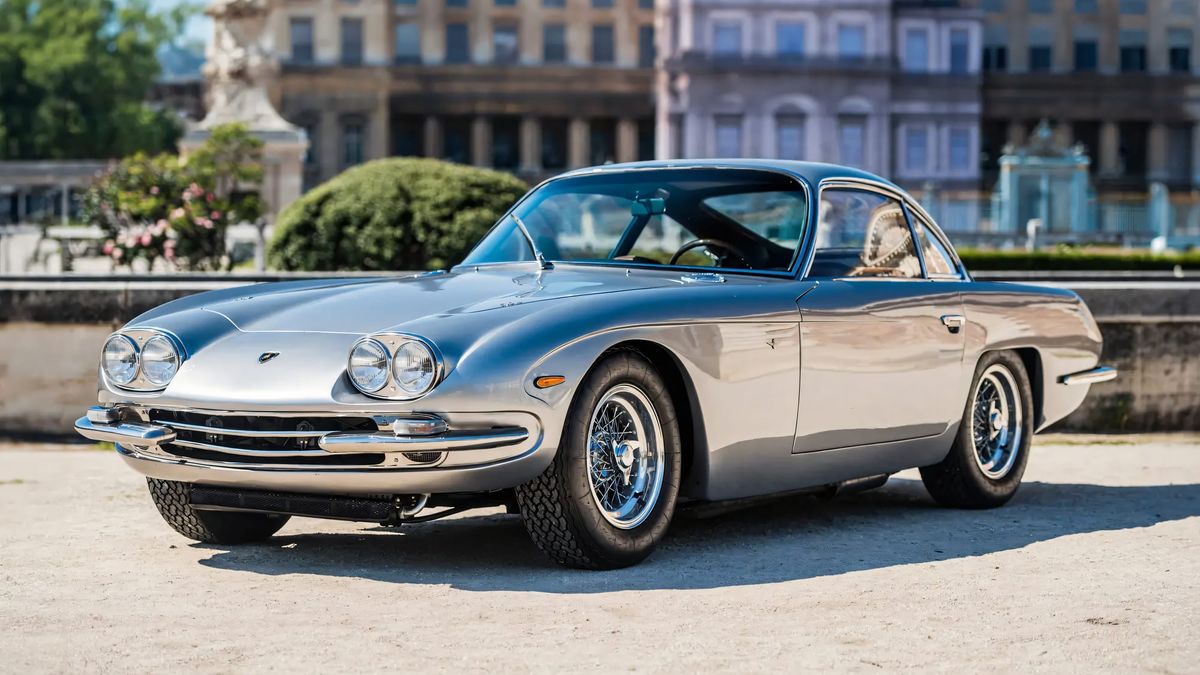
When Carrozzeria Touring Superleggera accepted the commission to rebody Lamborghini's existing grand tourer with rear seating, the Milanese coachbuilder was already in its final years of independent operation - a quietly poignant circumstance that gives the 400 GT 2+2 an unintended elegance. The car that emerged from that collaboration is one of the most gracefully proportioned objects to come out of the 1960s Italian automotive world, and yet it remains perpetually overshadowed by the mid-engined revolution happening just down the road in Sant'Agata Bolognese. That shadow has never been quite fair.
The 400 GT 2+2 was unveiled at the Geneva Salon in March 1966, presented as the definitive production Lamborghini for buyers who wanted a genuine four-seat grand tourer without surrendering the visceral rewards of a thoroughbred V12. It was, in a sense, the car that Ferruccio Lamborghini had always intended to build - a refined, usable, fast machine for covering serious distances in serious comfort, one that bore no particular interest in shocking anyone. The thunderbolt would come later, in the form of the Miura. But the 400 GT 2+2 was what the company needed in 1966: a credible, polished rival to Ferrari's 330 GT 2+2, aimed squarely at wealthy buyers who expected both rear passengers and road manners.
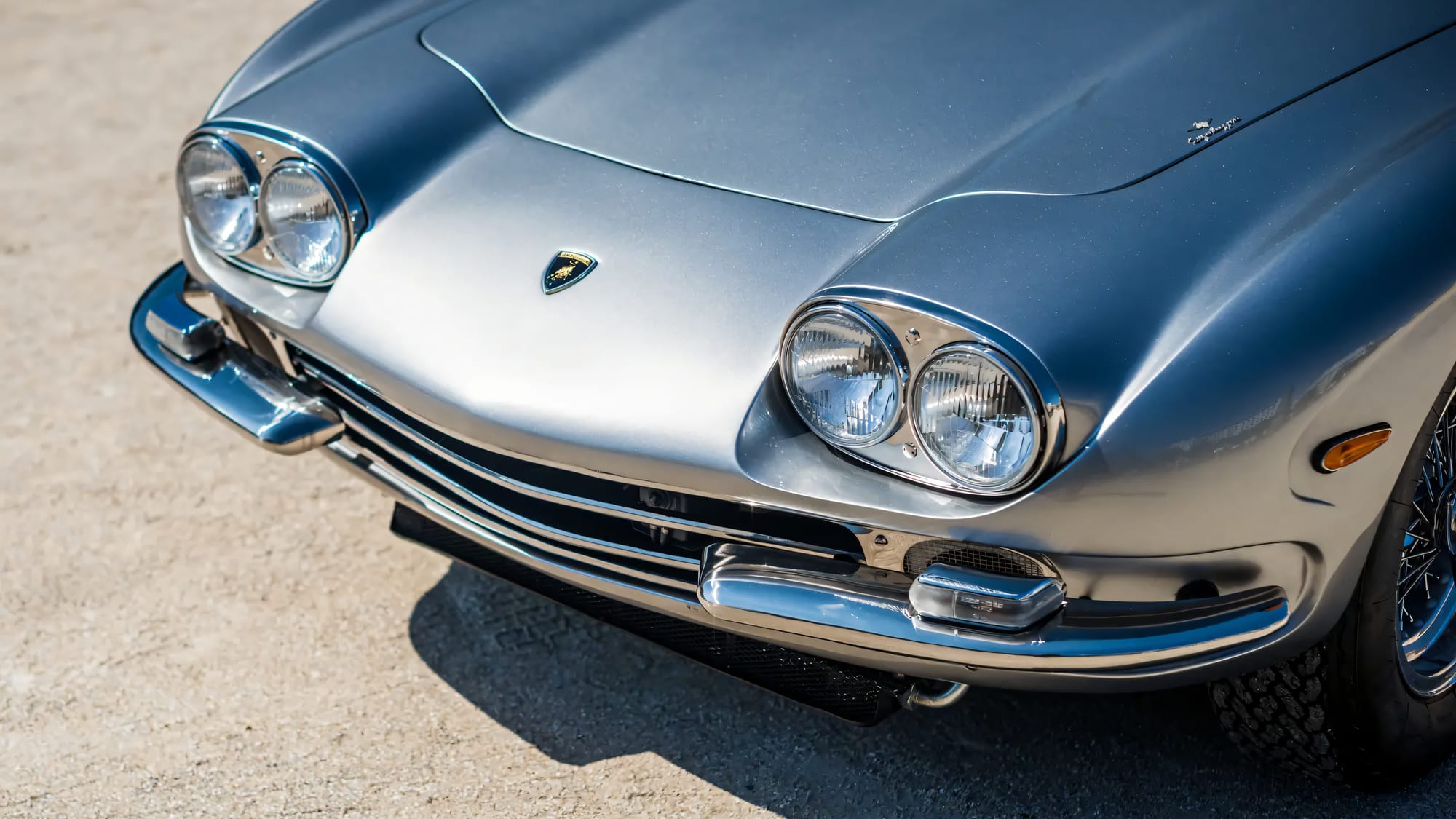
To understand where the 2+2 sits in Lamborghini's early lineage, the brief and fascinating interlude of the so-called "Interim" cars must be acknowledged. Before the new 2+2 body entered production, 23 examples were assembled using the older 350 GT bodyshell paired with the larger 4-litre engine - transitional machinery born of industrial pragmatism, bridging the gap while Touring finalised the new design. Those 23 cars quietly closed one chapter, and when the 400 GT 2+2 proper arrived, it opened another entirely. By the time production ended in 1968, approximately 247 examples had been built - a small number by any standard, though enough to establish the model as the commercial backbone of early Lamborghini production.
The engine at the centre of the 400 GT 2+2's appeal is one of the great pedigree units of the decade. Giotto Bizzarrini - the engineer who had helped create the Ferrari 250 GTO before his dismissal from Maranello during the famous 1961 "Palace Revolt" - designed the V12 originally with Formula 1 intentions in mind. When adapted for road use and developed for production by Gian Paolo Dallara, it grew from 3.5 litres in the 350 GT to a full 3,929cc in the 400. The architecture is a 60-degree V12 with twin overhead camshafts per bank, two valves per cylinder, and bore and stroke dimensions of 82mm by 62mm respectively. Six twin-choke carburettors sit between the four camshaft covers, and in a direct inheritance from Bizzarrini's racing-derived thinking, the engine employs dry-sump lubrication - a detail that both lowers the centre of gravity and protects the oiling system during sustained high-speed running. Peak output is 320 horsepower at 6,500rpm, with torque of 374Nm arriving at 4,500rpm - figures that were genuinely formidable for a road car in 1966.
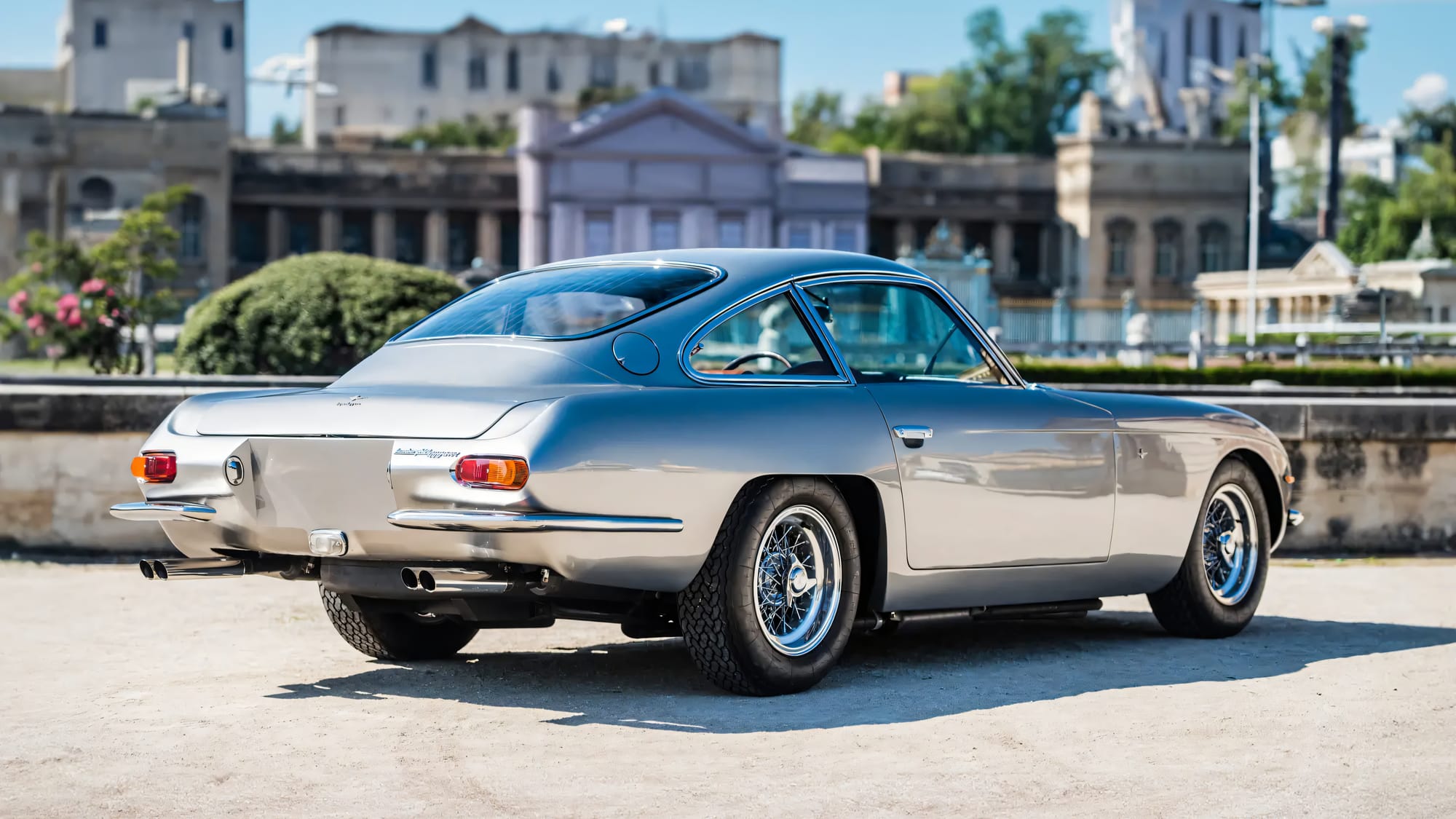
The transmission deserves specific attention because it represents a meaningful departure from the earlier car. The five-speed manual gearbox fitted to the 2+2 featured full synchromesh on all five ratios - a detail that sounds unremarkable today but was far from standard practice at the time. The suspension architecture is fully independent at both ends, using coil springs and transverse stabilisers, with four-wheel disc braking completing a chassis specification that was genuinely advanced for 1966. The wheelbase stretches to 2,550mm, and the overall length of 4,460mm gives the car a presence that is substantial without being imposing - the proportions are elongated in the Italian grand touring tradition, never bulky.
Touring's design task was inherently constrained, and the results are all the more remarkable for it. The brief was essentially to take the 350 GT's established silhouette and expand it to accommodate rear passengers without disfiguring the lines. The solution involved a modestly raised roofline and a wider, more generously curved rear window - changes that, in less capable hands, could easily have produced a bloated or ungainly result. Instead, the 400 GT 2+2 reads as a complete, harmonious object: a long bonnet flowing into a gently fastback roofline, the glasshouse kept shallow enough to maintain a sense of sportiness while the increased glazed area actually improves rear-quarter visibility. Where the 350 GT had been built on an aluminium body, the 2+2 transitioned to steel construction - a practical choice for production volumes, though one that added weight and shifted some of the earlier car's featherweight character.
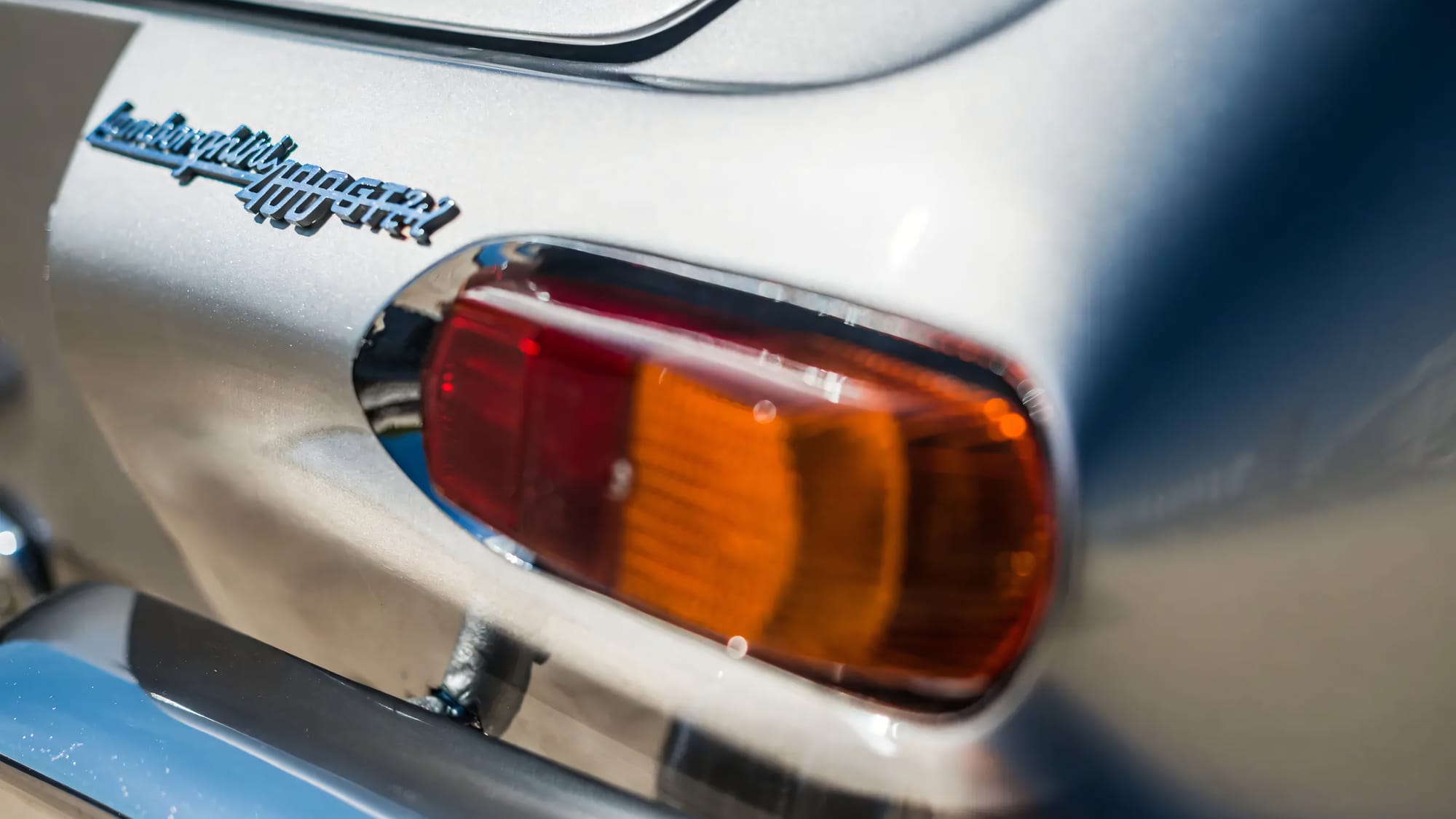
On the road, the 400 GT 2+2 is a car whose character reveals itself gradually. The V12's power delivery is progressive rather than sharp - it builds in a long, sustained swell from low revs, becoming increasingly insistent as the needle climbs toward that 6,500rpm peak. Top speed is in the region of 155mph in period testing, with 0-60mph times varying depending on source and conditions, but landing somewhere in the seven-second range in realistic road trim. That makes it fast by any contemporary measure, but the experience is more about momentum than aggression - the kind of effortless, mile-eating velocity that suits a car wearing the grand tourer designation honestly. The steering, operating through a worm-reduction unit, offers reasonable precision for the era without the sharp, communicative feel that would come to define later Lamborghinis. The ride is composed rather than sporting, and in this the car reflects its genuine intent: it is a long-distance machine, not a track weapon in road clothing.
Where the 400 GT 2+2 genuinely excels is in the coherence of its ambitions. Lamborghini was barely three years old as a manufacturer when this car was developed, and the depth of engineering evident in the Bizzarrini V12 and Dallara-developed chassis is remarkable given that institutional youth. The decision to retain dry-sump lubrication on a road car spoke to an unusually high engineering standard for production machinery, and the all-independent suspension with four-wheel discs placed it well ahead of many contemporaries in dynamic competence. The interior quality, with its leather appointments and careful detailing, was competitive with the established Italian houses - no small achievement for a new marque still establishing its credibility.
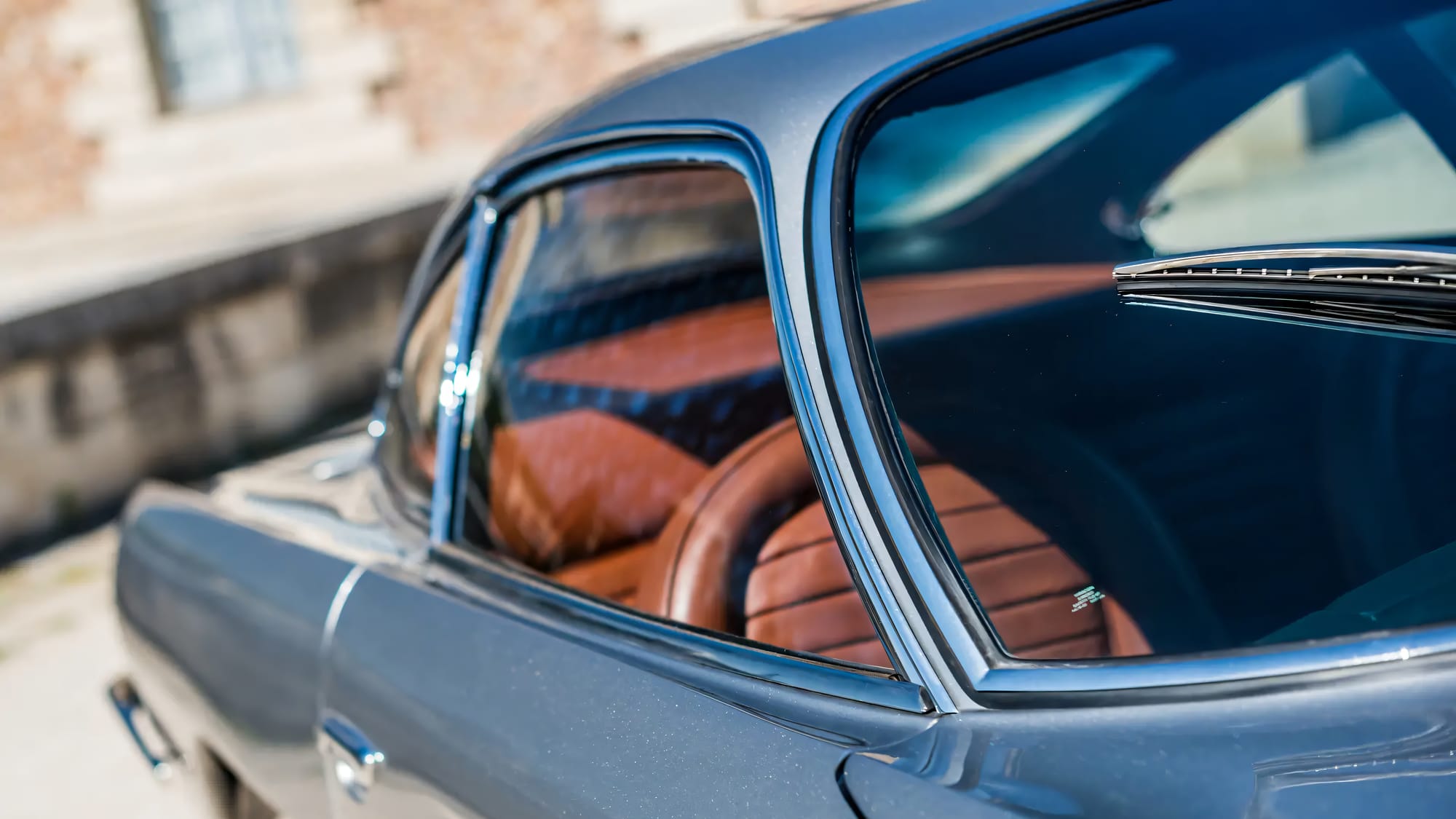
The honest criticisms of the 400 GT 2+2 are real, though they require period context. The rear seats are, by any candid measure, occasional at best - the raised roofline bought headroom, but the accommodation back there was better suited to children or short-journey adults than to the proper four-person touring the name implies. The steel body, while more structurally consistent than the earlier aluminium construction, resulted in a kerb weight approaching 1,472 kilograms - substantial for a car of this size and power, and a contributor to fuel consumption that period sources suggest could reach 16-18 litres per 100km at a brisk pace. The carburettor-fed V12, for all its mechanical drama, requires careful maintenance to keep all six twin-chokes in harmonious tune - a task that demands experience and patience in equal measure. And the worm-and-roller steering, while acceptable, lacks the involvement that the engine's character seems to promise.
The cultural significance of the 400 GT 2+2 is perhaps best appreciated by understanding what it was not. It was not the Miura, which arrived at the same 1966 Geneva show and consumed virtually all of the automotive world's attention with its startling mid-engined layout and Gandini bodywork. The 400 GT 2+2, debuting at precisely the same moment as one of the most seismically important cars in history, was immediately cast as the sensible sibling - capable, beautiful, and almost entirely overlooked in the excitement. That circumstance has defined its reputation ever since: perennially undervalued relative to what it actually represents, yet quietly revered by those who understand the engineering decisions that made it possible.
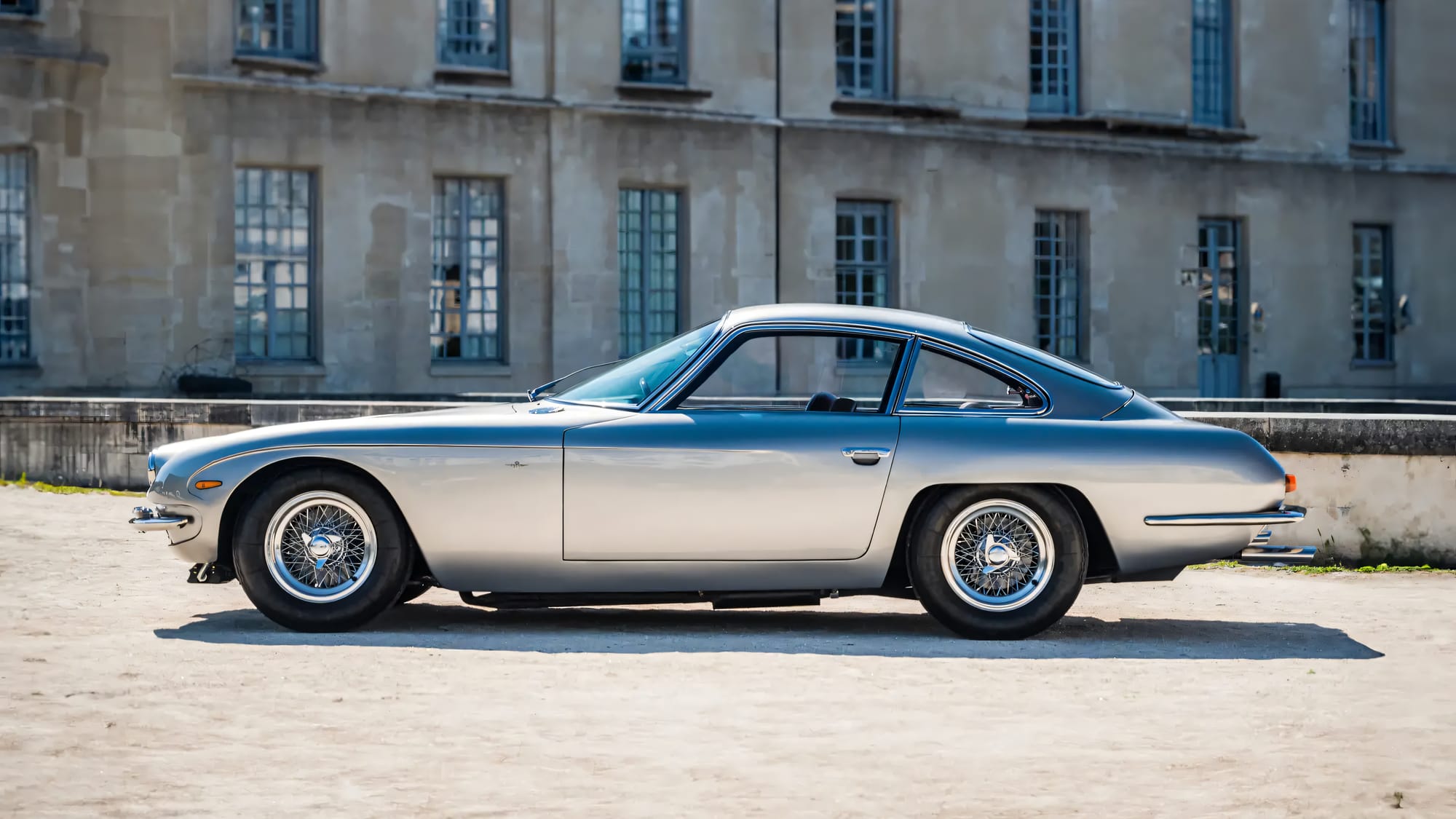
Critical reception at the time was warm but measured. Road testers appreciated the V12's extraordinary character and the car's genuine high-speed composure, while noting the rear seating limitations and the demands of carburation maintenance. Contemporary collectors have steadily reassessed the 400 GT 2+2 as prices for early Lamborghinis have risen and the car's historical position - as the model that kept the lights on in Sant'Agata while the Miura was developed - has become better understood. It is, in the end, a car that rewards the buyer willing to look past the drama of the Countach era and appreciate what it took to build a credible grand touring business from scratch in 1966, with an F1 engineer's engine, a dying coachbuilder's finest work, and the sheer conviction that a tractor manufacturer from Emilia-Romagna could rival Ferrari at its own game.