1949 Talbot-Lago T26 Grand Sport: Barou's Hidden Masterpiece
The only Talbot-Lago T26 Grand Sport bodied by Jean Barou - a teardrop coupé fusing Jaguar, BMW, and Mercedes influences over a Le Mans-winning chassis.
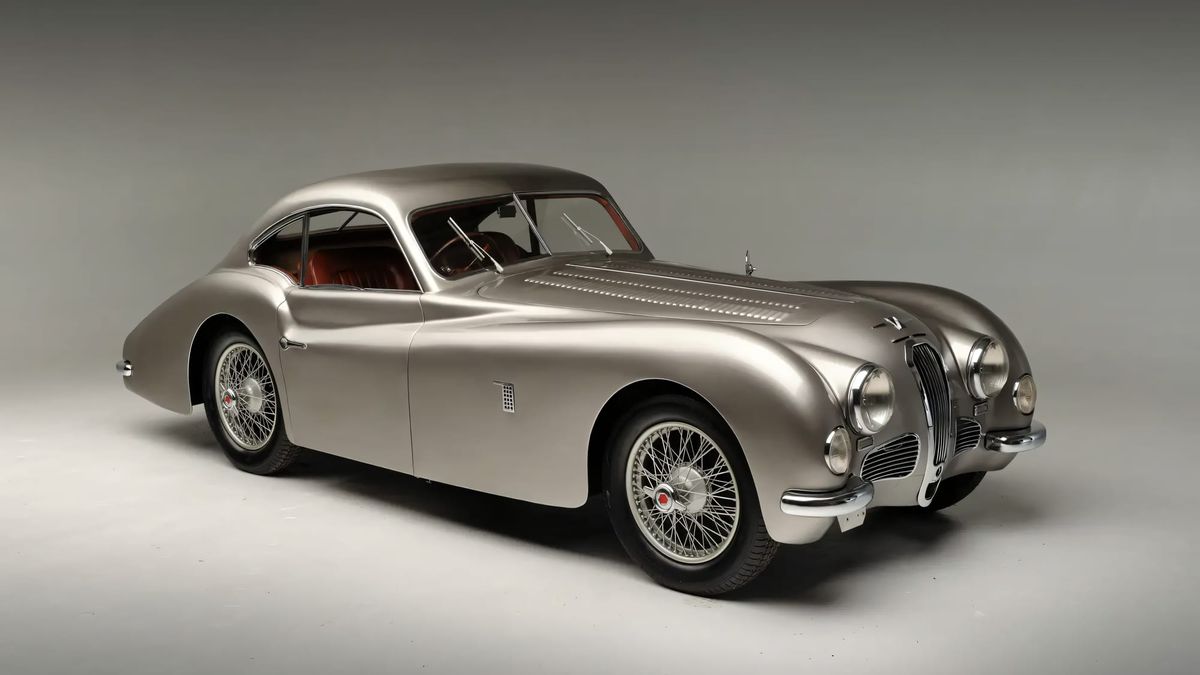
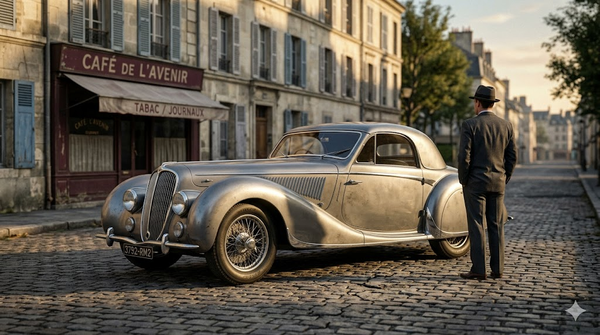
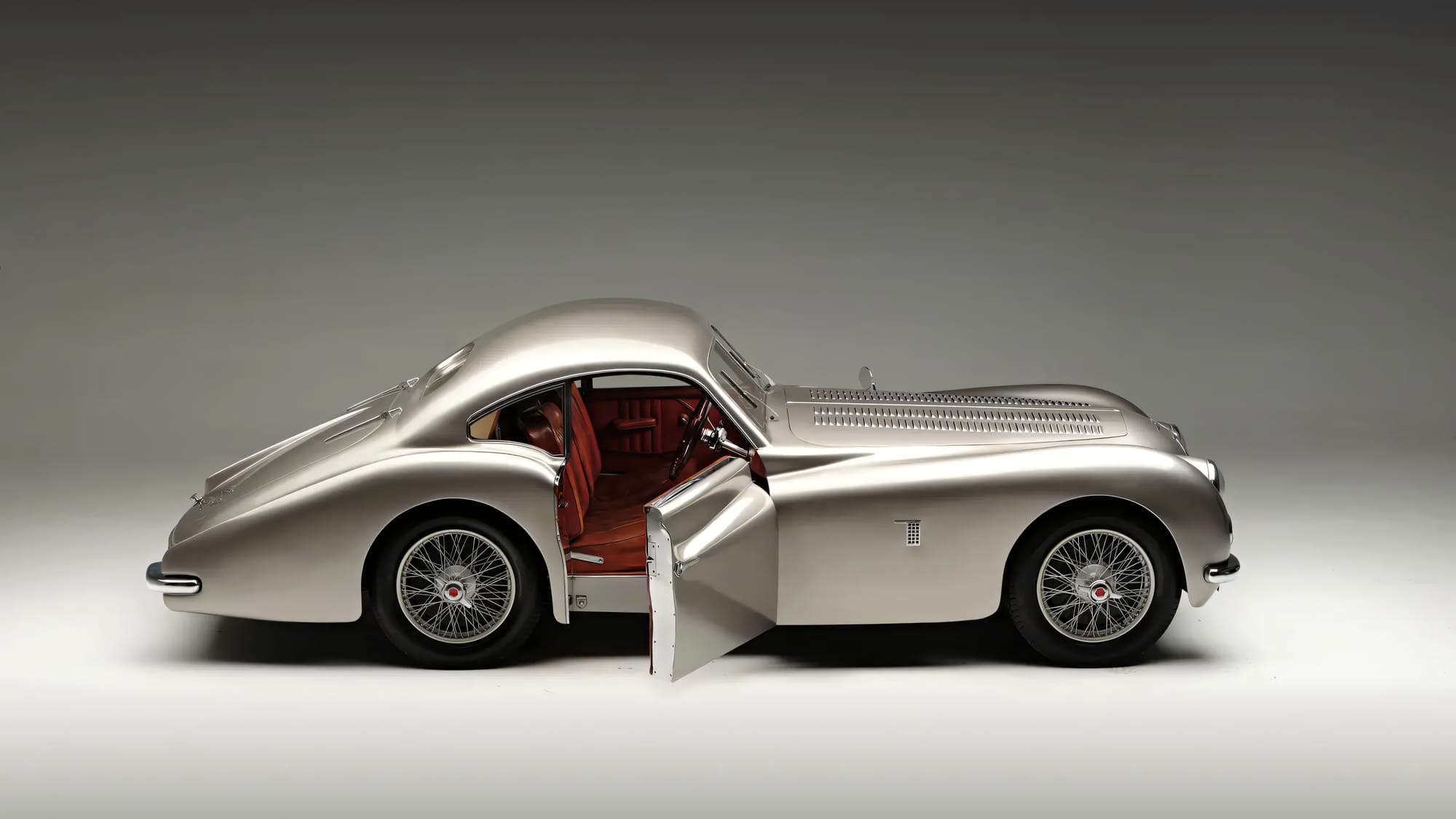
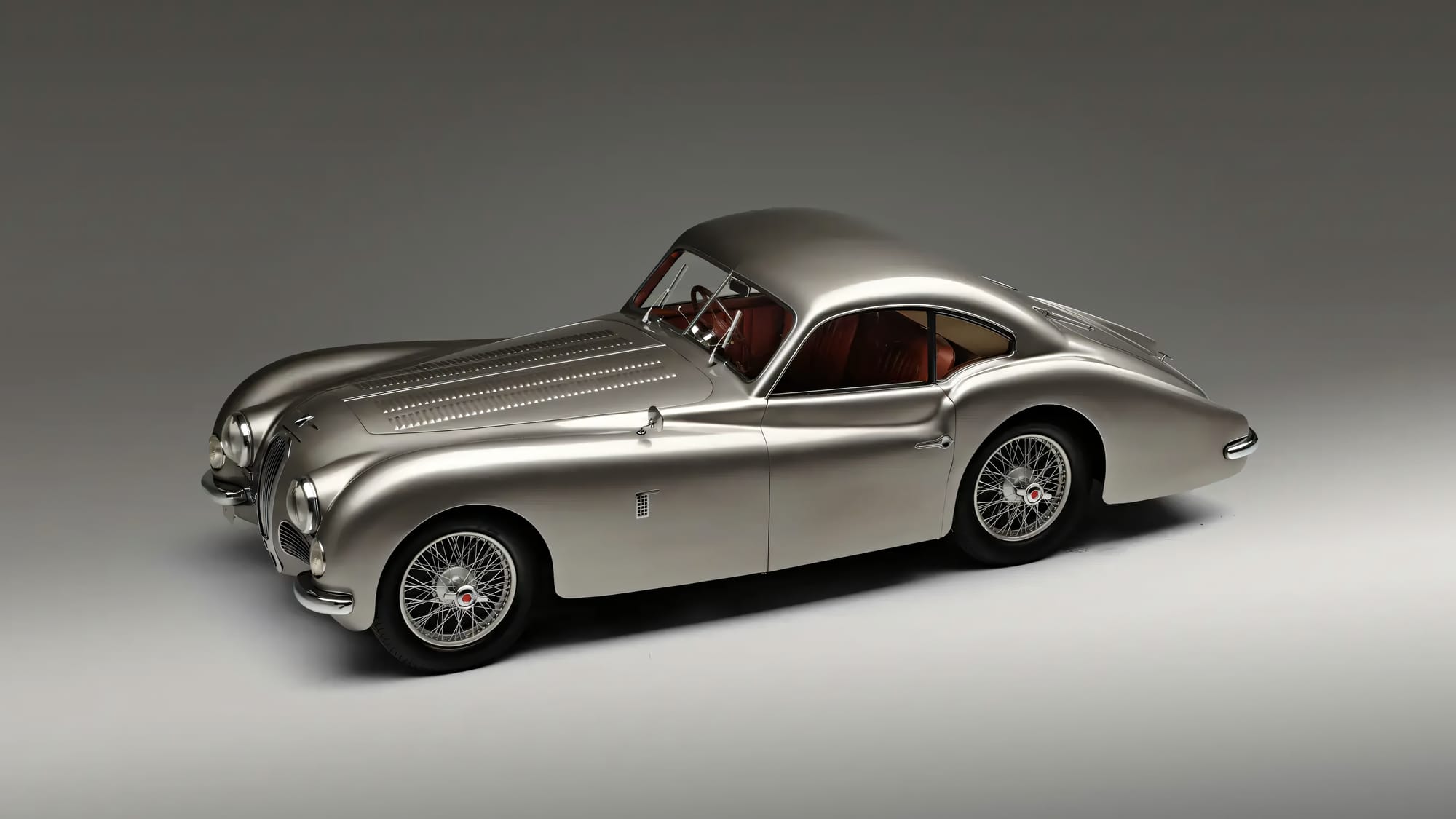
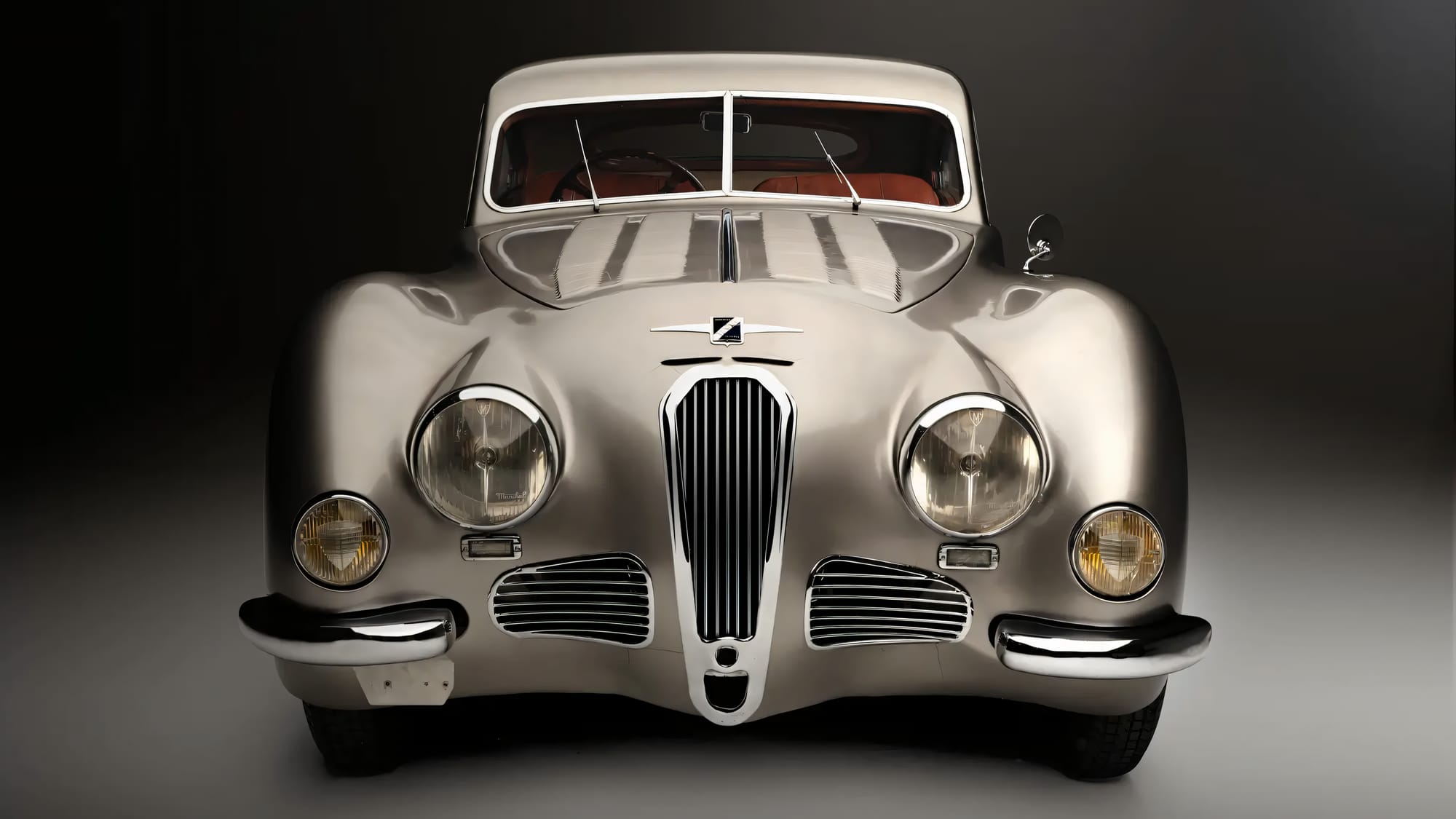
Somewhere in the Ardèche in late 1948, a coachbuilder who had been fabricating bicycle trailers and truck bodies during the German occupation assembled something that had no business being as coherent as it was: a teardrop coupé whose front end echoed the brand-new Jaguar XK 120, whose distinctive vertical grilles drew from pre-war BMW competition cars, and whose flowing rear half owed its lineage unmistakably to Sindelfingen's 540K Spezial Roadster - all draped over a chassis that had already contested a Formula 1 Grand Prix.
That the Talbot-Lago T26 Grand Sport routinely inspired this kind of cross-continental design alchemy says everything about the peculiar and magnificent position it occupied in the immediate post-war automotive world. Anthony Lago, the Italian-born engineer who had taken control of the Talbot concern in France in 1932, launched the Grand Sport in 1947 as an explicit distillation of his racing programme into a road car. The chassis was delivered to clients and coachbuilders without bodywork - a deliberate policy that simultaneously supported France's struggling grands carrossiers and positioned every T26 Grand Sport as a unique commission. Figoni et Falaschi, Franay, Saoutchik, Antem, and Dubos all received work; so, in one documented case, did Jean Barou of Tournon.
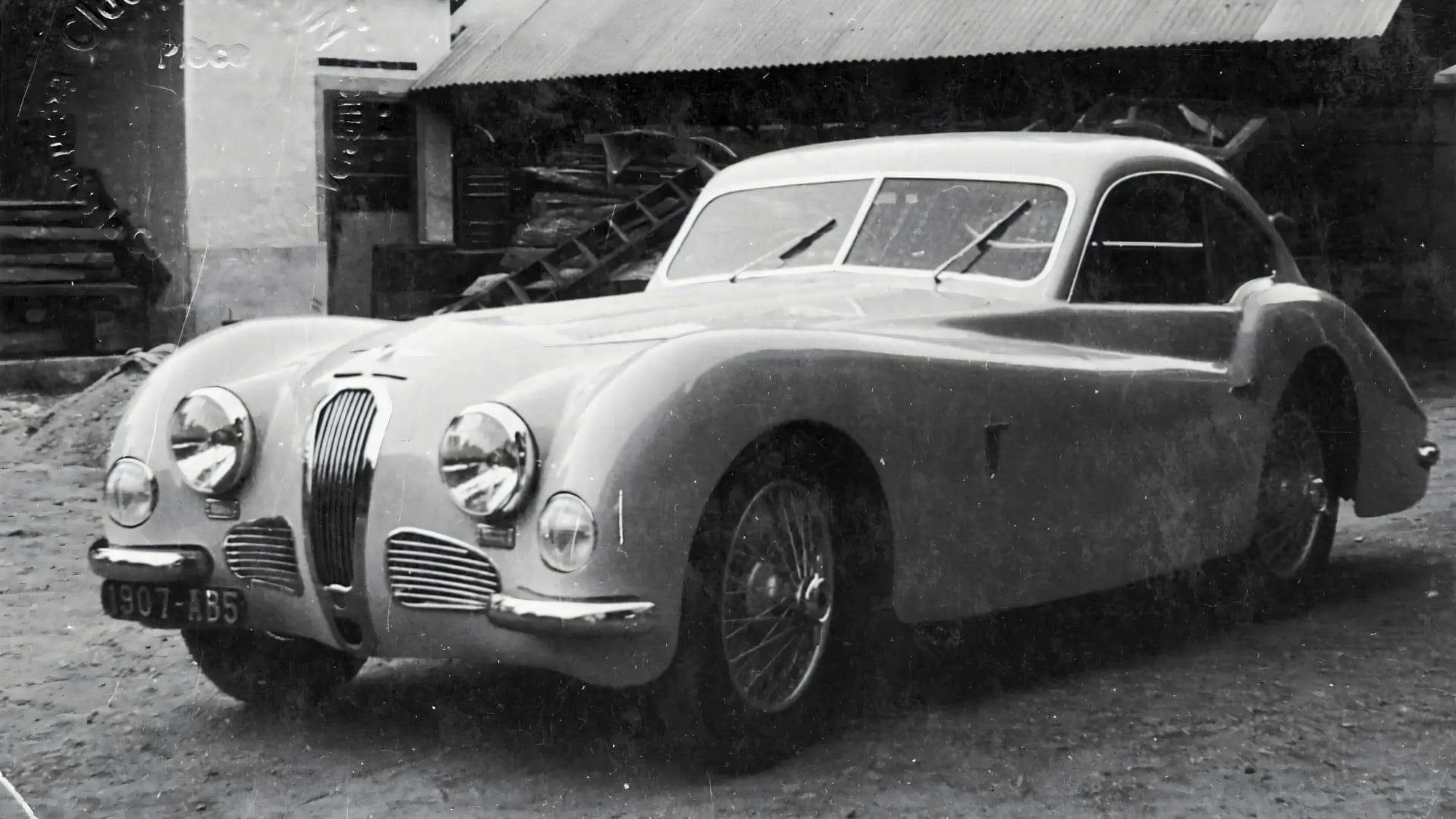
Barou's operation was modest by any measure. Founded in 1940 and initially focused on practical wartime manufacture, his carrosserie later offered coachbuilt bodies to clients who wanted something distinguished without necessarily turning to Paris. He is known to have worked on cars by Delahaye, Jaguar, Jowett, Simca, and Talbot-Lago, though his total output was small compared to the celebrated Parisian houses. The T26 Grand Sport he bodied appears to be the only example of that model he ever built - making this not simply a rare car within a rare series, but a singular expression of what the Grand Sport platform could inspire when placed in the hands of an unconventional interpreter.
The Grand Sport series itself occupies a deliberately blurry space in the production record. Depending on the source, somewhere between 26 and 36 chassis were built across a production run stretching from 1947 to 1952 - the imprecision itself a function of how deliberately individualised the whole enterprise was. The car was always conceived as a performance machine first. Its short-wheelbase box-section chassis was derived directly from the T26C Grand Prix car, lighter and stiffer than the Record saloon's platform and designed to accept coachwork of varying ambition. Independent front suspension with coil springs distinguished it from the more conservative touring cars of the era, while hydraulic drum brakes handled stopping duties all around.
The heart of everything, though, was the 4,482 cc inline-six. Talbot's 2AC engine was a genuinely remarkable piece of engineering for 1947: an Alpax aluminium alloy block and cylinder head, twin high-mounted camshafts in a Riley-influenced configuration, dry sump lubrication, magneto ignition, and three Zenith carburetors feeding a combustion chamber of hemispherical design. In Grand Sport road specification, it produced around 190–195 horsepower at 4,000 rpm with approximately 325 Nm of torque at 2,800 rpm. In racing trim, development eventually pushed output to 240 horsepower and beyond - figures that explain why, at Le Mans in 1950, Louis Rosier and his son Jean-Louis drove a T26 Grand Sport to overall victory, heading a stunning 1-2 Talbot-Lago finish over favoured Ferrari entries.
The transmission was the car's most peculiar and most debated attribute. The Wilson pre-selector epicyclic gearbox - standard specification on Grand Sport road cars - operated on its own philosophical terms. A driver selected the next ratio via a small lever mounted behind the steering wheel before the current gear was exhausted, then engaged the change through a separate foot pedal. The result was a driving experience that rewarded pre-planning and deliberation rather than quick reflexes: changes were smooth and progressive, well-suited to the engine's torque-heavy character, but the system demanded unlearning before it revealed its particular logic. The Audrain Museum notes that at least one Grand Sport was eventually fitted with a conventional four-speed manual, underscoring that the Wilson box, for all its sophistication, was not universally embraced.
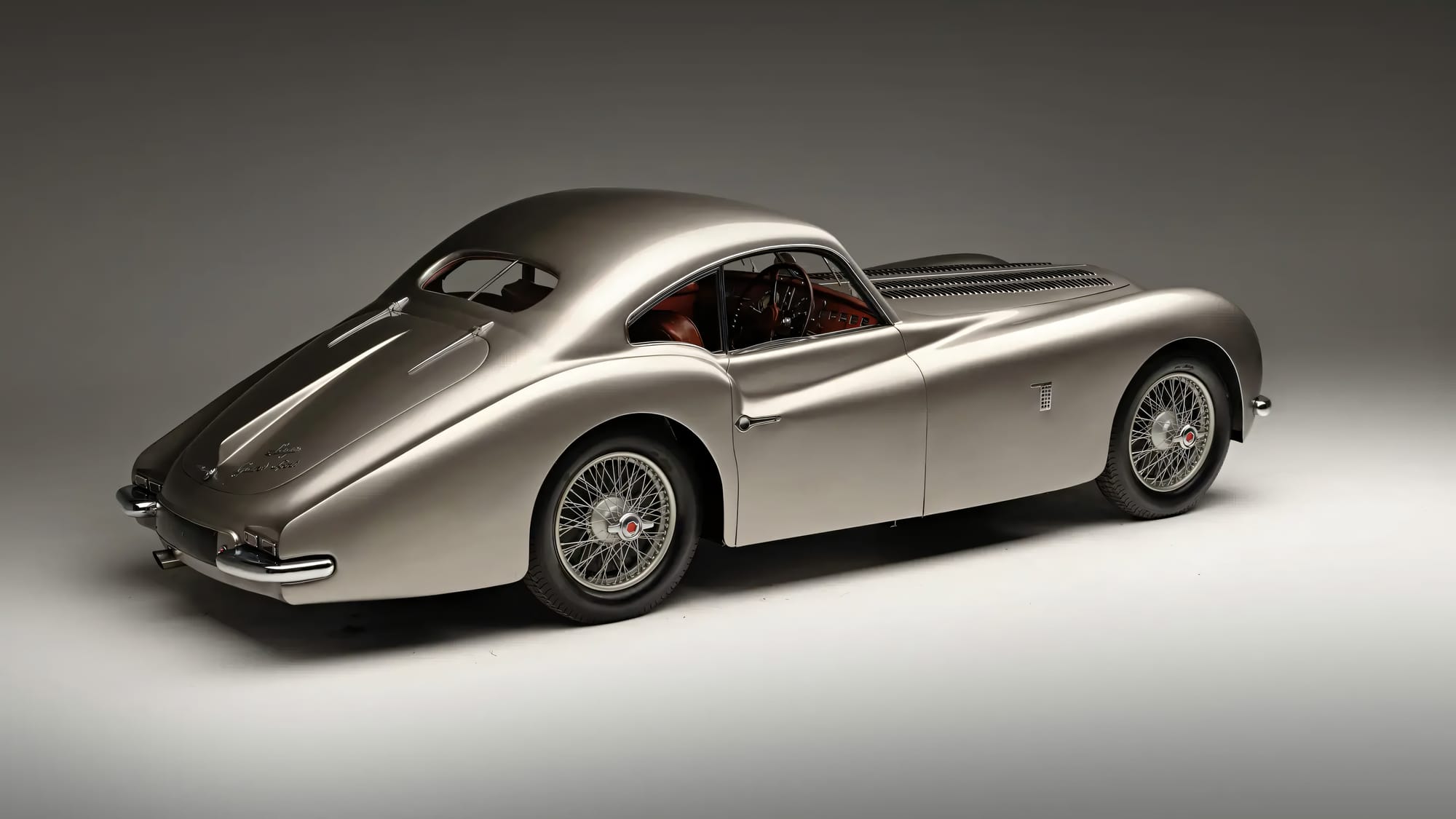
Barou's body on the Grand Sport chassis synthesises its eclectic references with unusual tact. As documented by Peter Larsen and Ben Erickson in Talbot-Lago Grand Sport: The Car From Paris, the front of the car carries clear debt to the 1948 Jaguar XK 120's proportions, while the vertical radiator grilles recall 1930s BMW competition cars. The rear half flows into a teardrop form that draws specifically from the 540K Spezial Roadster built at Sindelfingen. That a regional French coachbuilder simultaneously channelled Coventry, Munich, and Stuttgart - and produced something that reads as a coherent whole rather than a confused hybrid - speaks to Barou's instincts, however modest his workshop's resources compared to the Parisian elite.
On the road, the T26 Grand Sport occupied a fascinating position between two worlds. It was emphatically not a sports car in the narrow British sense - too large, too heavy at around 1,800 kg, too oriented around sustained pace rather than cornering theatrics. But it was equally unsuited to classification as mere luxury transport. The six-cylinder engine's torque enabled it to clear 190 km/h with conviction, and the independent front suspension endowed it with composure that contemporary beam-axle rivals simply could not match. The drums brakes, massive and hydraulically operated, were never quite a match for the performance available - a limitation universal to the period but one that demanded ongoing respect, particularly downhill.
What the Grand Sport genuinely excelled at was endurance. The 2AC engine's efficiency relative to its output was one of Talbot-Lago's strategic advantages in racing, and that same quality translated to road use: the car would cover ground at sustained speed with less drama and less thirst than the cubic-inch brutes of the era might suggest. Reliability, consistently developed from the Grand Prix programme, backed up the performance credentials. This was a car designed to finish, not merely to start impressively.
The compromises, though, were structural. The chassis was fundamentally an evolution of pre-war thinking - the independent front suspension and aluminium engine aside - and the T26 Grand Sport never shed that lineage entirely. Compared to what Ferrari and eventually Mercedes would offer through the early 1950s, the Wilson gearbox grew increasingly anachronistic, and the drum brakes were already being outpaced by the performance on offer. The open coachbuilding policy that gave each Grand Sport its individual character also meant quality and aerodynamic coherence varied enormously across the range; the best examples were extraordinary, but the formula offered no guarantee of consistent outcome.
Historically, the T26 Grand Sport represents the last serious expression of the French grand routier ideal - the notion that a car could serve equally as racing machinery and as a civilised conveyance for crossing Europe. The chassis went to France's grands carrossiers at a moment when their survival depended precisely on commissions like these, and the cars that resulted - each a unique collaboration between client, craftsman, and factory engineering - constitute the final chapter of an approach to automobile production that mass manufacturing was already rendering obsolete. Talbot-Lago's Le Mans victory in 1950, accomplished through durability and strategy over Ferrari's outright speed, gave the model its defining public moment and its clearest articulation of character.
Critical appreciation of the T26 Grand Sport has grown steadily in the decades since production ended, with well-documented examples appearing at the most prestigious concours events and attracting serious scholarship - Larsen and Erickson's reference work being the most comprehensive. The diversity of coachwork simultaneously complicates and enriches the model's story: every car is a different argument for what the platform could become, and the outliers - the regional coachbuilders, the unusual commissions, the cars that never saw Paris - offer the most revealing evidence of how widely the Grand Sport's influence actually spread.
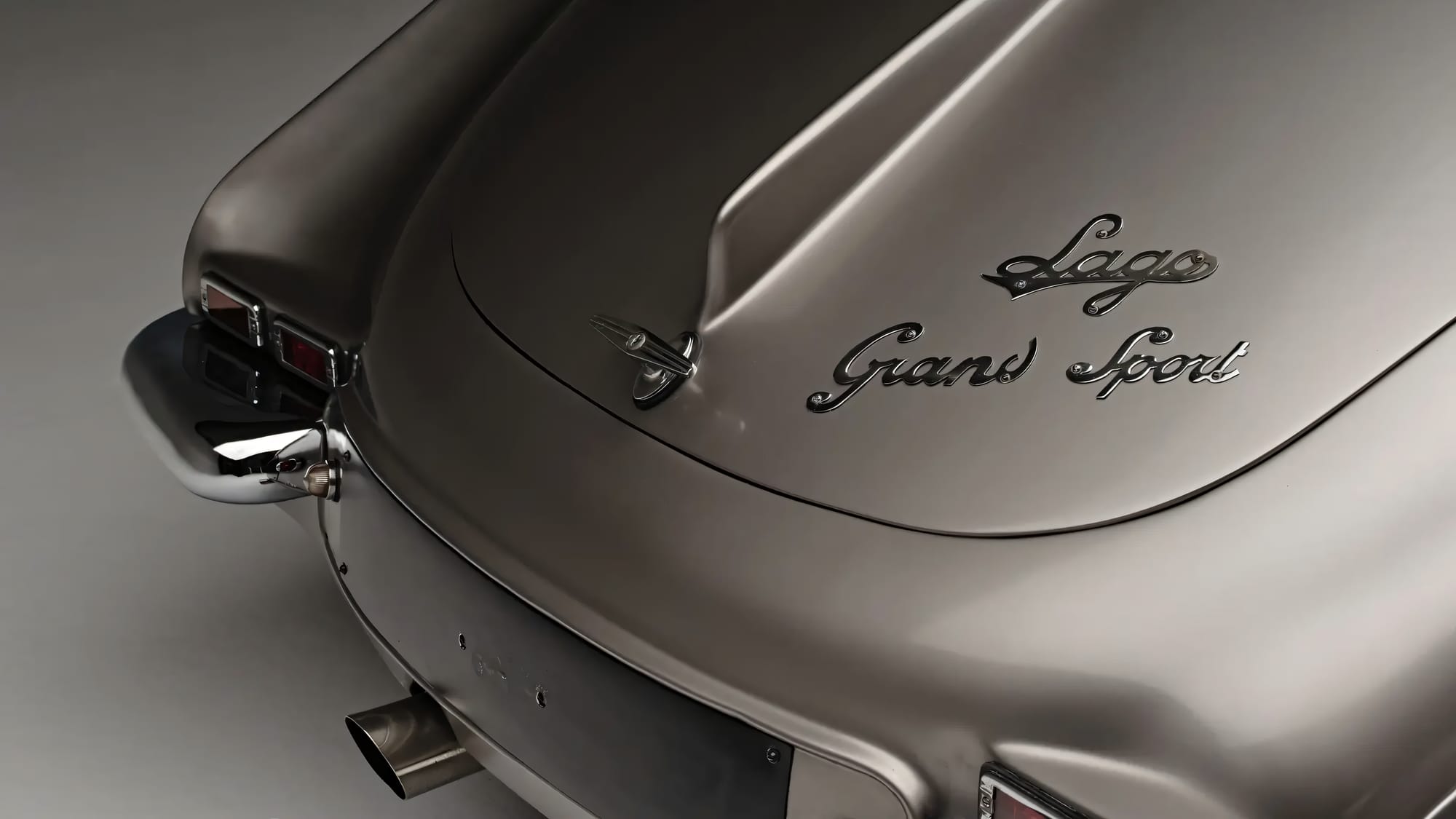
Barou's Talbot-Lago, built by a man who had been making truck bodies while France was under occupation, wearing references borrowed from three other national traditions, stands as a quietly argued counterpoint to the glamour of the better-known Grand Sport commissions. The engineering underneath is precisely the same as what contested Le Mans; the coachwork above it is the work of a craftsman who understood line and proportion well enough to make something improbable cohere. In that combination - serious hardware, unconventional interpretation, genuine distinction - it captures something essential about what the T26 Grand Sport always was.