Burning Daylight on the Route Nationale: The French Automobile in the 1940s
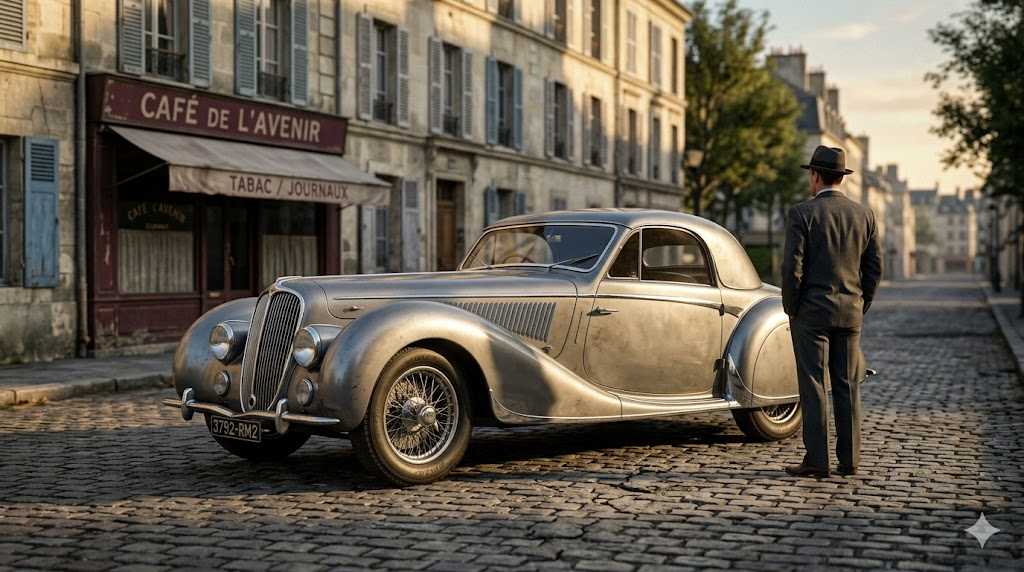
The liberation of Paris in August 1944 freed many things, but it could not immediately free the French automobile. Steel was rationed, factories were scarred, and the government planners who would shortly consolidate the industry under centralised direction had already decided that the future belonged to small, affordable machines for a nation that needed to move rather than impress. Yet somehow, simultaneously, France produced some of the most extravagant and technically ambitious cars ever built - a final, defiant flowering from marques like Talbot-Lago, Delahaye, and Bugatti that behaved as though the world hadn't changed at all.
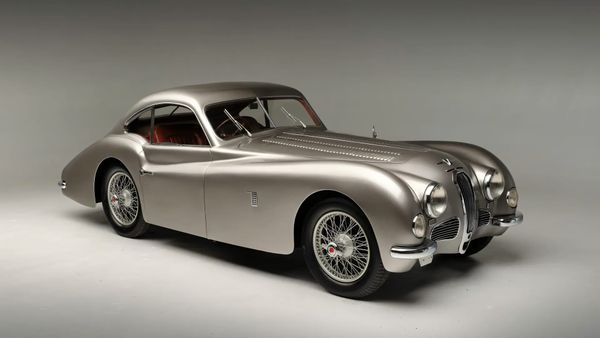
The contradiction at the heart of French motoring in the 1940s is precisely that: two entirely different automotive philosophies, operating in the same country at the same time, with almost no dialogue between them. On one side sat Renault's 4CV, conceived in secret during the Occupation, small and rear-engined and emphatically pointing toward a democratic automotive future. On the other stood the great bespoke houses - Figoni et Falaschi, Saoutchik, Franay, Chapron - clothing the aluminium-blocked straight-sixes of Delahaye and Talbot-Lago in coachwork of baroque magnificence, for a clientele that had somehow emerged from the wreckage of war with money still intact and tastes entirely unchanged.
The infrastructure that made the latter possible was already ancient. Paris's grand carrossiers had been building bespoke bodies onto rolling chassis since the 1900s, and the fundamental arrangement - manufacturer delivers chassis, coachbuilder delivers body, client specifies both - persisted into the post-war years as though by sheer force of tradition. Delahaye returned to production in 1946 with the Type 135M, its triple-carburettor straight-six offering up to 130 horsepower and a chassis that Chapron, Franay, and Letourneur et Marchand queued to dress. Talbot-Lago's Grand Sport debuted at the 1947 Paris Salon with a 4,482 cc twin-cam six producing close to 195 horsepower in road form - power figures that would seem ambitious on any national stage in that period. These were not gestures at nostalgia; both engines were genuine engineering achievements, and both cars were fully competitive at the highest levels of motorsport well into the early 1950s.
What the great French marques could not resolve was economics. Their entire model - low-volume production, coachbuilt bodywork, handbuilt mechanical assemblies - depended on a wealthy clientele whose purchasing power had been eroded by the war and whose taste, crucially, was also being courted by the Italians, who offered comparable elegance with better industrial organisation. The French government's 1954 rationalisation policy, which forced the consolidation of Hotchkiss, Delahaye, Delage, and related firms, did not cause the collapse of the grandes marques so much as document what the market had already decided. Bugatti built only a handful of cars after the war and never recovered its pre-war commercial momentum. Delahaye ceased car production in 1954. Talbot-Lago hung on until 1960 in diminished form.
The lasting legacy of French automobiles in the 1940s is not the mass-market machinery, even though that side ultimately prevailed. It is the extraordinary body of coachbuilt work produced between 1946 and roughly 1952 by workshops - some celebrated, some regional and obscure - that understood the post-war moment as a brief window before industrial logic closed permanently. They worked quickly, they worked with materials still in short supply, and they produced objects that mixed influences from across Europe with no apparent anxiety about the borrowing. The French automobile in the 1940s was genuinely plural: democratic and aristocratic, practical and impractical, forward-looking and consciously terminal - all at once, all in the same decade, and mostly within a few kilometres of each other.