The Long View - Motor Sport Magazine and the Art of Caring Too Much
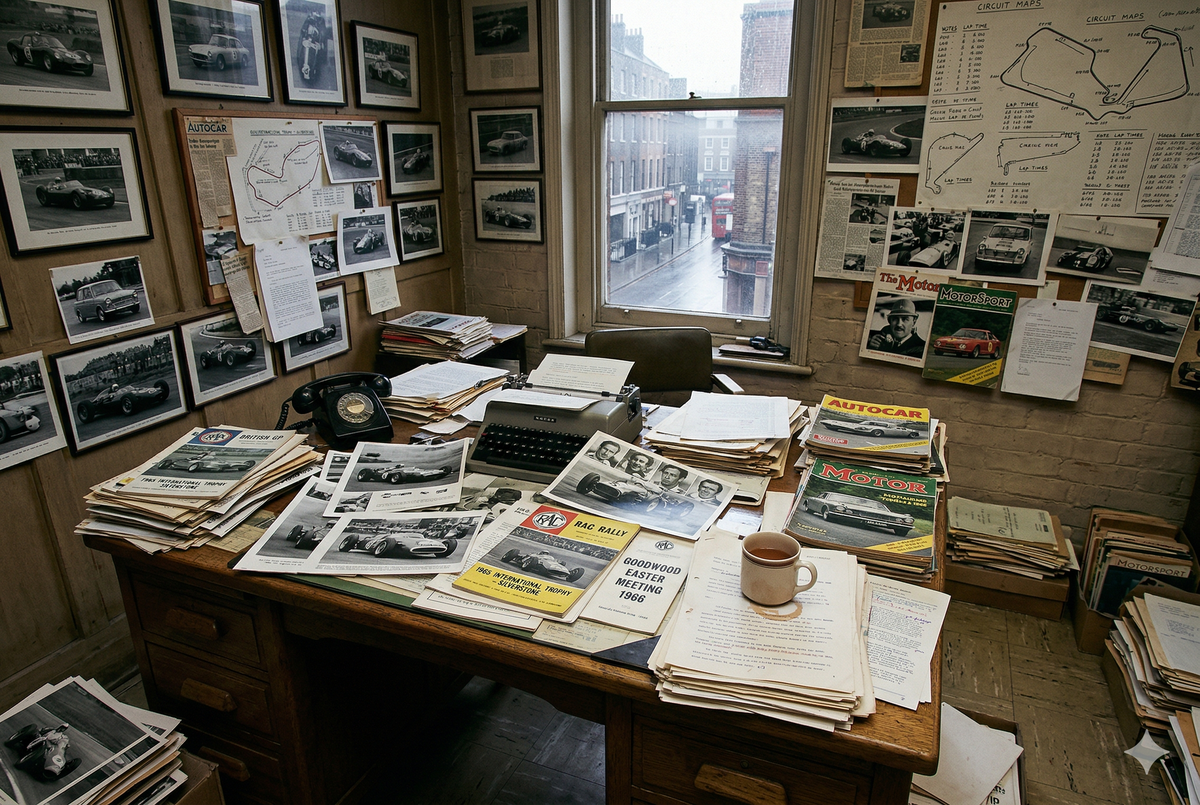
When a magazine is technically bankrupt but its editor keeps filling the pages anyway - because there is simply no acceptable alternative - you are dealing with something beyond a publication. That is the situation William Boddy found himself in during the mid-1930s, owed back pay by a near-insolvent title called Motor Sport that had begun life a decade earlier as the Brooklands Gazette, a parish newsletter for the fastest stretch of tarmac in England. A new owner kept the title alive largely because Boddy was prepared to write most of it himself, and from that undignified arrangement grew what would become the most influential motor racing magazine in the English language.
The magazine that Boddy shaped across his 55-year editorship - he formally held the position from 1936 to 1991, though he was effectively running the pages from 1937 onwards - was never entirely comfortable with the present tense. Its heart lived at Brooklands, in the VSCC paddock, in the mechanical archaeology of Vintage machinery that most of the press considered irrelevant. Boddy's own transport throughout much of his career consisted of vintage cars used as daily drivers, and the magazine reflected his sensibility faithfully: detailed, historically rigorous, slightly eccentric, and deeply suspicious of any car or driver who had not yet demonstrated staying power across a sufficient number of decades. Road tests of contemporary machinery sat alongside meticulous reconstructions of pre-war racing history, and the combination produced something that resembled no other title in the field.
That editorial personality was genuinely distinctive but it also carried real costs. The magazine's resistance to the broad popular market that Autosport pursued so successfully meant Motor Sport occupied a narrower and more intellectually demanding position, which constrained its circulation without ever quite threatening its authority. The writers it attracted - Nigel Roebuck's Grand Prix coverage across several decades representing perhaps the high watermark of Formula One journalism in print - gave it a credibility that advertising budgets could not manufacture. Roebuck's pit lane dispatches, dense with paddock intelligence and unsparing in their assessments of drivers and team principals alike, were read carefully in the places they described, which is the surest test of sports journalism's quality.
The post-Boddy years brought turbulence and reinvention. A period from 1997 to 2006 during which the magazine leaned heavily into historic motorsport represented an overcorrection - doubling down on the Boddy inheritance at the expense of contemporary relevance, and losing readers who wanted both. The subsequent rebalancing restored Formula One and modern racing to prominence alongside the archival depth that had always distinguished the title, and the magazine's digital and podcast presence eventually extended its reach beyond what the print edition alone could sustain.
What has never entirely left the magazine is the quality that Boddy embedded in it by temperament rather than editorial policy: the conviction that motor racing deserves the same depth of historical attention and critical seriousness as any other significant human endeavour. That sounds straightforward until you consider how few publications in any sport have actually sustained it across a century. The archive alone - road tests, race reports, and technical analyses stretching back to 1924, much of it now accessible online - constitutes a primary historical resource of genuine scholarly value. Boddy's 1930 article on Brooklands, his first published piece, sits in that archive alongside coverage of the 2026 F1 season, and the continuity is not merely institutional. It reflects a consistent belief that the cars, the races, and the people who built and drove them are worth getting right - and that getting them right takes considerably longer than a news cycle allows.