Bristol Cars - History and the Filton Atelier
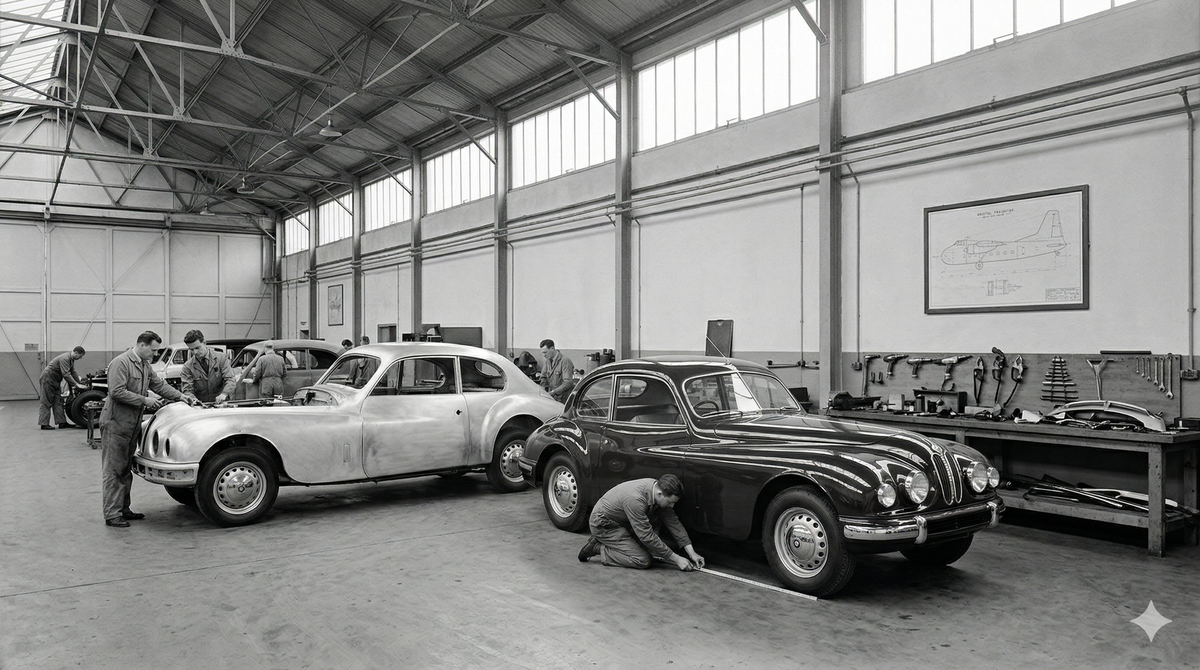
Britain emerged from the Second World War having invented several methods of killing people at altitude with remarkable efficiency, and the Bristol Aeroplane Company at Filton emerged from it in possession of something even more unusual: a genuinely transferable industrial philosophy. When the government's postwar contraction of the aircraft industry left BAC with excess capacity and engineering talent it could not afford to idle, the decision to build motor cars was less a strategic leap than a lateral application of what the company already knew how to do. The surprise, in retrospect, is how completely the aviation DNA expressed itself in the cars - and how long it took the rest of the industry to notice, or care.
The factory at Filton, north of Bristol on the edge of the aerodrome, was where everything happened. Never more than three cars were built in any given week; the figure was not a limitation imposed by demand but a deliberate ceiling that reflected the available skilled labour and the standard of finish that Bristol considered acceptable. Fuselage fitters and instrument riggers became coachbuilders. The disciplines that governed the construction of a Bristol Freighter - close-tolerance assembly, no shortcuts, every fastening treated as flight-critical - transferred with barely any modification to the production of a motor car. The result was a build quality that contemporary journalists often acknowledged with genuine astonishment, particularly in the early years when the contrast with the mass-production offerings from Longbridge and Dagenham was most stark.
The first cars, the 400 series from 1947, were built on acquired BMW foundations - the War Reparations Board had made available the pre-war 326 chassis, 328 engine, and 327 coupé coachwork, and Sir George White's team at Filton used all three, intelligently refined, as the basis for the Bristol 400. This was not plagiarism but engineering pragmatism: the BMW 328 was among the most technically accomplished cars in Europe before the war, and Bristol's modifications - revised suspension geometry, improved body aerodynamics validated in the wind tunnel at Filton - made it demonstrably better. Dr. Fritz Fiedler, BMW's own pre-war chief engineer, came with the plans; his presence ensured continuity and comprehension rather than guesswork.
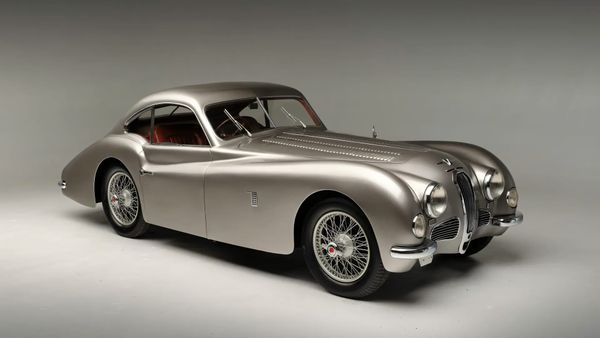
What distinguished the Filton approach most forcefully was the aerodynamic rigour. The 401 of 1948, styled with input from Touring of Milan using their Superleggera construction method, was tested in BAC's own wind tunnel - a facility that almost no other car manufacturer in Britain had access to or would have thought to use. The drag figures were genuinely superior to most rivals that merely looked streamlined. The 404 of 1953 replaced the BMW-derived kidney grille with a clean aerodynamic intake that directly echoed the intake geometry of the contemporary Bristol jet aircraft being assembled in the same complex. The cars and the aeroplanes shared not just a factory but a visual and functional vocabulary.
The decisive break came in 1961. The Bristol straight-six - by then developed to 2.2 litres in the 406 - had reached its practical limit, and the economics of developing a new engine in-house were beyond what a company building three cars a week could sustain. Tony Crook's solution, the Chrysler 313 cubic-inch V8 in the 407, was pragmatic and quietly brilliant: more torque, more power, better long-term parts supply, and a transmission in the TorqueFlite that was, if anything, more refined than anything Bristol could have sourced domestically. The separate chassis - used on every Bristol from the 400 through to the final 411 in 1976 - accommodated the switch without structural redesign.
The Filton operation was wound down progressively as the aerospace company consolidated under government pressure in the late 1960s, and Bristol Cars eventually moved its production base to Patchway before the final transfer of ownership to Tony Crook's sole control in 1973. The physical separation from the aerodrome was symbolic as much as anything - the aerospace parentage had always been more philosophy than infrastructure - but it marked the beginning of an era in which Bristol Cars was entirely dependent on Crook's personal energy and commercial instinct for its survival.
The Fighter of 2004, developed under Toby Silverton's ownership with a bespoke reworked Dodge Viper V10 producing over a thousand horsepower in top tune, was the most dramatic departure from Filton tradition the marque had ever attempted. Carbon-fibre body, gullwing doors, a claimed 210mph top speed, no separate chassis for the first time in the company's history: it was either a reinvention or an abandonment, depending on your perspective, and the muted critical reception suggested the market wasn't sure which. Bristol went into administration in 2011.
The Filton atelier, at its best, was something that the industry's standard models of commercial success could not adequately describe or accommodate - a place where the discipline of building things that must not fail was applied to objects that most manufacturers treated as consumer goods. The cars that came out of it were imperfect in various ways, conservative past the point of prudence, and priced at a level that required considerable faith in the manufacturer's self-assessment. But they were also built by people who had, in the most literal sense, learned their trade in a context where getting it wrong had consequences that extended well beyond the loss of a sale. That background is not a marketing story. It is the actual reason the cars were what they were.