1974 Iso Rivolta Lele
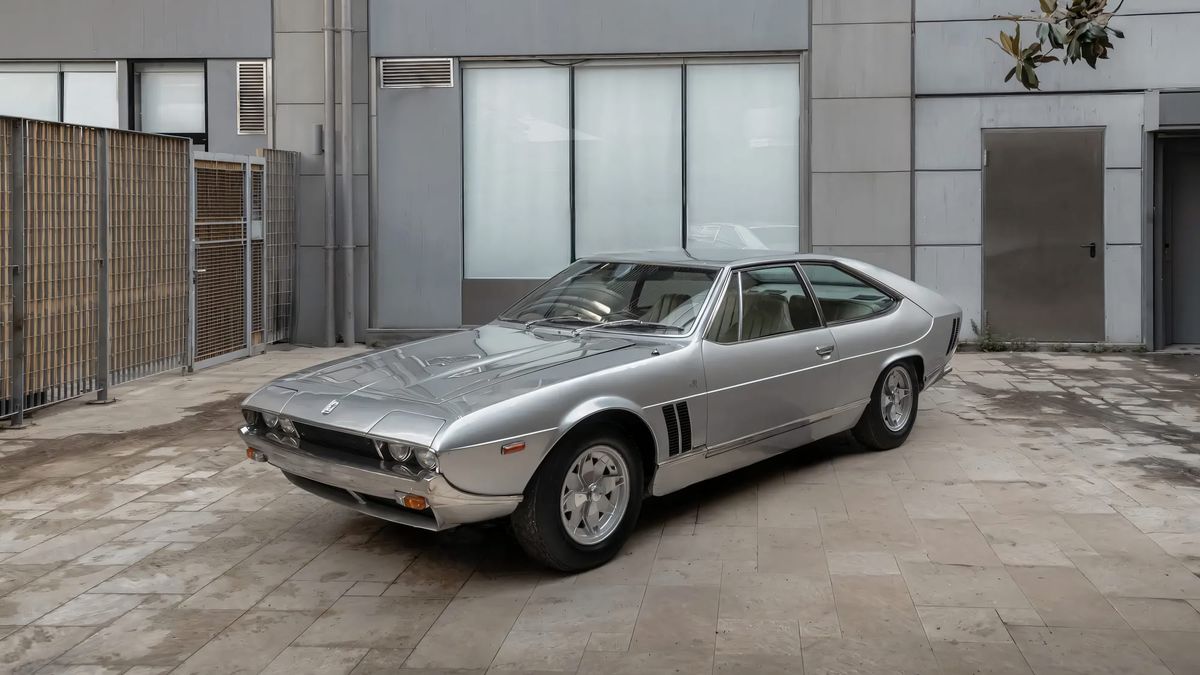
When Piero Rivolta wanted to give his wife Rachele a gift worthy of the early 1970s Italian GT scene, he did something that most husbands cannot: he commissioned Marcello Gandini at Bertone to design her a car. The resulting fastback coupé - named Lele after Rachele's nickname - was unveiled to the public at the 1969 Turin Motor Show, and the crowd's reaction promptly turned a personal gesture into a production model. It is one of the more romantically absurd origin stories in automotive history, and it sets the tone for a car that was always a little eccentric, sometimes frustrating, and genuinely fascinating.
The Lele was Iso Rivolta's calculated answer to the Lamborghini Espada, positioned to fill the gap between the two-seat Grifo and the stately four-door Fidia. As a 2+2 fastback grand tourer, it targeted the same buyers circling the Maserati Mexico and Ferrari 365 2+2 - people who wanted Italian emotional appeal but also genuine rear-seat space and the kind of effortless long-distance cruising that a big American V8 could provide without apology. It was a crowded, expensive segment, and Iso - a company that had started life making refrigerators and motor scooters - was throwing itself at the very sharpest end of it.
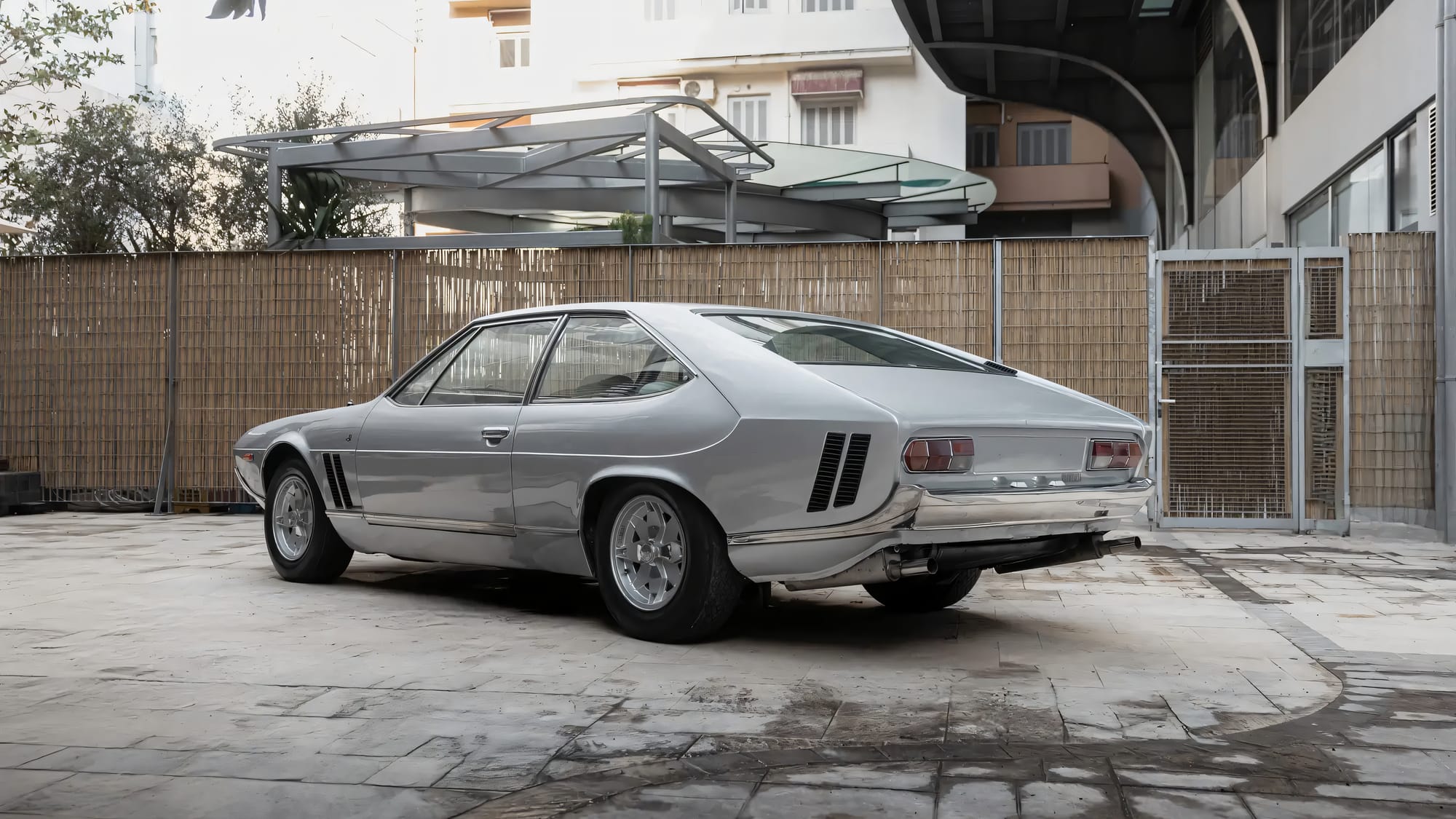
The engineering foundation was inherited from the IR300 platform, revised and updated, with a tubular steel chassis clothed in a steel body from Bertone. Early production cars - approximately the first 125 examples - used General Motors' Turbofire V8, available in 300 or 350 horsepower states of tune depending on specification, paired with a four-speed GM manual gearbox, and later optionally with a ZF five-speed unit. The arrangement was the same pragmatic recipe Iso had already deployed in the Grifo: keep the mechanical components sourced from high-volume American production, keep costs manageable, and use Italian coachbuilding to make the whole thing feel stratospherically special.
That recipe hit a significant snag in 1972 when General Motors informed Iso that it would henceforth require advance payment for engine supplies. The small Milanese firm, producing cars in the dozens rather than the thousands, simply couldn't absorb that kind of upfront capital commitment. Iso pivoted to Ford, fitting the 351 cubic inch Cleveland V8 - 5,766cc, rated at 325 SAE horsepower in standard form, with an 8.6:1 compression ratio and a 5,800 rpm redline - and sourcing a Ford Cruise-O-Matic three-speed automatic to complement the continuing ZF five-speed manual. It was an unglamorous corporate scramble dressed up as a specification upgrade.
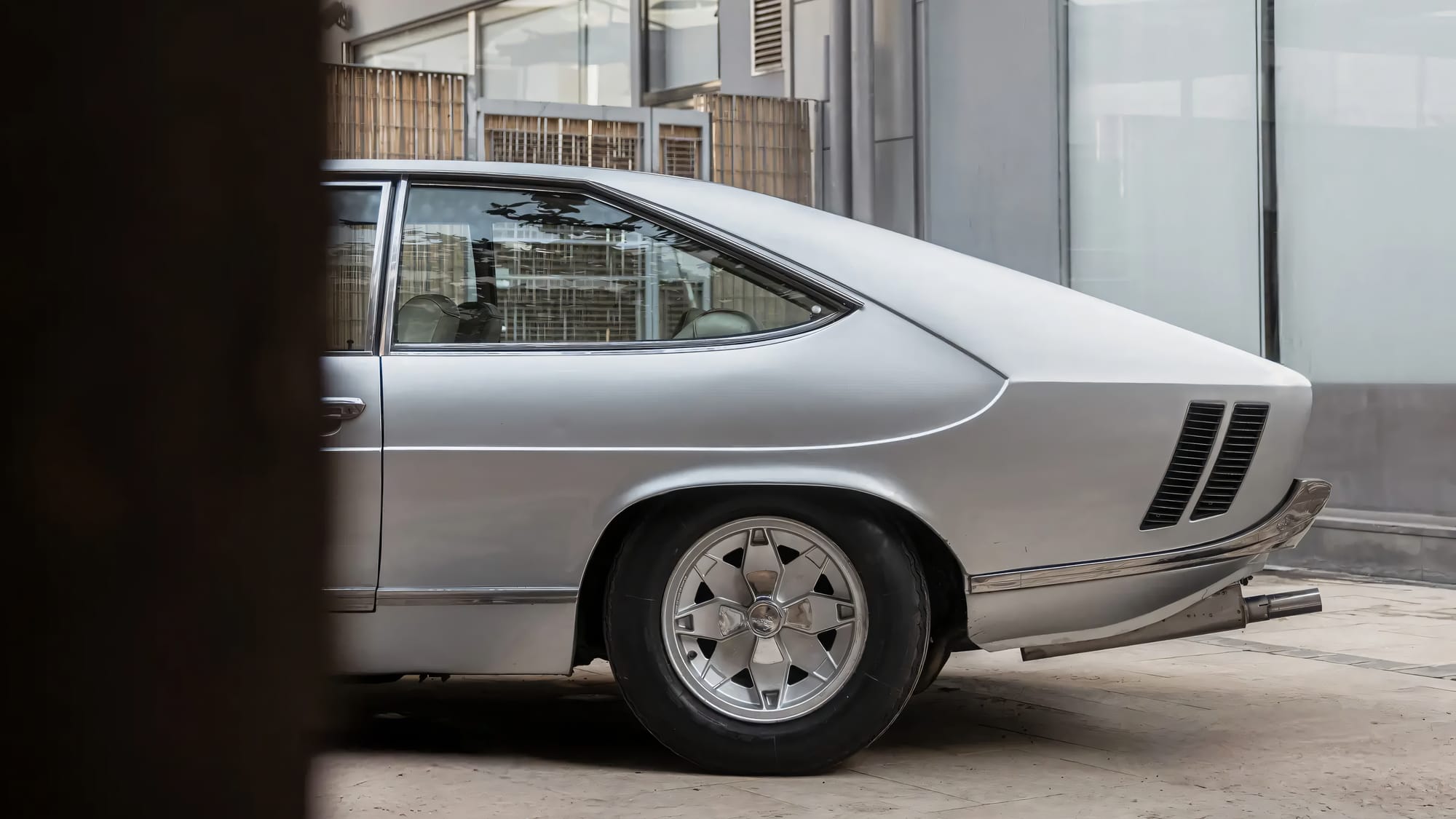
The Ford-engined variants were designated IR6, and in 1973 the range gained its most potent member: the Lele IR6 Sport. With engine modifications developed directly from the work done on the Iso-Marlboro Formula One team's cars - specifically the units prepared for drivers Howden Ganley and Nanni Galli - the Sport pushed output to 360 SAE horsepower. It shed sound deadening, received a revised dashboard, and was offered exclusively with the ZF five-speed. The connection to Formula One was more than marketing: the engine tuning was genuinely derived from competition work, and it gave the Sport a harder, more purposeful character than the standard car. The Cleveland V8 Ford-powered variants, of which only around 165 were built, now represent the rarer and arguably more interesting half of the Lele's production run.
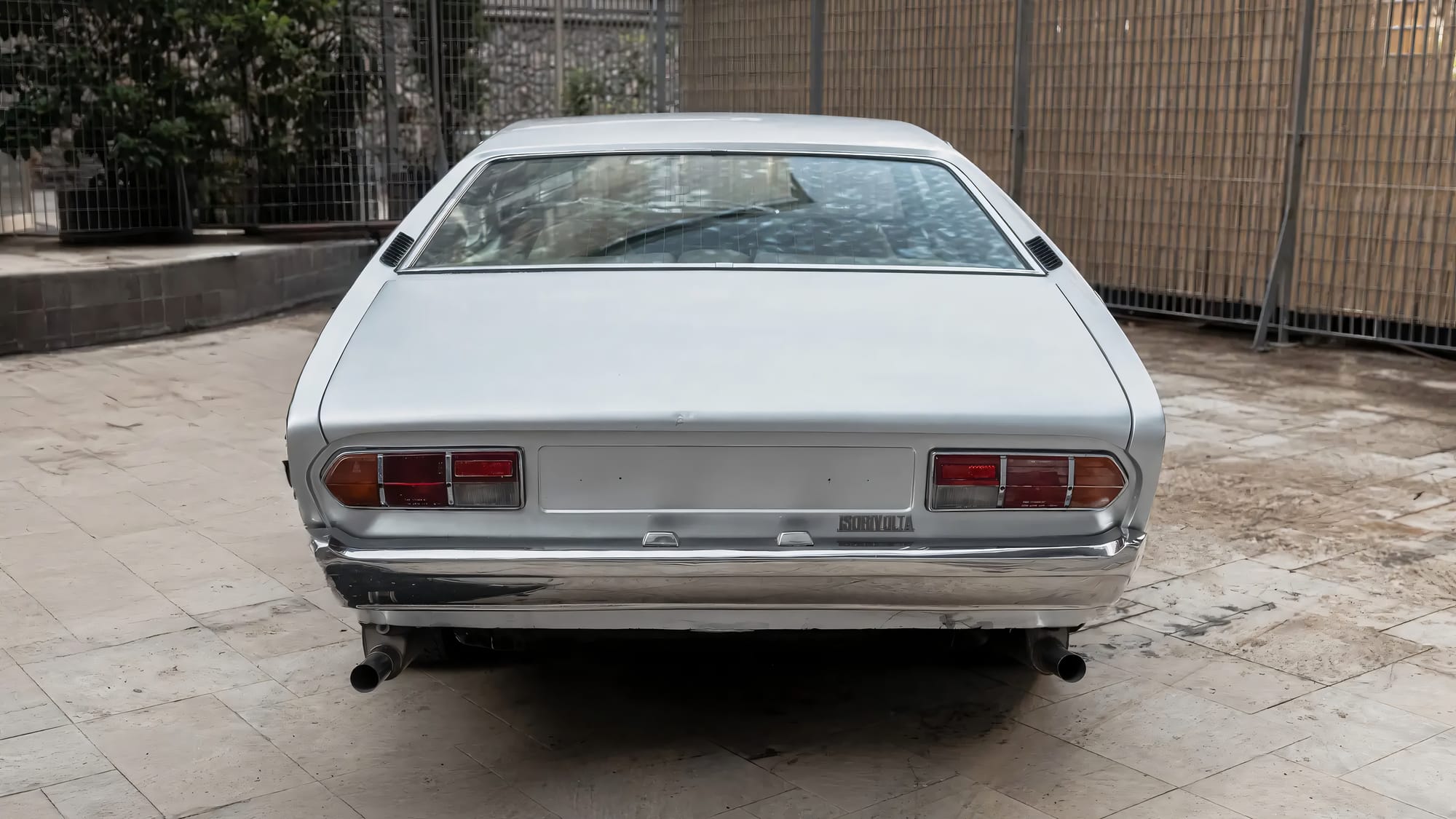
Gandini's design for the Lele was bold in the way that only early-1970s Italian design could be - all long fastback roofline, sharp horizontal shut lines, and a slightly muscular stance that owed something to the contemporary Espada (the two cars were developed at Bertone at much the same time). From certain angles, particularly the three-quarter rear, the Lele's proportions read as genuinely dramatic. From others, it's harder to love - the roofline sits fractionally too high, and the bonnet reads as slightly abbreviated, as if Gandini was working within platform constraints that prevented him from achieving exactly the visual sweep he wanted. The result is a car that rewards looking at from specific directions, which is an oddly apt description of the Lele's relationship with the world more broadly.
Inside, the cabin delivered what the exterior promised in terms of intent if not always execution. Four adults could be accommodated properly - a genuine achievement in a car of these proportions - and the interior was trimmed in leather with an eye toward grand touring comfort. The dashboard was functional rather than artful, the switchgear a familiar mixture of Italian and American components, and the overall ambiance was one of purposeful luxury rather than the baroque excess of some Ferrari contemporaries. The Sport's cabin deletion of sound deadening made the whole proposition more raw, which either improved or destroyed the experience depending on how the driver felt about Cleveland V8 acoustics at full chat.
On the road, the Lele's character was defined by that big American pushrod engine in an Italian suit. Performance was strong rather than savage - the 325 horsepower Ford unit could motivate roughly 1,500 kilograms of coupé to around 240 km/h with conviction, and the torque delivery was broad, accessible, and reassuringly undramatic. This was a car for covering distance efficiently and with a certain theatrical style, not for attacking mountain passes in the manner of the Grifo. The ZF five-speed made the manual cars genuinely pleasant to drive quickly, with a positive, mechanical action that complemented the engine's low-end muscle without demanding constant gearchanging. The automatic, inevitably, blunted the involvement but added a languid, trans-continental ease that some buyers found entirely preferable.
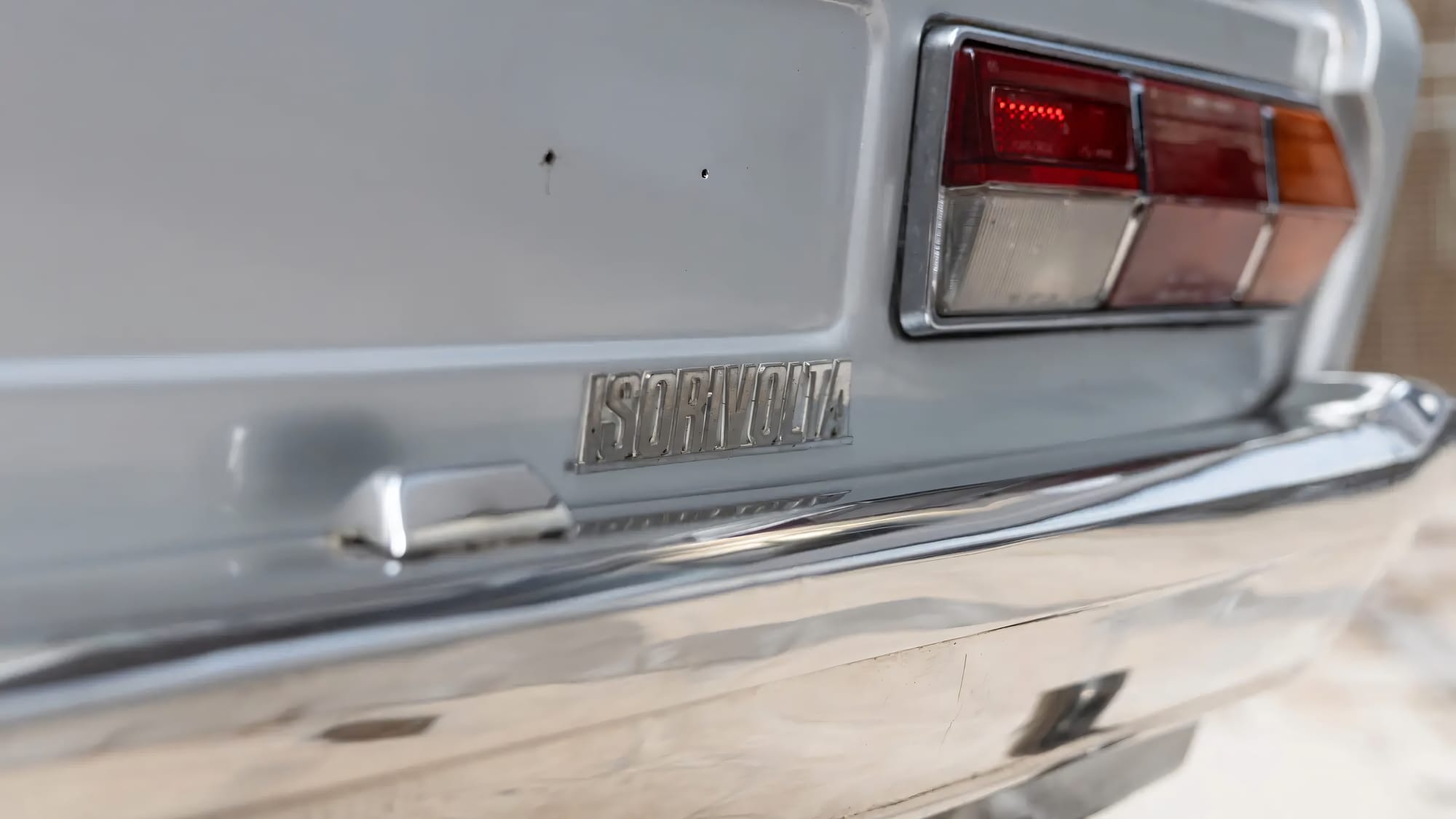
What the Lele did genuinely well was offer something none of its more famous rivals could quite match: a credible Formula One connection in the Sport variant, genuine four-seat usability, and a design that was sufficiently distinctive to draw attention without the maintenance anxiety of a comparable Ferrari or Lamborghini. The Ford and GM V8 engines were, compared to the finicky Italian units in rival machines, practically agricultural in their reliability and ease of service - a real-world virtue that the brochures never quite knew how to celebrate without also inadvertently insulting the product. The Iso ownership experience was, by the standards of 1970s exotica, relatively painless.
The drawbacks, however, were real. Total production across the entire run amounted to roughly 317 examples, with the Ford-powered cars accounting for the minority of that figure. That scarcity today reads as exclusivity, but during the production years it reflected the reality that Iso was fighting for survival in a market that increasingly favored established names. The styling, however characterful, never quite achieved the universal visual authority of the Espada or the Ferrari 365 - it was too angular in some places, too chunky in others, and too derivative of the Lamborghini it was meant to rival without quite eclipsing it. The luxury detailing inside was adequate rather than exceptional, and the American drivetrain components, for all their practical advantages, robbed the car of the all-Italian purity that some buyers in this segment considered non-negotiable.
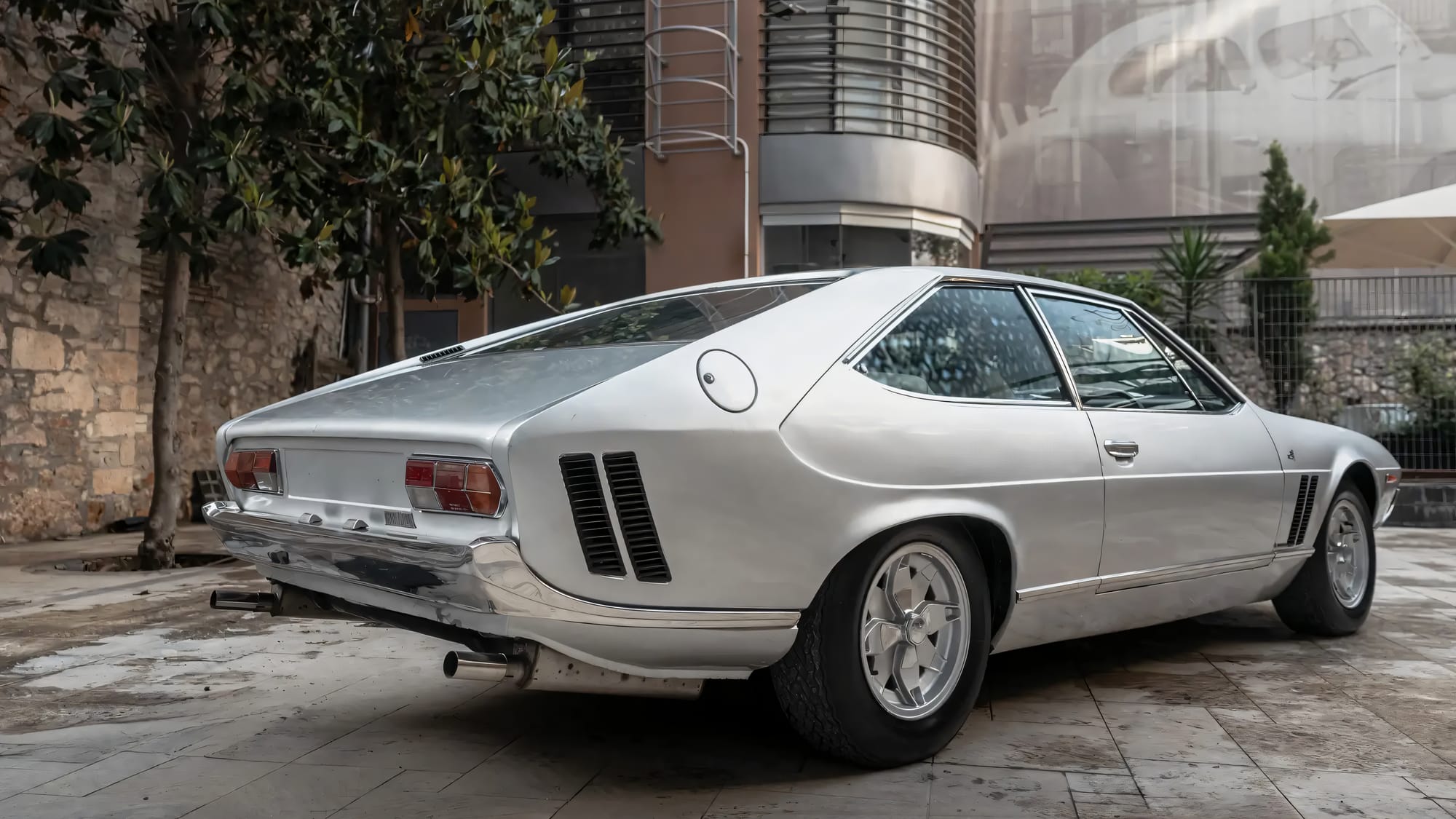
The Lele's story ended in 1974, not because the car had run its natural course, but because Iso Rivolta itself collapsed under the pressure of the 1973 oil crisis and its financial consequences. A company making bespoke grand tourers in tiny volumes, dependent on expensive hand-craftsmanship and now facing fuel price shocks and a luxury goods market in sudden retreat, simply had no resilience against that kind of macroeconomic assault. The Lele was, in a sense, a casualty not of its own limitations but of forces entirely beyond the control of the Rivolta family or anyone who worked in that small factory outside Milan.
Critical assessment of the Lele has historically been shaped by what it was competing against, which placed it in an impossible position. Against the Espada it offered a more intimate 2+2 proposition but a less resolved design. Against the Ferrari 365 GT 2+2 it offered more accessible running costs but less emotional pedigree. The contemporary road test press found it impressive in terms of performance and appreciated the practical usability of the four-seat cabin, while noting honestly that the interior quality and the aesthetic execution didn't quite reach the heights its price demanded. The below-the-radar assessment that has followed the Lele through subsequent decades is essentially correct: it was an enigmatic option, one that made complete sense when evaluated on its merits and yet somehow never quite commanded the recognition it deserved.
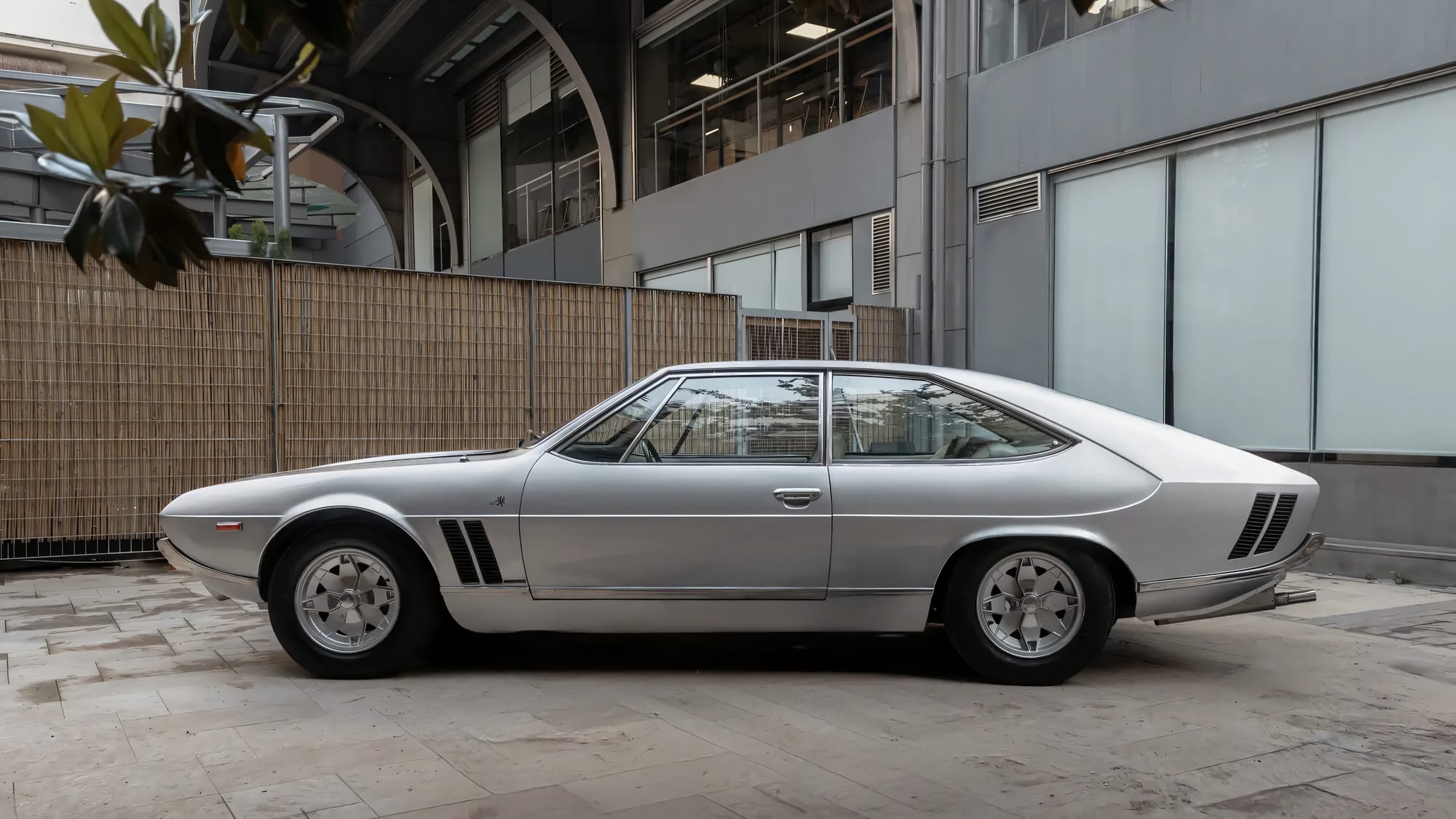
What's stayed interesting about the Lele, long after Iso's closure, is that connection to a specific moment when a handful of small Italian manufacturers genuinely believed they could compete at the very top of the GT market using American horsepower as the leveler. Iso's approach - take a proven tubular chassis, commission a great designer, fit an engine that nobody's mechanics will be baffled by - produced the Grifo, the Fidia, and the Lele in succession, and the Lele was the most commercially ambitious of all three. That it fell short of conquering its segment says nothing particularly damning about the car itself; it says rather more about the difficulty of taking on Ferrari and Lamborghini with a fraction of their resources, their history, and their mythology. The Lele deserved a longer run, a stronger economy, and perhaps a slightly longer bonnet. It got none of those things, and yet it remains, in the understated company of cars the world almost forgot to notice, one of the more genuinely interesting grand tourers the early 1970s produced.