The Moss Gearbox in British Sports Cars
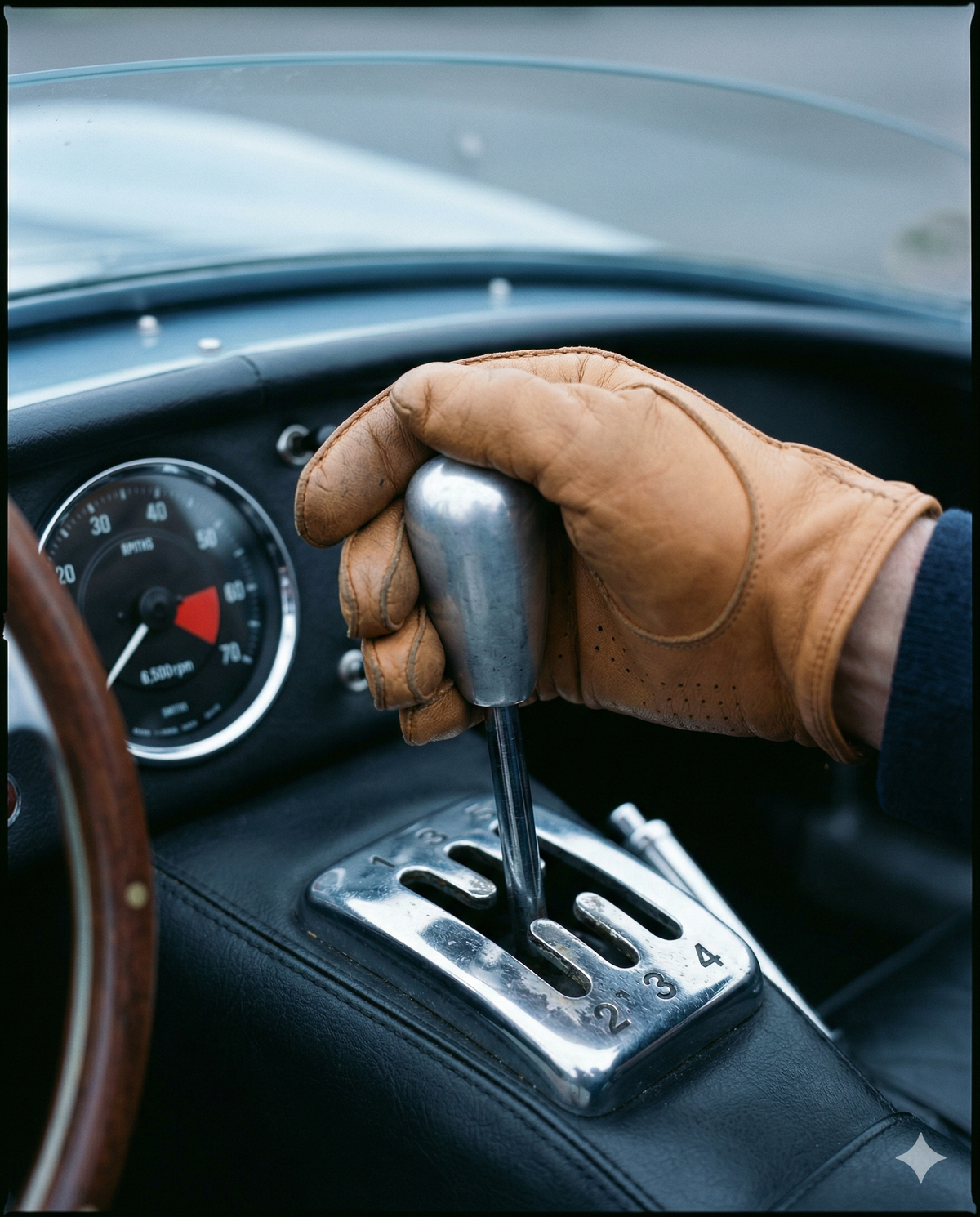
Every experienced driver who has spent time with a Series 1 E-Type or an XK150 knows the ritual: clutch in, pause, ease the lever across the gate with deliberate unhurried authority, clutch out - and if you rushed it, if you let impatience override the box's specific temperament, the Moss gearbox would grind at you with the reproachful indifference of a piece of machinery that had been built before synchromesh on first gear was considered either necessary or polite. That missing first-gear synchro is the Moss box's most famous quirk, its most discussed limitation, and also, in a strange way, the clearest window into the philosophy of the British sports car industry during the late 1940s and 1950s - an era that believed a proper driver would double-declutch as a matter of competence rather than wait for mechanical assistance to compensate for impatience.
The Moss Gear Company, based in Birmingham, was producing gearboxes for the British motor industry long before Jaguar adopted the unit for the XK120 at the car's 1948 launch. The four-speed unit that became standard across the XK series and carried into the early E-Type was a robust, conventional design - helical gears, synchromesh on second, third, and fourth, a fairly long and deliberate lever throw, and ratios that suited the XK engine's broad torque spread reasonably well. It was not a precision instrument by the standards of the Italian sports car industry; it was solid British engineering, designed for durability and ease of production rather than the kind of slick, short-throw shifting that was becoming fashionable in continental competition machinery. In period, few customers complained loudly about it, because most alternatives in the same price bracket were no more sophisticated.
The trouble is that the XK engine, and later the E-Type's 3.8 unit, were sporting enough to expose the gearbox's limitations with some clarity. A car capable of 150mph deserved a transmission that could be operated at pace without ceremony. The Moss box demanded ceremony. Double-declutching into first at low speeds was not merely advisable but essentially mandatory if you wanted to preserve the synchro rings on second, which bore the brunt of missed downchanges. Owners who drove quickly discovered early that the lever's long travel rewarded anticipation - starting the movement well before it was strictly needed, letting the synchromesh do its work at the speed it preferred rather than the speed the driver preferred.
The overdrive option, where fitted, provided genuine relief on longer runs - dropping revs on the motorway and revealing a more relaxed, grand-touring character - but it interacted with the Moss internals in ways that required its own learning curve, and engaging it under power was discouraged by every workshop manual Jaguar published. The three-speed Borg-Warner automatic available as an alternative on the XK150 was smoother in operation but absorbed enough power to blunt the S model's performance noticeably, and almost no enthusiast buyer chose it willingly when the manual was available.
The Moss box's obsolescence became undeniable when Jaguar introduced its own fully synchronised four-speed unit with the 4.2-litre E-Type in 1964. The new gearbox had synchromesh on all four gears, a shorter and more precise lever action, and ratios better suited to the increasingly powerful engine. The contrast was immediate and significant enough that contemporary road testers commented on it directly - the car felt more cohesive, more modern, easier to exploit quickly. The Moss unit, which had served across a fifteen-year span covering the entire XK series and the early E-Type, was quietly retired without ceremony, much as it had operated throughout its career.
What makes the Moss gearbox historically interesting rather than merely technically flawed is the attitude it encoded. British sports car buyers of the 1950s were expected to learn their machinery - to understand its rhythms and work with them rather than against them. The gearbox that punished impatience was, in that context, not a shortcoming but a position. It was also, inevitably, a commercial liability as the decade wore on and the Italian and German competition demonstrated that a sporting transmission could be both demanding and precise without requiring its driver to treat every gearchange as a negotiation. The Moss box was built by people who thought patience was a driving virtue. The drivers who eventually replaced it had decided that precision was better.