Ferrari 430 Scuderia: The Last Analogue Supercar From Maranello
The Ferrari 430 Scuderia matched the Enzo's Fiorano lap time, shed 100kg, and delivered 503hp of Schumacher-tuned, naturally aspirated fury.
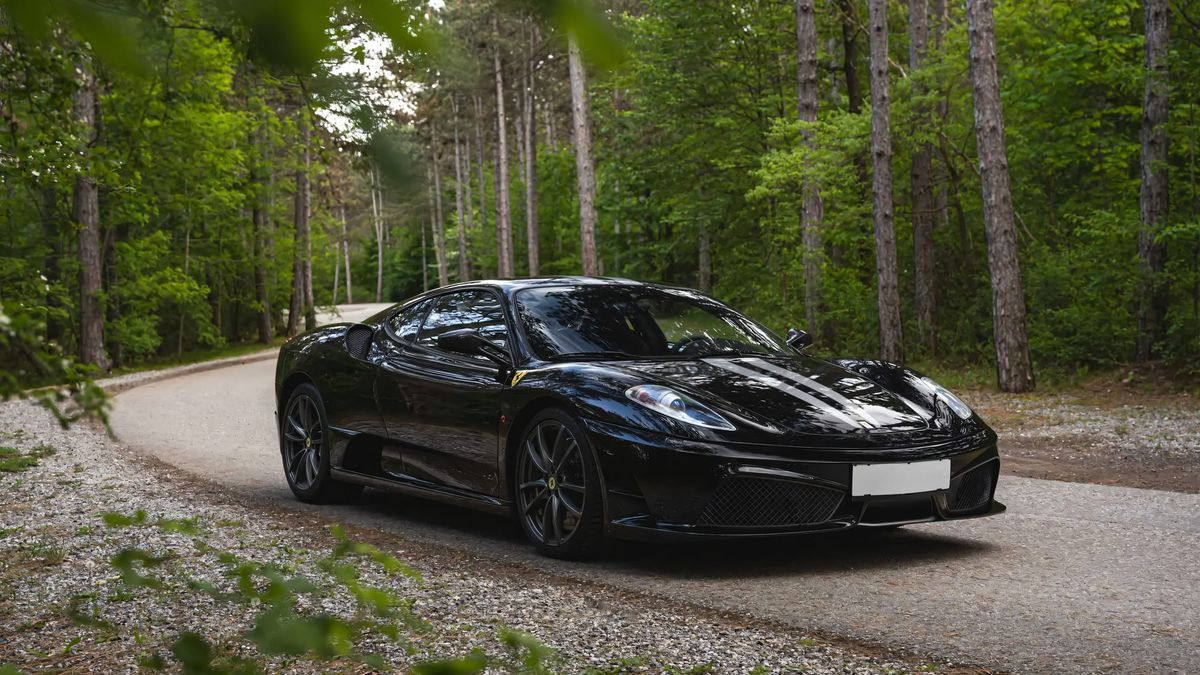
At Fiorano in the summer of 2007, Ferrari's engineers gathered around a stopwatch that read 1:25.0 and then looked at one another. The car that had just posted that lap time came equipped with air conditioning, wore road-legal tyres, and was headed for delivery to private customers. The only other Ferrari to have recorded that precise time around the same circuit was the Enzo - a mid-engined twelve-cylinder supercar that had cost three times as much and carried the weight of the entire company's prestige when it was built. The message from the 430 Scuderia was clear: Maranello's engineers didn't just want to improve the F430. They wanted to make the notion of a road-going supercar feel slightly embarrassed about itself.
The F430 had already been a remarkable machine when it arrived in 2004 - a generational step over the 360 Modena in almost every measurable dimension, powered by a 4.3-litre V8 that revved with an urgency that bordered on operatic. But Ferrari's competitions department had been busy exploiting the same platform in the F430 Challenge one-make race series, and the lessons learned there were too good not to distill into a road car. The result, unveiled at the Frankfurt Motor Show in September 2007 with Michael Schumacher standing next to it, was the 430 Scuderia - a name that carried weight not just as a marketing exercise but as a genuine engineering statement.
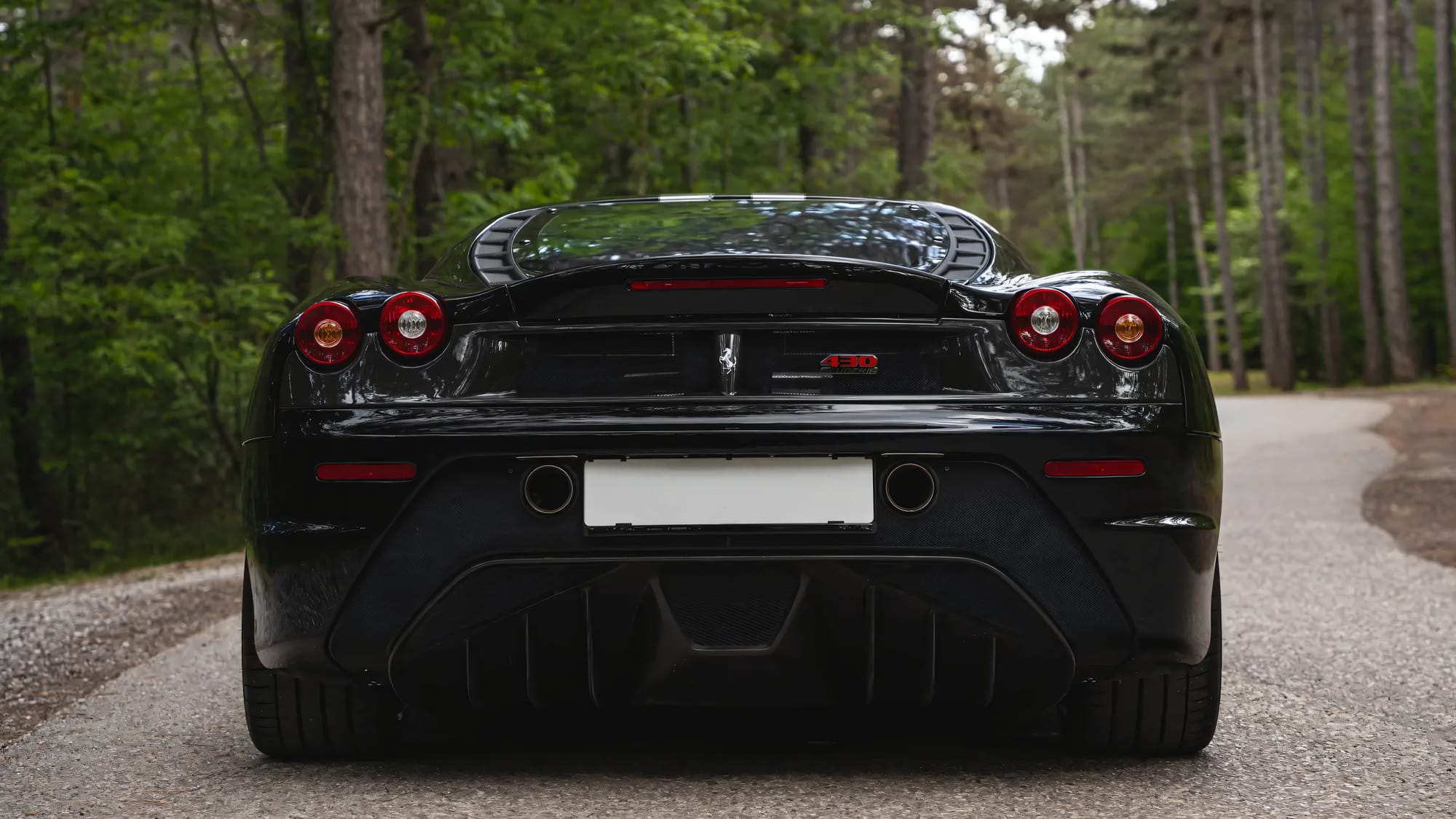
Schumacher's involvement is often cited as a headline-grabbing stunt, but the evidence suggests his contribution was substantive. The seven-time world champion brought to the development program the kind of precision feedback that no amount of engineering instrumentation can fully replace - a human sensitivity to chassis balance and response that shaped how the Scuderia communicates with its driver. Ferrari shed almost exactly 100 kilograms from the standard F430's already reasonable weight, dropping the Scuderia to around 1,250 kilograms in dry trim. The car sat 15 millimetres lower on a revised suspension setup featuring titanium springs - a material choice that saved weight without compromising spring rates - while the aerodynamics were reworked to generate meaningful downforce at speed.
Ferrari also produced a second variant for those who wanted wind-in-hair drama alongside the track-focused intent: the Scuderia Spider 16M, limited to exactly 499 units and built to celebrate the Scienza Ferrari had accumulated across sixteen Formula One Constructors' Championships. The 16M weighed approximately 80 kilograms more than the coupe due to its folding hardtop mechanism, which nudged the power-to-weight ratio slightly off the pace, but the visual spectacle of a Scuderia with its roof folded away remains one of the more evocative sights in recent Ferrari history. At a listed price of around $313,000 in the United States at launch, it sat above the coupe's already considerable ask, but only 499 customers would ever be in a position to write that cheque.
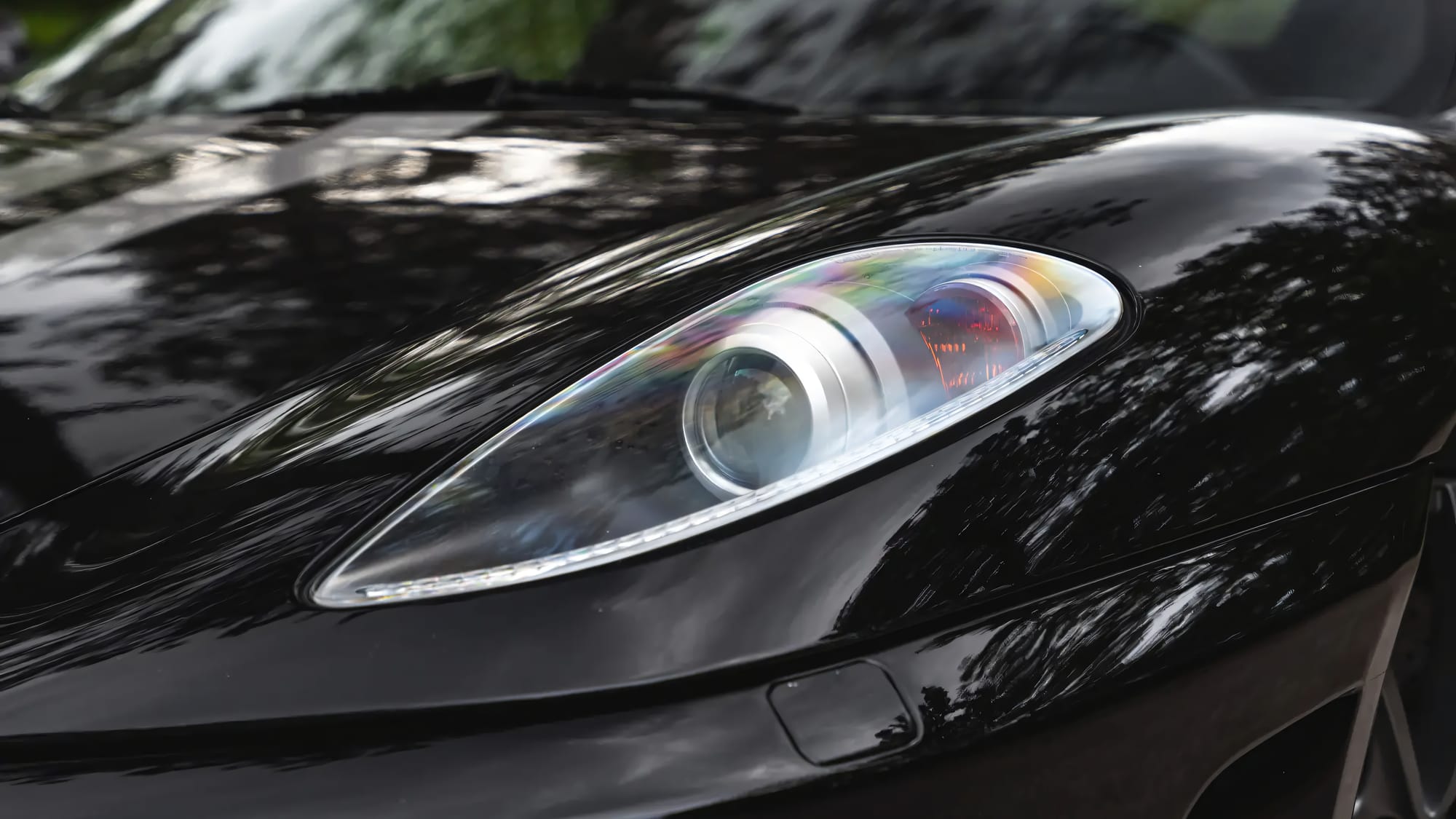
The Tipo F131 V8 at the heart of the Scuderia is one of the finest naturally aspirated engines Ferrari has produced in the modern era. Displacing 4,308 cc across a 90-degree V architecture with a bore and stroke of 92 by 81 millimetres, it breathes through a revised intake, exhaust manifold, and an ion-sensing knock-detection system that permitted engineers to push the compression ratio to 11.9:1 without the compromises that usually accompany such aggression. Peak output rose to 510 PS - 503 brake horsepower in the figures Ferrari quoted - at 8,500 rpm, a meaningful improvement over the standard car's 483 horsepower and one that made itself felt most emphatically in the final third of the rev range where the engine seems to find a second wind and genuinely accelerate toward the limiter. Torque of 347 lb-ft arrives at 5,250 rpm, and while that figure is not exceptional in isolation, the way the engine pulls from 4,000 rpm upward with almost supercharger-like linearity is genuinely surprising for a high-compression atmospheric unit. The transmission was upgraded to the SuperFast2 calibration of Ferrari's single-clutch automated manual, reducing gear-change times to a claimed 60 milliseconds - fast enough that on full-throttle upshifts the mechanical event is almost imperceptible. An E-Diff2 electronic differential, borrowed from the concurrent 599 GTB program and linked to the F1-Trac traction control system, completed a drivetrain package that was more sophisticatedly integrated than anything Ferrari had offered at this price point before.
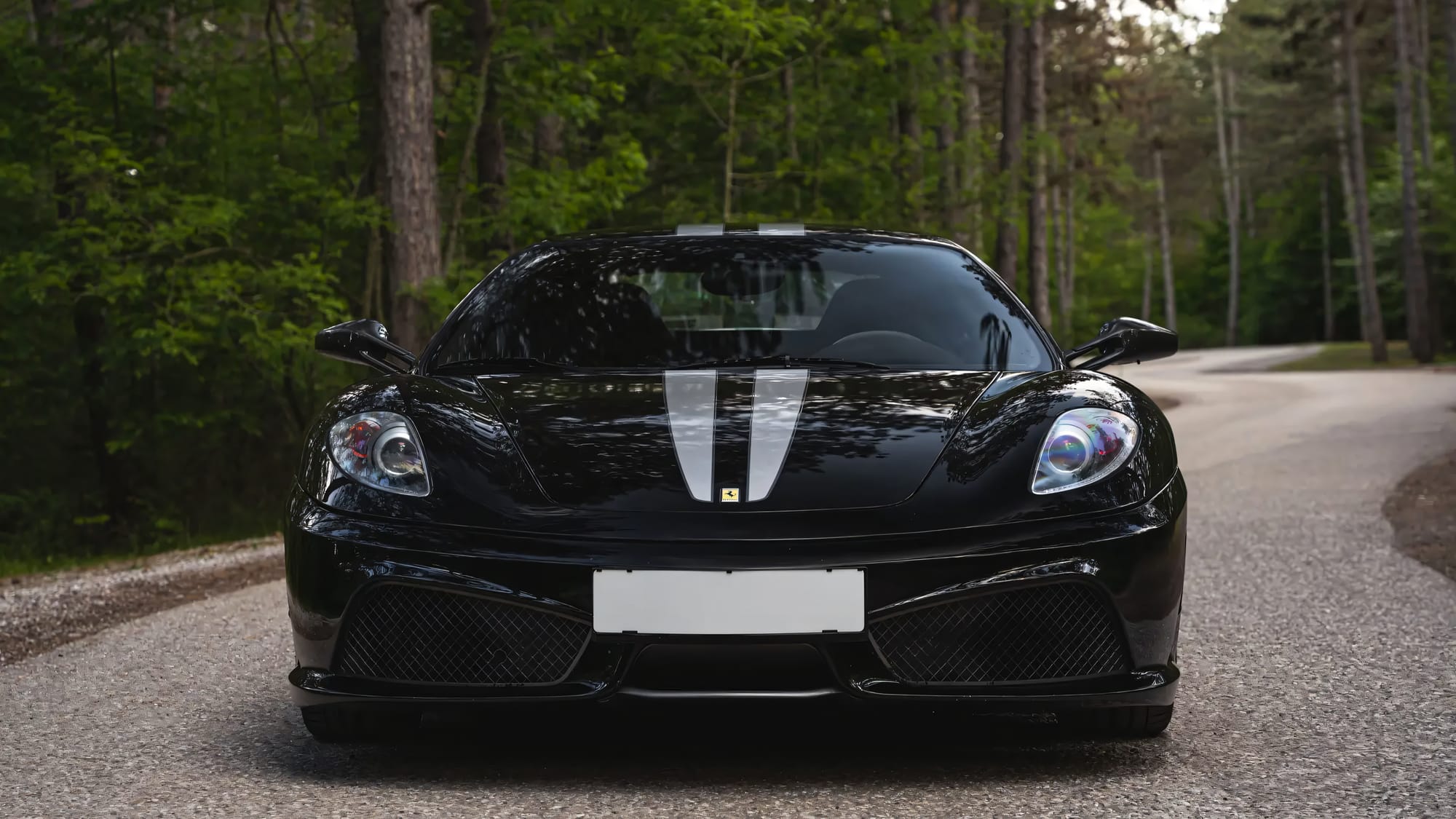
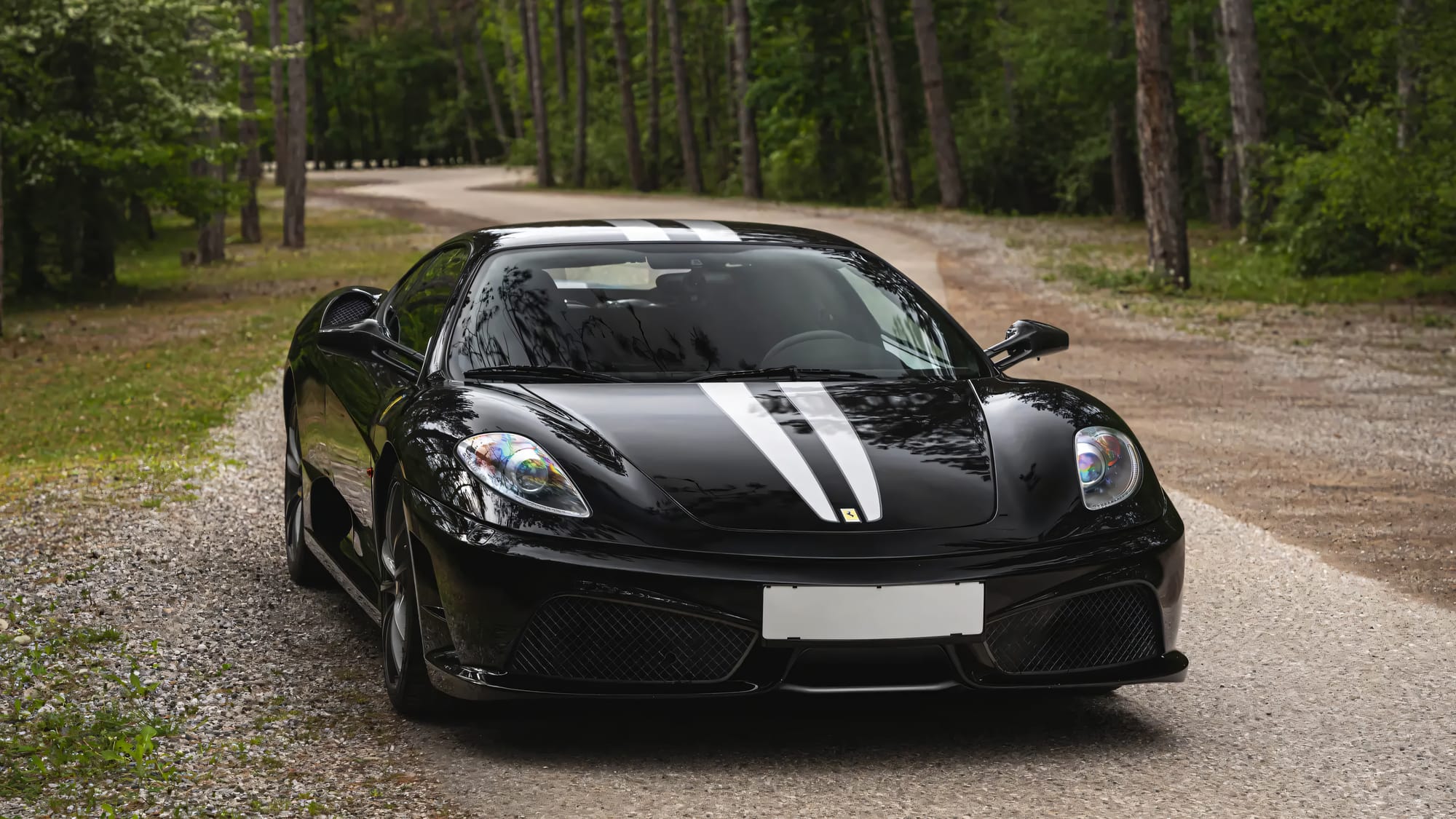
Pininfarina's body for the Scuderia evolved the F430's already strong proportions rather than departing from them. The visual signature is one of intent rather than flamboyance - a wider front splitter, a more aggressive rear diffuser, and a chin that sits close enough to the road to make supermarket car parks a mildly anxious experience. Racing stripes were offered across the colour range and became the defining visual signature of the model, anchoring the car's aesthetic firmly in the motorsport lineage from which it sprang. The cockpit stripped away much of the standard F430's upholstery in favour of carbon fibre and aluminium panels, with lightweight seats trimmed in technical fabric that grip the occupant without the bulk of conventional padding. The manettino dial on the steering wheel received a reconfigured map that acknowledged this was now a car for people who intended to use the full range of the chassis, with settings calibrated for circuit use rather than merely aggressive road driving.
On the road and on track, the Scuderia's most celebrated characteristic is its hydraulic steering - a system that was already facing obsolescence in the industry at large when the car was built, and which Ferrari would abandon on the 458 Italia that replaced it. The rack is not particularly quick by contemporary standards, requiring slightly more input than modern drivers accustomed to electronically assisted setups might expect, but the information it transmits through the wheel is extraordinary. You can feel the front tyres loading up, sense the onset of understeer as weight transfers forward under braking, and detect the subtle changes in road texture that tell you whether grip is building or diminishing. A supercar driver who trained on this steering would arrive in any subsequent car better educated for the experience. The brakes - Brembo carbon-ceramic discs front and rear - shed speed with a matter-of-fact authority that the reviewers at Rush magazine described as "a typically Italian shrug of the shoulders," which captures perfectly the combination of violence and nonchalance they deliver. The overall dynamic character is one of sublime balance and almost zero inertia, a car that responds to inputs so immediately that the usual fraction-of-a-second delay between thought and action seems to disappear.
The Scuderia's strengths are, in many ways, symptoms of a precise historical moment. It represents the last Ferrari mid-engine V8 to combine naturally aspirated power with hydraulic steering and a chassis that had been honed specifically for the enthusiast driver rather than calibrated around electronics designed to make mediocre inputs feel competent. That combination now reads as something of a farewell - a concentrated expression of an analogue philosophy that the 458 Italia, for all its brilliance, would begin to soften, and that the turbocharged 488 of 2015 would effectively conclude. The Scuderia also benefits from the F430 Challenge's race-bred heritage in a way that is genuinely traceable rather than merely claimed in marketing material, and Schumacher's input introduced a calibration standard that was verifiably elite.
The drawbacks, however, are real and worth understanding. The single-clutch SuperFast2 gearbox, for all its track-day ferocity, is a deeply unhappy mechanism in slow urban traffic. Unlike the dual-clutch transmissions that arrived on later Ferraris, the single-clutch unit requires a specific driving technique at low speeds - a release of throttle at just the right moment, an acceptance that parking lot maneuvers will involve lurching - that newcomers find tiresome and that even experienced owners describe as a learned skill rather than a pleasure. Ownership costs are not for the faint-hearted: the F430 platform is known for its appetite for service expenditure, and the Scuderia's rose joints - metal-to-metal suspension components that give the chassis its track-worthy rigidity - produce a constant low-frequency clinking over road imperfections that some owners come to appreciate as character and others find wearing after several years. The carbon fibre in the engine bay can also discolour with heat over time, which is a cosmetic irritant on a car that commands considerable money.
The cultural impact of the 430 Scuderia is perhaps most clearly visible in the secondary market. Ferrari produced approximately 1,800 coupes before production ended in 2009 to make way for the 458 Italia. That relative scarcity, combined with the car's position as the last of a specific analogue lineage, has made it increasingly sought-after among collectors who are not primarily interested in depreciation-proof assets but in driving machines with genuine character. Ferrari enthusiasts who have sampled both the Scuderia and the technically superior 458 Speciale frequently return to the Scuderia as the more emotionally communicative machine - a telling endorsement from a community that is rarely sentimental without reason.
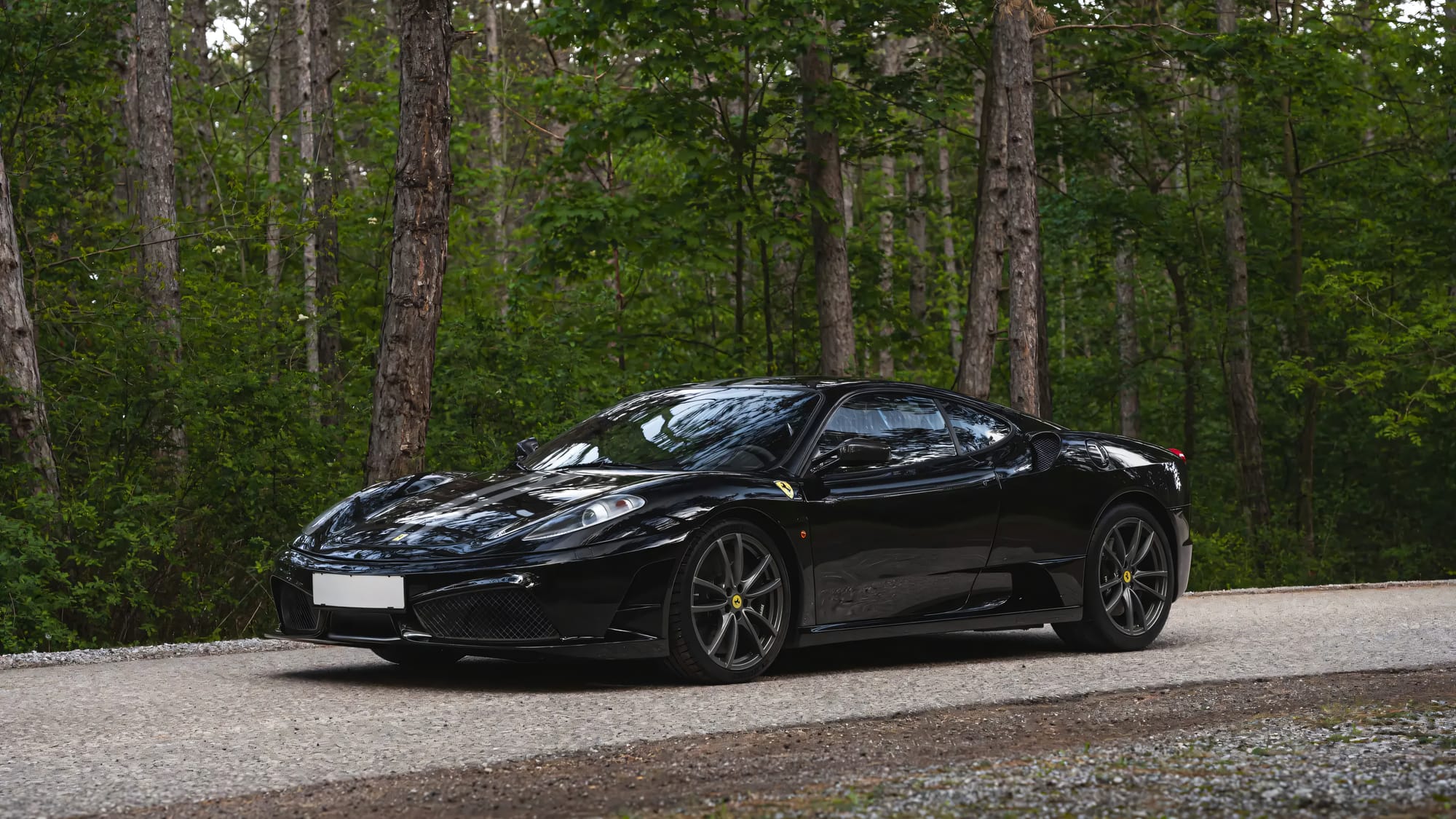
The press response at launch was uniformly enthusiastic without quite grasping the full significance of what Ferrari had built. Car and Driver noted in 2008 that the Scuderia was "equally fantastic" on road and track, with a ride quality that was "outstandingly composed" at softer damper settings - praise that was accurate but perhaps insufficient given what the car turned out to mean in retrospect. What reviewers were describing was the last great expression of a specific Ferrari philosophy: maximum driver involvement through minimum electronic mediation, achieved through engineering excellence rather than the artificial amplification of sensation. By the time the 458 arrived and raised the objective performance bar with a dual-clutch gearbox and electric power steering, the industry had moved on. The 430 Scuderia had not moved on. It had simply been definitive at a moment that turned out to be a threshold.
The Fiorano stopwatch reading of 1:25.0 still matters, not because it proved the Scuderia was fast - plenty of cars are fast - but because of what it cost to achieve. It cost 100 kilograms. It cost Schumacher's attention. It cost Ferrari's competitions department years of learning on racetracks where the only acceptable feedback is a faster lap time. And it cost buyers approximately a quarter of a million dollars, which at the time felt like a lot and in hindsight, given what they received, feels more reasonable with every passing year.