1994 Lamborghini Diablo: The Last Raw Supercar Legend
The 1994 Lamborghini Diablo was the last Lamborghini built on pure Italian passion - a 325 km/h V12 monster that demanded everything from its driver.
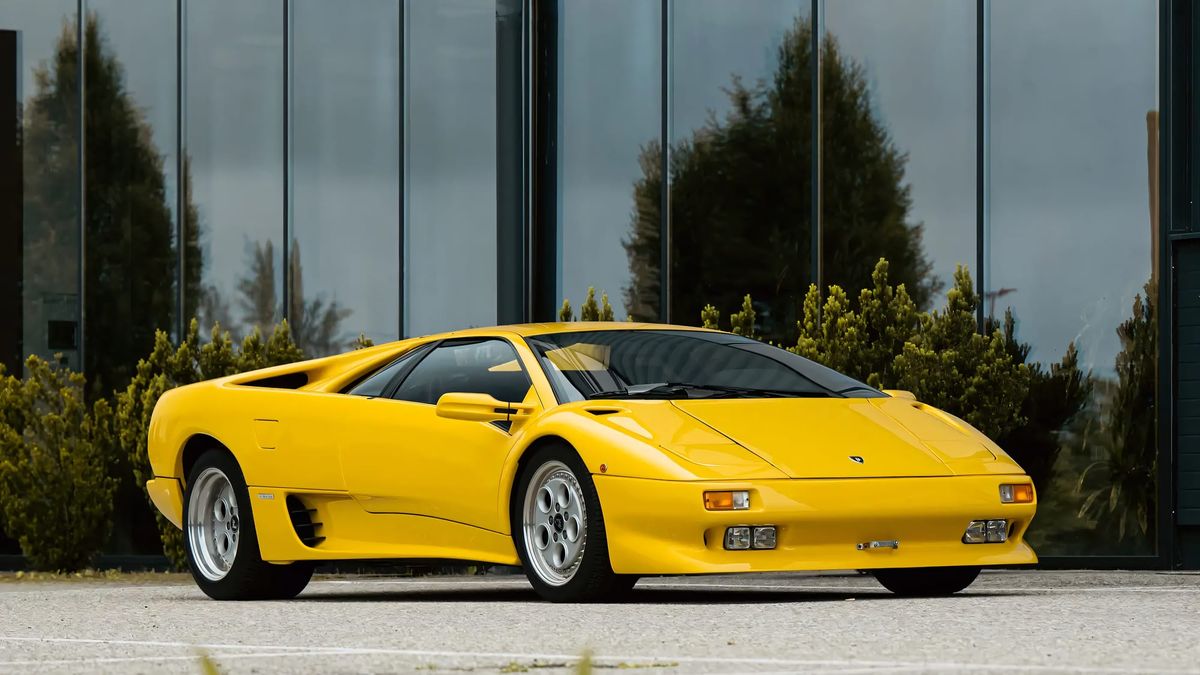
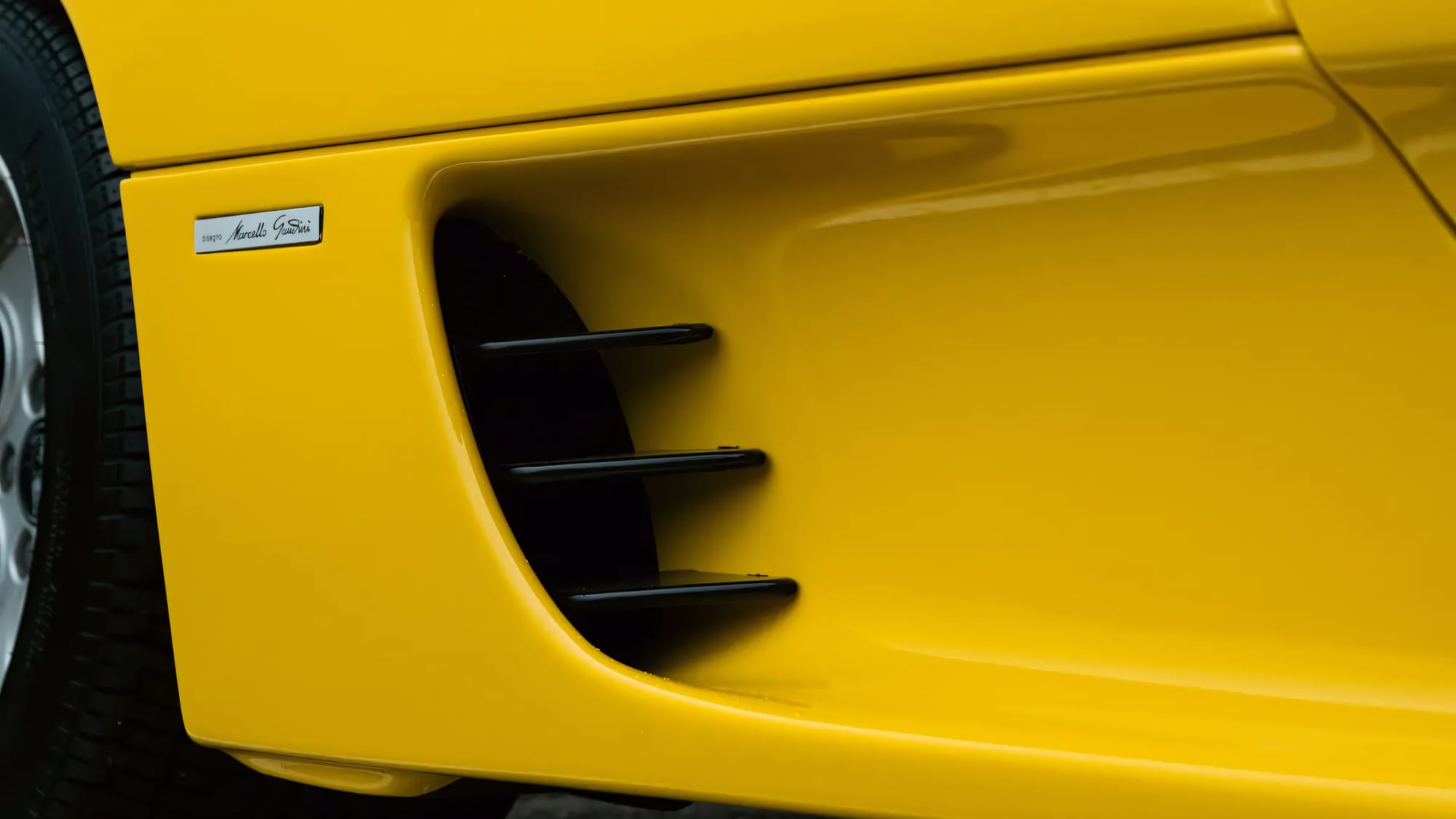
Marcello Gandini's original design for what would become the Diablo was so aggressively wedged, so mercilessly sharp at every crease and corner, that when Chrysler Corporation arrived at Lamborghini's Sant'Agata factory following their 1987 acquisition, their Detroit design team reportedly looked at the P132 prototype and quietly commissioned an extensive rethink. The edges were softened. The extremities were rounded. The outright aggression of Gandini's vision was tempered into something that - by the standards of the late 1980s supercar market - was merely extraordinary. Gandini, characteristically, had so little interest in watching his original work diluted that he simply sold those discarded lines to someone else, and they reappeared as the wild-eyed Cizeta-Moroder V16T. The car that reached the public on the 21st of January 1990 was the compromise version, and it remains one of the most captivating automobiles of the twentieth century.
Named for a ferocious fighting bull raised by the Duke of Veragua - specifically, a beast that fought the matador El Chicorro in Madrid on 11 July 1869 - the Diablo arrived as an 11-year project, with development beginning as far back as June 1985 under the codename P132. The brief was straightforward: replace the Countach, and achieve a minimum top speed of 315 km/h. Lamborghini's engineers exceeded it. Powered by a 5.7-litre dual-overhead-cam V12 breathing through computer-controlled multi-point fuel injection, the original Diablo produced 492 PS and 580 Nm of torque, returning a claimed 325 km/h - the first production Lamborghini to breach the 200 mph barrier. Auto Motor und Sport measured the sprint to 100 km/h in 4.5 seconds, and reaching 200 km/h took just 13.7 seconds. The 6 billion Lire development cost had bought something genuinely formidable.
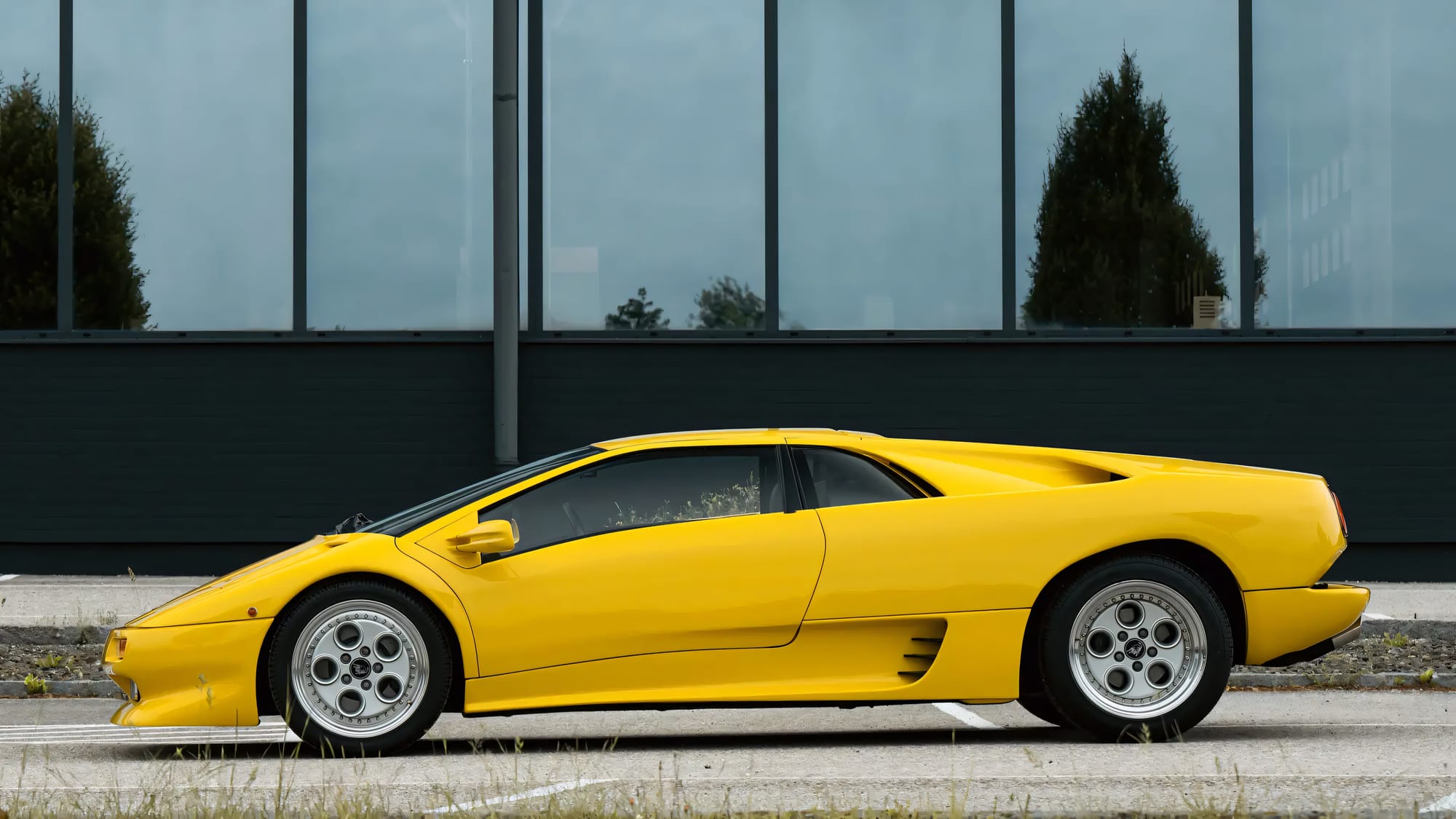
What the specification sheet didn't mention was the physical commitment required to drive it. Early Diablos - built from 1990 through to the 1993 introduction of the VT variant - had no power steering, and at parking speeds the car communicated its displeasure at every corrective input. This was not oversight; it was a consequence of packaging a mid-mounted V12 in a body barely wider than the engine itself, and it remains the defining sensory fact about the pre-VT car. The flat dashboard carried a distinctive "cliff" instrument binnacle that rose vertically from the panel like a wall - an oddly architectural detail that interior designers of the era seemed determined to defend even when the rest of automotive design had moved on. Visibility was compromised in every direction except the windshield. The car weighed 1,576 kg with a 41/59 front-to-rear weight distribution, a rear bias that, combined with the rear-wheel-drive layout, demanded the driver's complete concentration when the V12 exhaled hard onto cold asphalt.
The 1993 Diablo VT answered several of these criticisms at once. The VT - for Viscous Traction - introduced Lamborghini's first all-wheel-drive production car, using a viscous centre differential to direct up to 25 percent of engine torque forward during rear-wheel slip. Power steering arrived with it, as did four-piston brake calipers and electronically adjustable dampers. The VT was not a defanged Diablo; it remained a rear-biased, muscular animal. But it was one that a talented driver could now tame with rather more regularity, and its combination of everyday usability and headline performance positioned it as the sensible choice in a range that had, by this point, found considerable success with buyers who desired the spectacle of a Lamborghini but preferred their cars to remain on the road.
The same year brought the SE30, a limited run of 150 examples built to commemorate the marque's 30th anniversary. The SE30 deleted the air conditioning, stereo, and power steering, replaced the glass side windows with fixed Plexiglas, and installed carbon-fibre seats with four-point harnesses and a fire suppression system. The engine received a tuned fuel system, magnesium intake manifolds and a freer exhaust, lifting output to 525 PS - and about 28 of those 150 were subsequently converted to Jota specification, a factory kit that raised power further still to 595 PS. These are among the purest of all Diablos, and the rarest in meaningful spirit.
The 1995 Geneva Motor Show introduced the SV - Super Veloce - a title resurrected from the Miura era. The SV was priced below the standard Diablo while making more power: 510 PS through rear wheels only, with an adjustable spoiler and 18-inch front wheels to handle the wider front brake package. This paradox - entry-level by price, faster by output - made it the enthusiast's Diablo, the variant that demanded the most skill and offered the most sensation. Also in 1995 arrived the VT Roadster, Lamborghini's first open-top V12 production model, featuring a manually removable carbon-fibre targa panel stored above the engine lid.
The 1999 facelift brought the most divisive change in the car's history. Out went the pop-up headlamps, those theatrically rising units that had become synonymous with the shape - and in came fixed composite lenses borrowed, under license, from the Nissan 300ZX (Z32). The argument was aerodynamic efficiency and reliability; the counter-argument, made by every enthusiast who noticed the origin, needed little elaboration. The revised interior replaced the upright binnacle with an integrated wave-shaped dashboard - aesthetically inspired, Lamborghini claimed, by Bang & Olufsen's Hi-Fi design language. ABS arrived as standard equipment across the range, fitted with Kelsey-Hayes hardware.
The final flowering of the Diablo came after Audi's 1998 acquisition of Lamborghini. The VT 6.0, refined by designer Luc Donckerwolke, paired the enlarged 6.0-litre V12 - which had made its debut in the extraordinary 80-unit Diablo GT - with 550 PS and 620 Nm, channelled through a revised viscous traction all-wheel-drive system. The car was quieter and more composed than any previous Diablo, and that is both a genuine achievement and a fair criticism: the Audi-era cars had manners where the early ones had moods.
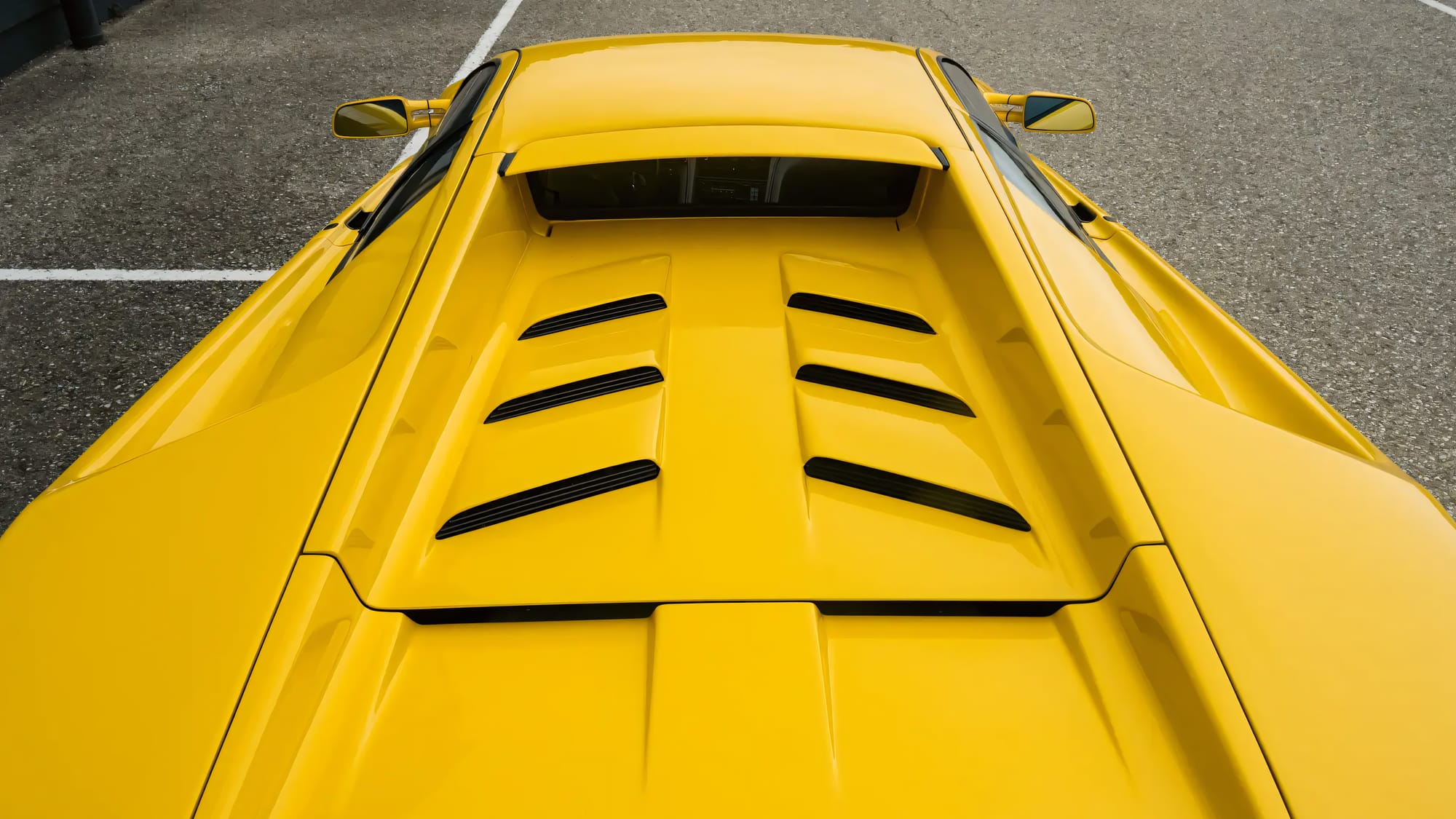
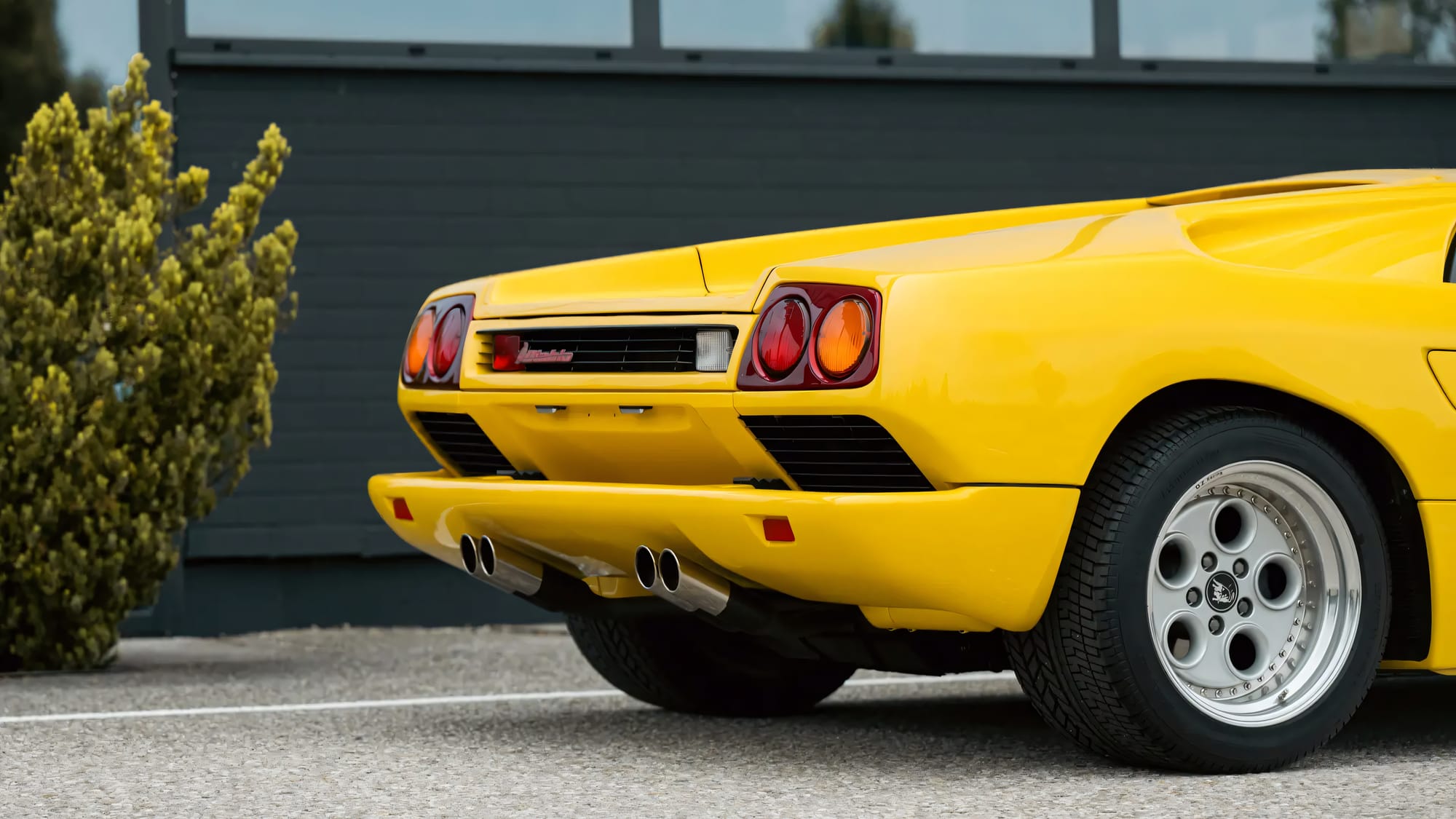
The Diablo GT itself deserves separate acknowledgement. With a carbon-fibre body, a stripped interior, a rear bumper discarded entirely in favour of a carbon diffuser, and the 6.0-litre V12 producing 575 PS, all 83 examples were sold immediately, and the GT remains the high-water mark of raw Diablo character. Its successor in the one-make race series, the GTR, pushed the same architecture to 590 PS with titanium connecting rods and individual throttle bodies, achieving genuine competitive results including back-to-back Australian Nations Cup championships in 2003 and 2004 under Paul Stokell.
By the time production ceased in 2001, Lamborghini had built 2,903 Diablos across all variants and over eleven years. The car that replaced it, the Murciélago, was unambiguously a more accomplished machine - more powerful, better built, more composed in corners, easier to place quickly on a road. None of those arguments matter to the people who will always prefer the Diablo. They prefer it precisely because it was demanding, because its dimensions were generous compared to its cockpit, because its V12 required revs before it delivered its full authority, because the early cars without power steering told you everything about their mood through the rim of the wheel. The Diablo was the last Lamborghini built entirely before the German engineers arrived - the last model whose character was shaped entirely by the people who had also created the Miura and the Countach, with all the brilliance and all the intractability that implies. The poster on a million bedroom walls was not wrong to put it there.