1974 Ferrari 365 GT4 2+2 by Pininfarina
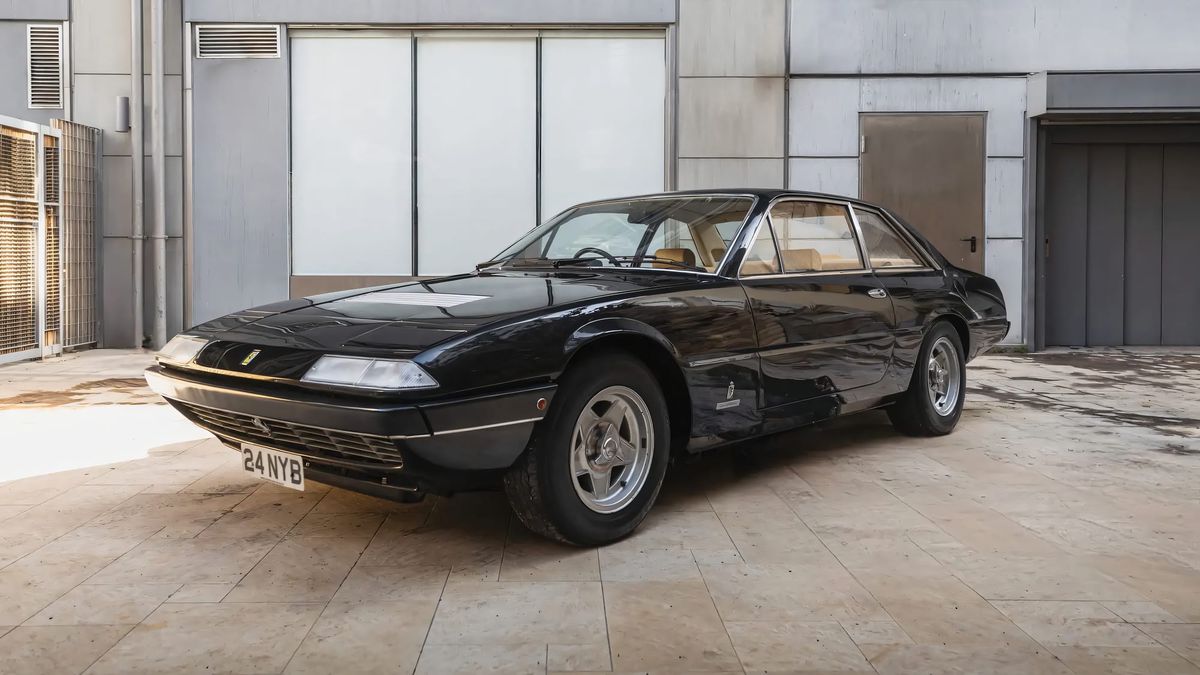
Asking Leonardo Fioravanti of Pininfarina to draw a sensible Ferrari was perhaps the most paradoxical brief in Maranello's history. Yet that was essentially the task handed to the designer in 1971, following growing criticism that the 365 GTC/4 - for all its talents - could not adequately accommodate four adults, and that Ferrari's increasingly affluent, family-oriented clientele wanted the cavallino on the bonnet without the cramped rear quarters. The car that emerged from those conversations, unveiled at the 1972 Paris Motor Show, was the 365 GT4 2+2: angular where its predecessor had been feline, upright where it had been raked, and deliberately restrained where a Ferrari might ordinarily have screamed for attention. It was a deeply unusual proposition from Maranello, and it remains one of the most misunderstood.
The name tells you almost everything you need to know about how Ferrari thought about this car. Following the marque's convention, "365" denotes the single-cylinder displacement in cubic centimetres - each of the twelve cylinders displacing precisely 365.86cc for a total of 4,390.35cc. "GT4" acknowledges the four overhead camshafts working across the Colombo-derived V12's twin banks, and "2+2" is the polite shorthand for what the whole exercise was actually about: fitting two proper rear seats behind two properly sporty front ones. It is one of the more honest model names in Ferrari's history, delivering a specification sheet in four characters.
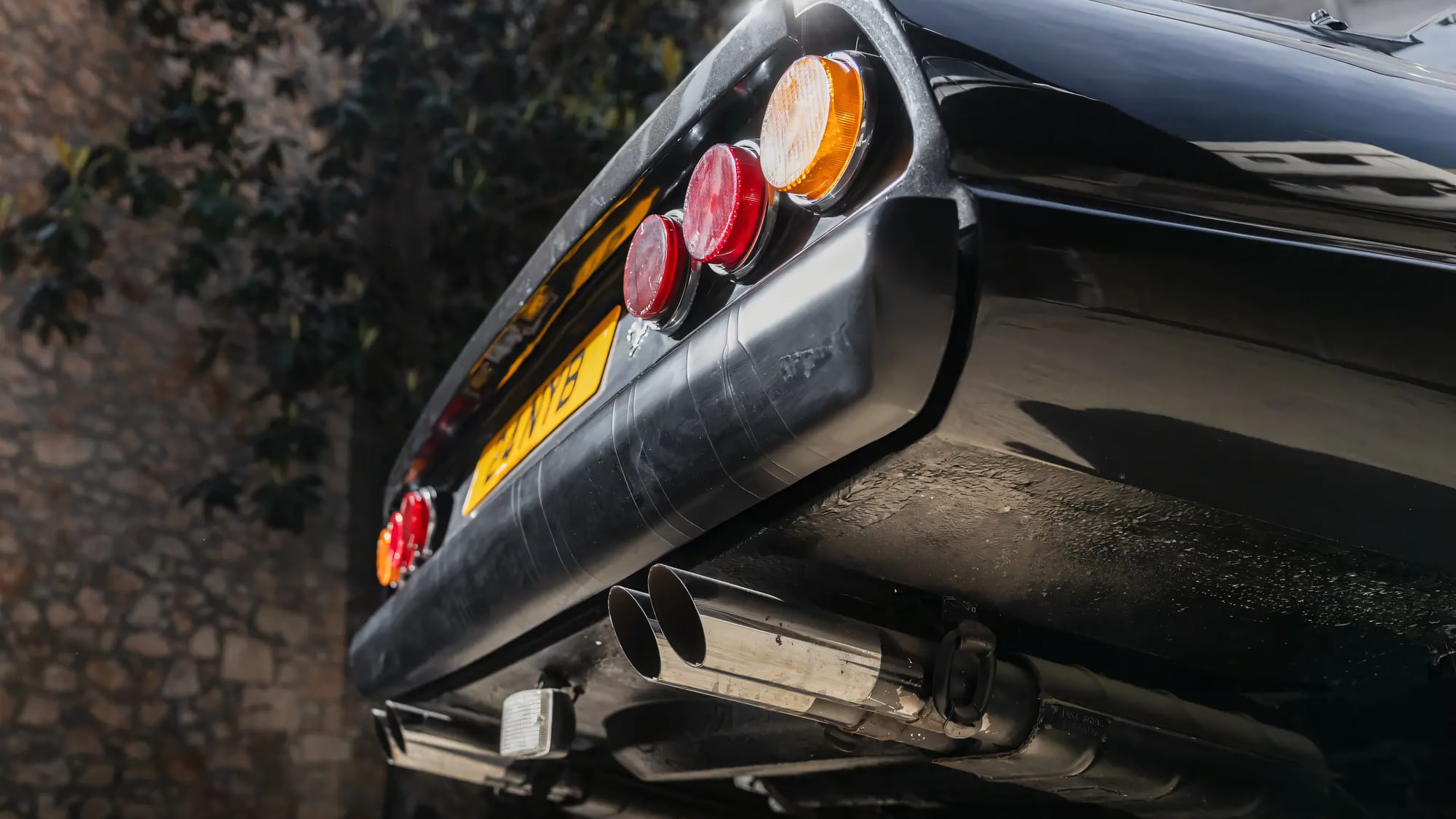
Ferrari offered the 365 GT4 2+2 in a single, uncomplicated variant throughout its four-year production run from 1972 to 1976, with approximately 524 units built, including three prototypes. That relative scarcity - by the standards of a model built to serve Ferrari's broader grand touring market - was partly deliberate and partly a function of the hand-assembled production process, where bodies were completed and trimmed at Pininfarina's Turin plant before being shipped to Maranello for mechanical assembly. It was an unambiguously European proposition: no version was ever officially sold in the United States, because Enzo Ferrari concluded - with the Nixon-era 55mph speed limit and tightening emissions legislation in mind - that America's appetite for twelve-cylinder luxury was already satisfied by his eight-cylinder offerings. Many cars found their way there regardless, via the grey market, which speaks to the universal pull of the formula.
The mechanical foundation of the 365 GT4 2+2 was the tubular steel chassis borrowed from the GTC/4, but stretched by 200mm in the wheelbase - now sitting at 2,700mm - to carve out that critical rear cabin space. The suspension geometry was double wishbones at each corner with coil springs, telescopic dampers, and anti-roll bars, but the rear axle carried a hydraulic self-levelling system: a quiet acknowledgment that rear passengers and their luggage might upset the 1,500kg car's composure at speed. Power steering was standard equipment, operating through a recirculating-ball system rather than the more communicative rack-and-pinion setup. It was comfortable and light - appropriate to the car's mission - but it sacrificed the tactile feedback that purists craved.
The engine, however, was hardly a compromise. The V12, a 60-degree alloy unit with twin overhead camshafts per bank and 24 valves in total, breathed through six side-draft Weber 38 DCOE carburettors and produced 340PS at 6,200rpm. Drive was sent rearward through a five-speed, fully synchromesh manual gearbox with a single-plate clutch, the transmission being bolted directly to the engine and connected to a rear limited-slip differential by a conventional driveshaft. The result was 335bhp at your right foot, hauling a car that - at 1,500kg dry - weighed meaningfully more than any contemporary two-seater bearing the same prancing horse badge. The claimed top speed hovered around 152mph depending on which market's homologation paperwork you trust, with 0–62mph dispatched in approximately 6.5 seconds: figures that placed the car firmly ahead of its obvious grand touring rivals, including the Jaguar XJ12, which would simply have watched the Ferrari disappear down the road.
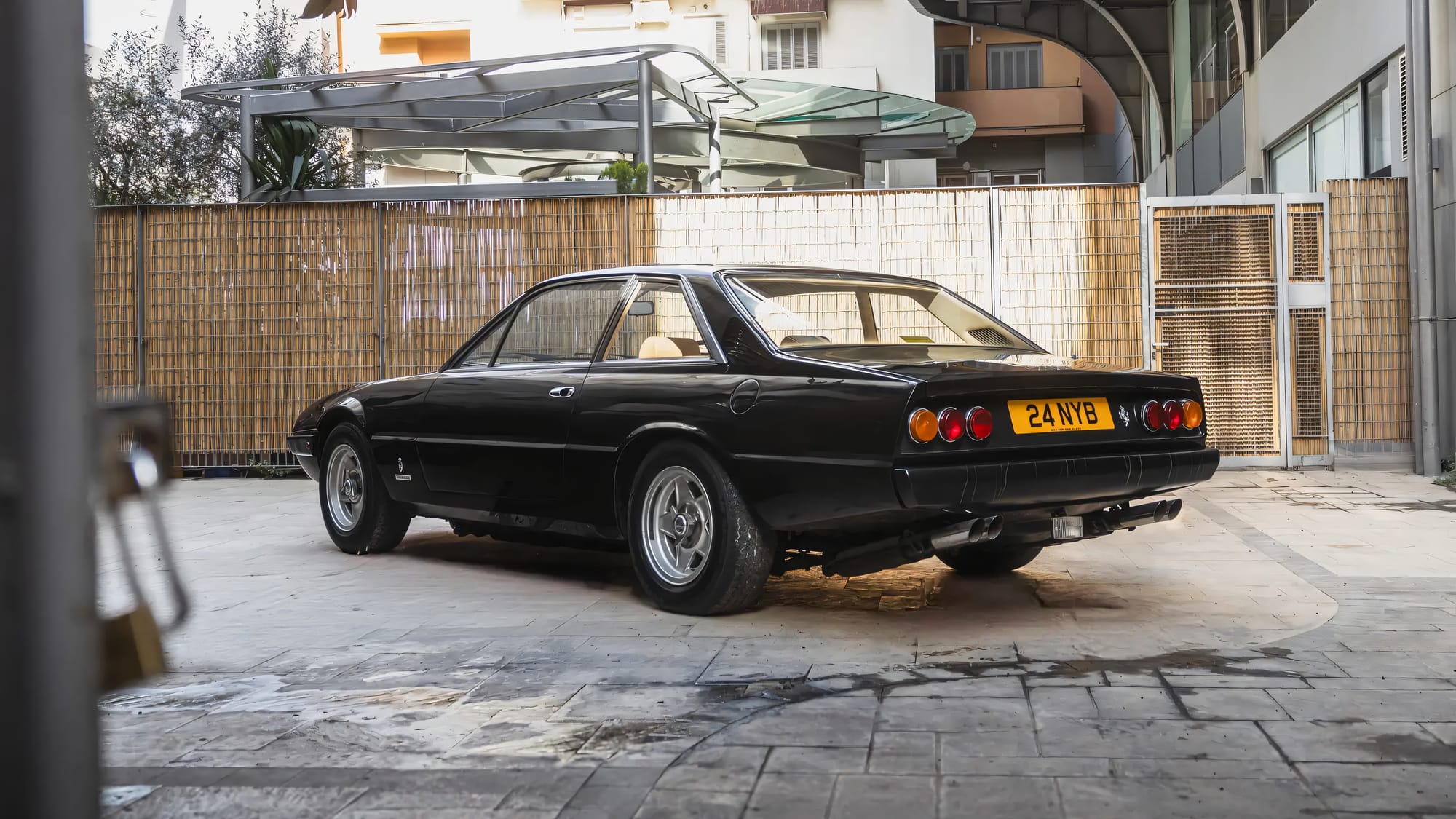
Fioravanti's design philosophy for the body was the three-box form - a decision that represented a clear and deliberate break from the fastback lineage of the GTC/4 and the dramatic Daytona before it. The 365 GT4 2+2 did, however, carry over one of the Daytona's most distinctive visual signatures: the raised swage line that divides the bodywork horizontally into upper and lower halves, making it the second Ferrari to use this device. The glasshouse was notably large, giving the cabin an airy, almost Teutonic quality at odds with the brooding Italian sports car tradition, and the overall impression was one of, as Ferrari's own documentation put it, "genteel refinement exuding an air of sporting luxury." Standard equipment ran to full leather upholstery, electric windows, and air conditioning - not merely gesture features but genuine, usable luxury appointments appropriate for the intercontinental runs that were the car's natural habitat.
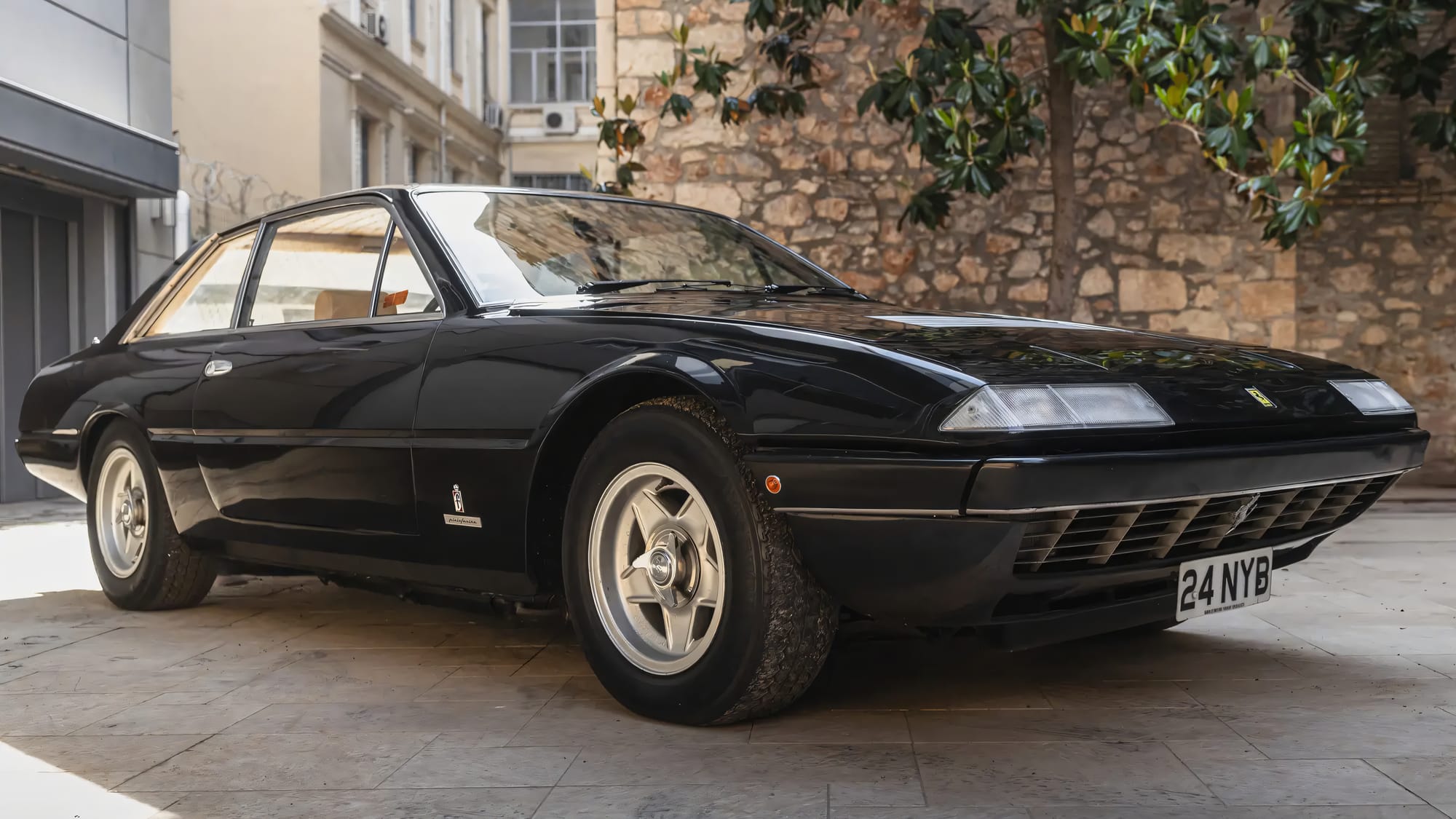
Behind the wheel, the 365 GT4 2+2 revealed its character gradually rather than all at once. This was not a car that performed for spectators. Its power delivery was smooth and progressive, the V12's torque peak arriving at a measured 4,000rpm and remaining broadly available through the rev range. The five-speed gearbox gave the driver something meaningful to do on long runs, and the steering - light as it was - conveyed enough information to place the car accurately on fast, sweeping roads. Contemporary drivers who pressed deeper found that the 365 GT4 was both faster and more nimble than its dimensions suggested, and the car's self-levelling rear suspension maintained composure even when heavily laden. What it was not, and what it was never intended to be, was a track instrument. The ride quality was deliberately cushioned, body movements were gentle rather than taut, and the recirculating-ball steering wrapped the whole experience in a layer of insulation that was exactly right for covering large distances at speed in unruffled comfort.
The engineering genuinely admirable in the 365 GT4 2+2 is, in many ways, its refusal to make obvious concessions. The wheelbase was lengthened - but not so much that the proportions were ruined. The power output was maintained from the GTC/4's specification - but channelled through a car nearly four centimetres taller and appreciably heavier. The self-levelling rear suspension solved a real load-carrying problem elegantly, without resorting to air springs or overly complex active systems. And the choice to retain the manual gearbox exclusively - without the automatic option that would arrive with the successor 400 in 1976 - kept the 365 GT4 2+2 honest to its sporting identity throughout its entire production life. For today's collectors, that manual-only configuration represents a significant attraction: the GM THM400 three-speed automatic fitted to the 400 was widely and fairly criticised as an unworthy fitment for a twelve-cylinder Ferrari, and the 365 escaped that legacy entirely.
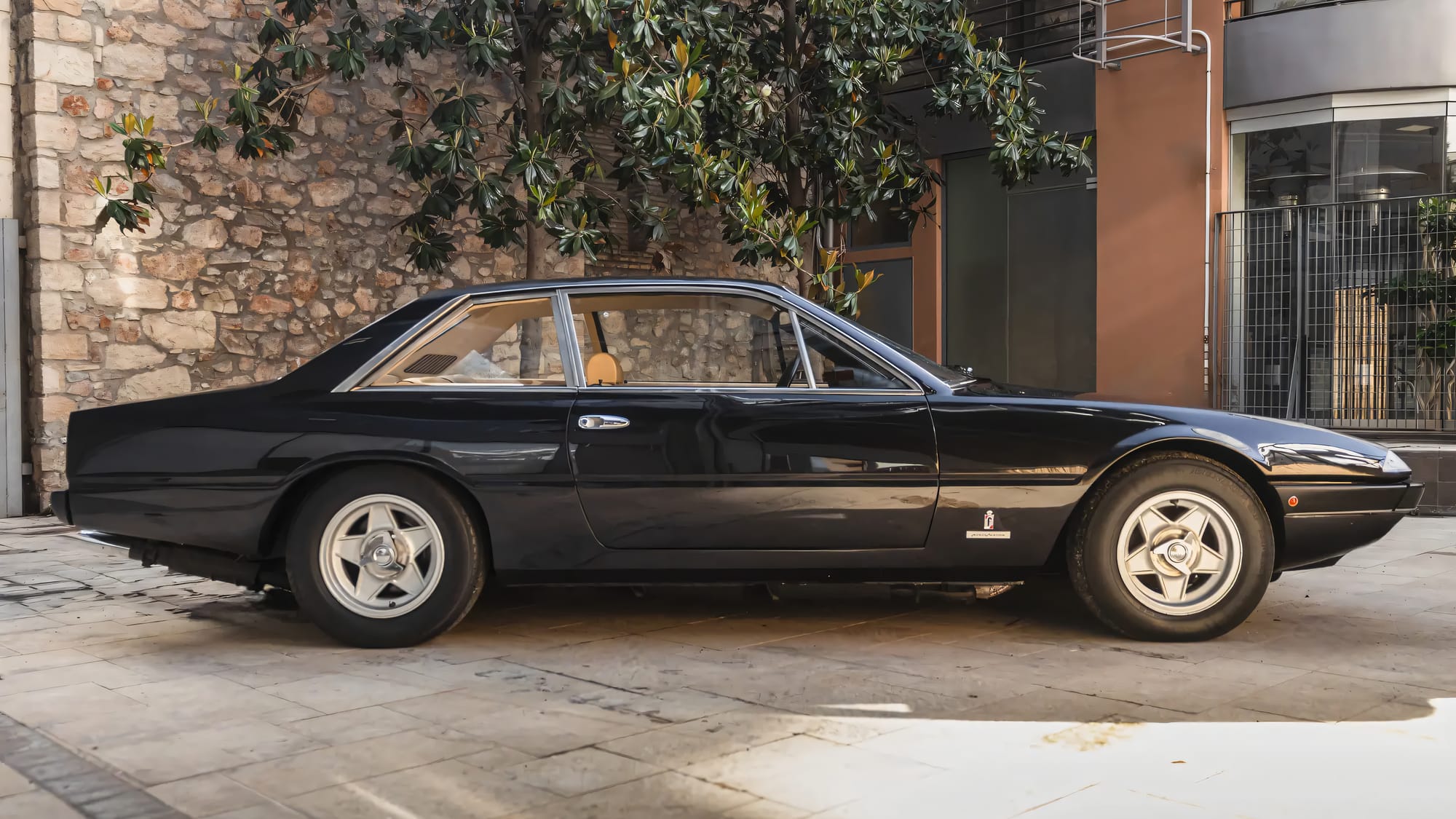
The weaknesses, though, are real and worth stating plainly. The fuel consumption was brutish - early drivers noted roughly 12mpg when driven with restraint, and considerably less when the V12 was given its head. Running costs were, and remain, commensurate with the engineering: six Weber carburettors in perfect synchronisation require patient, knowledgeable attention, and the complexity of the Tipo F101 V12 - magnificent as it is - means that neglect shows quickly and expensively. The steering, while appropriate in spirit, sacrificed a degree of feedback that more driver-focused alternatives delivered. And the styling, which Fioravanti designed as an exercise in restraint, has proven genuinely divisive in a way that other Ferraris from the same era have not. The BBC's "Crap Cars" list placed the broader F101 family at number eighteen, and Jeremy Clarkson, never one for nuance, described it as "awful in every way." These assessments are harsher than the car deserves, but they point to a real issue: the 365 GT4 2+2 does not court immediate admiration the way the Daytona or the Dino does.
The historical significance of the 365 GT4 2+2 rests primarily in what it started. The car launched Ferrari's longest-ever production family - the F101 lineage - which ran through the 400, 400i, and ultimately the 412 produced until 1989: seventeen continuous years of front-engined V12 grand touring. It established a template for how Ferrari could serve customers who valued practicality alongside performance, a template that was eventually succeeded by the 456 in 1992. The connection to that era of Ferrari is palpable in the ownership history of individual cars: Niki Lauda, having signed his Ferrari Formula One contract in 1973, received a 365 GT4 2+2 as his company car - delivered in Grigio Argento over Blu leather - and drove it while on his way to becoming World Champion two years later at Monza. That Ferrari chose this model to represent the marque in the hands of its racing flagship driver says something about the esteem in which Maranello held it.
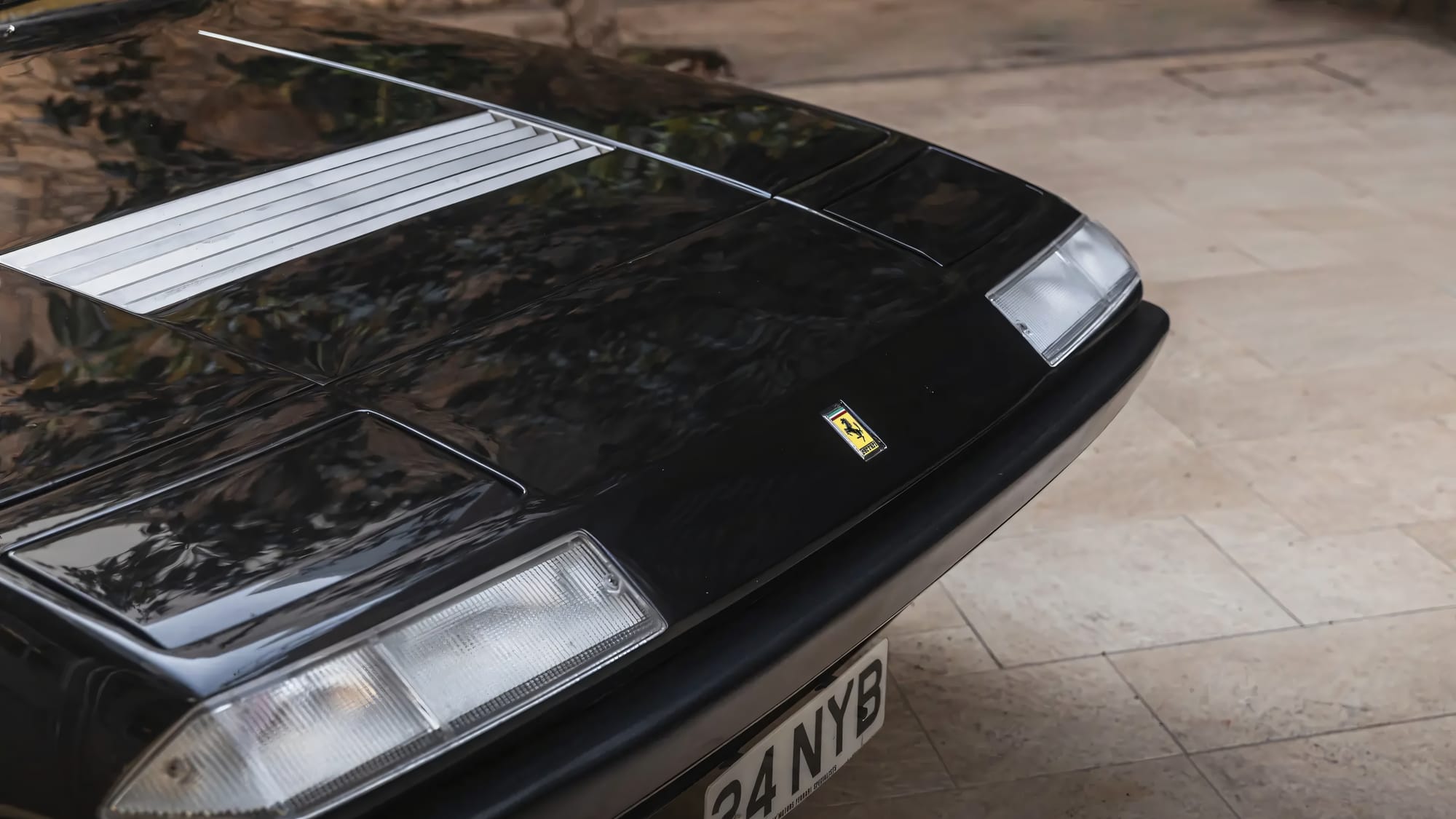
Critical reception has mellowed considerably with time. What once seemed dowdy has gradually revealed itself as measured. Motoring journalist L.J.K. Setright, writing in CAR magazine in 1984, described the F101 bodywork as "one of the few most beautiful, and one of the two most elegant, bodies ever to leave the lead of Pininfarina's pencilling vision" - an outlying view in his era, but one that looks increasingly prescient. Stephen Frankel of Goodwood Road & Racing has made a sustained case for the 365 GT4 2+2 as the most underrated V12 Ferrari in existence, pointing to a car that was built in relatively small numbers, demands daily-driver ability, offers genuine V12 theatre, and remains - even now - priced well below its emotional and mechanical peers. Values have risen steadily from the single-digit thousands that scruffy automatic 400i examples once commanded, with clean manual 365 GT4 examples now trading comfortably into six figures in Europe. That trajectory suggests the market is finally catching up with what the more perceptive enthusiasts understood for decades: this was never a lesser Ferrari. It was always a different one.