1967 Ferrari 275 GTB/4 Alloy by Scaglietti
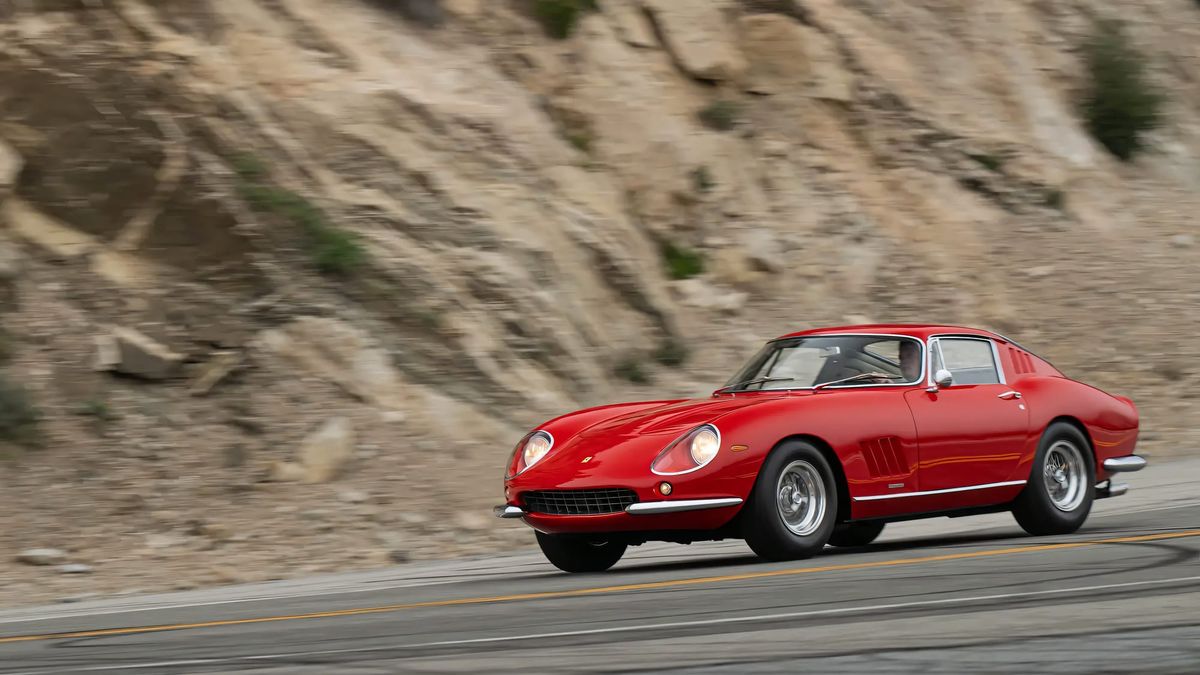
Scaglietti's craftsmen could do things with aluminum that no press tool could match, and when Ferrari quietly offered to clothe sixteen GTB/4s in hand-formed alloy bodywork rather than the standard steel, it wasn't marketing - it was a private acknowledgment between Maranello and a handful of serious clients that the car's full potential demanded a lighter skin. The result was the 275 GTB/4 Alloy, a car that exists at the precise intersection of road car and racing machine, a formula Ferrari pursued throughout the 1960s with increasing ambition and arrived at, here, about as completely as they ever would.
To understand what that means, you have to trace the lineage. The 275 GTB arrived at the 1964 Paris Motor Show as the successor to the 250 series, carrying with it two engineering milestones that would define how Ferraris felt to drive for the rest of the decade: the transaxle gearbox and fully independent rear suspension. Ferrari had already proved both concepts on the racetrack; the 275 GTB was simply the company's acknowledgment that its road cars deserved the same sophistication. The Colombo short-block V12, already a legend in the 250 series, was stroked to 3,285cc and designated the Tipo 213, producing a claimed 280 horsepower in standard specification. The 275 GTB was a significant car by any measure - better balanced, more powerful, and more technically ambitious than anything Ferrari had offered a road-going customer before it. And then they kept refining it.
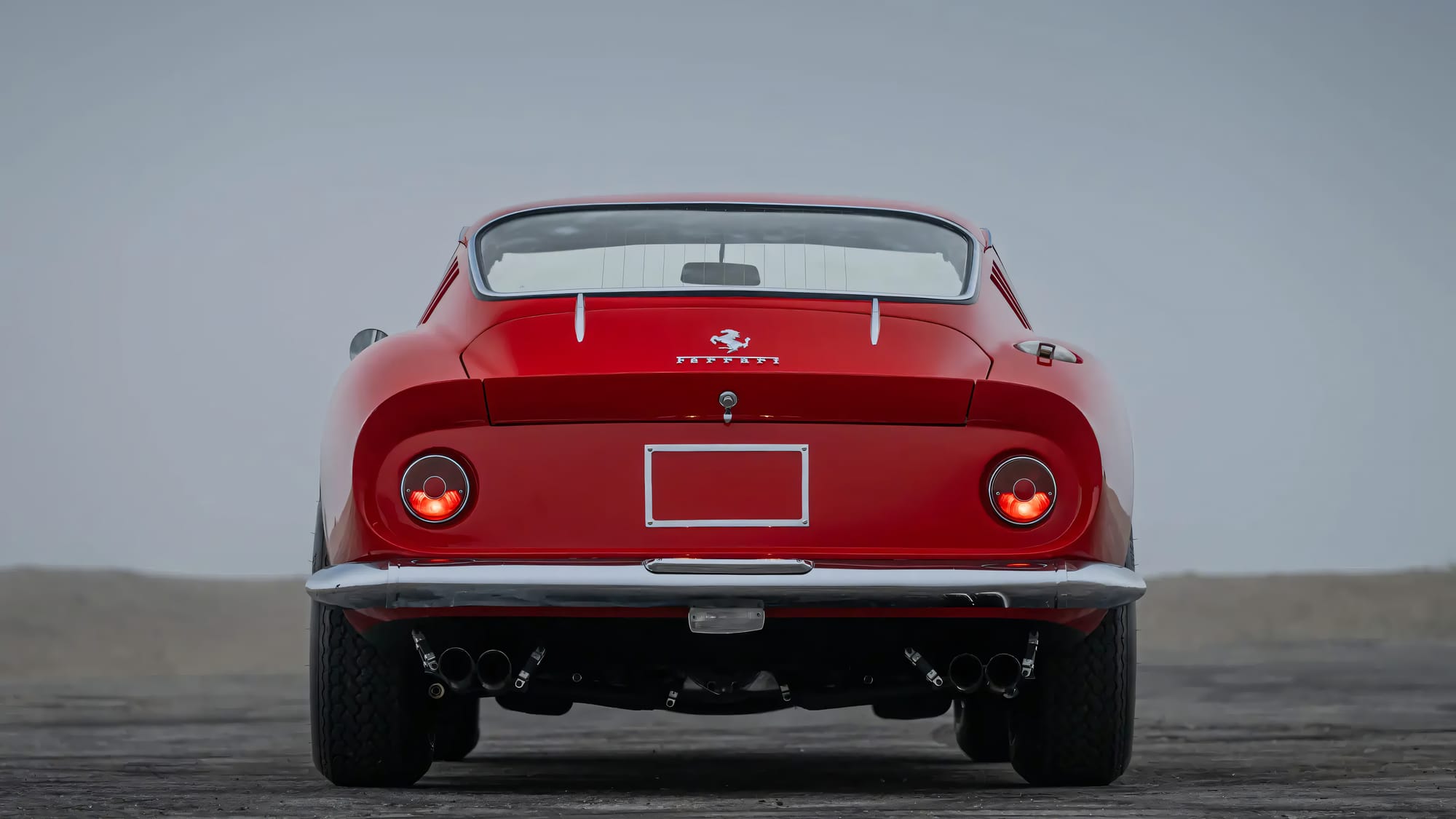
The evolution through production was relentless. Ferrari updated the 275 GTB continuously - the long-nose bodywork arrived, the torque tube driveshaft replaced the earlier open propshaft, and the car grew steadily more resolved with each iteration. When the GTB/4 was presented at the Paris Salon in October 1966, it carried all of those rolling improvements as its baseline, then added the most significant change of all: the Tipo 226 engine, with four overhead camshafts and six Weber 40 DCN carburetors as standard equipment. This was the first production Ferrari to be fitted with the four-cam version of the Colombo V12, a configuration derived directly from the P2 racing prototype. The engine displaced the same 3,285cc as its predecessor, with an unchanged bore and stroke of 77mm by 58.8mm, but the new cylinder heads - with sparking plugs positioned between the camshafts - transformed its character entirely. Output was rated at 300 horsepower at 8,000 rpm, alongside a dry-sump lubrication system that meant it could be pressed hard in cornering without the oil starvation issues that troubled earlier wet-sump V12s.
The alloy body was not a published option with a checkbox in a brochure. It was factory-applied special treatment, the kind that Maranello dispensed to clients it respected - those who understood what they were asking for and why. Scaglietti hand-formed each alloy panel, and the weight savings over a steel-bodied GTB/4 were substantial - around 180 kilograms in the most optimistic estimates, making an already nimble machine genuinely quick in a way the steel car, for all its qualities, simply wasn't. The alloy cars also came with additional performance-oriented factory modifications: special pistons, external fuel filler caps mounted on the flanks for racing-style refueling, and Borrani wire wheels in place of the standard Campagnolo magnesium alloys. These were details drawn from competition practice, fitted to a car intended to be driven hard on the road and, with very little preparation, on a circuit. That was the point.
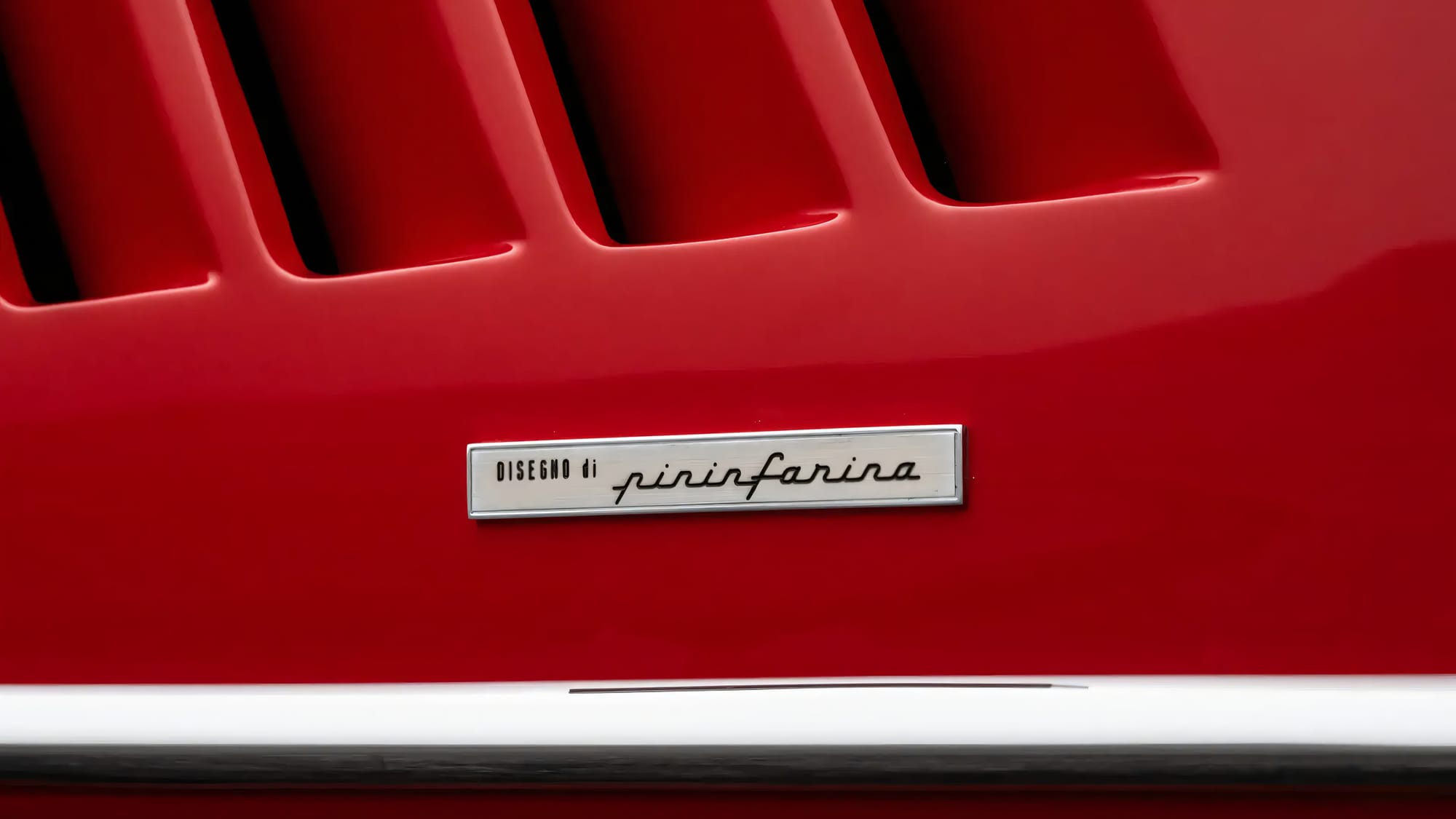
Pininfarina designed the body and Scaglietti built it, and the partnership produced something that has only grown more coherent with age. The GTB/4's silhouette is a refinement of the original 275 GTB shape - the long nose, the set-back cabin, the Kamm tail - updated with a shallow central hood bulge that accommodates the four-cam engine's increased height with minimal drama. There are no aerodynamic appendages, no scoops grafted on as an afterthought. The lines breathe from front to rear as a single thought, and in alloy, there is an additional quality to the surfaces that steel simply cannot match - aluminum, hand-worked, has a subtly organic quality under light that gives the body a life of its own. The interior maintains the standard GTB/4's approach: leather throughout, a wooden-rimmed steering wheel, a dash of elegant simplicity that Ferrari was already abandoning in favor of greater opulence in its larger GT cars of the period.
Driving a 275 GTB/4 Alloy is an exercise in understanding what Ferrari's engineers actually wanted from their cars in this era. The transaxle layout places the gearbox over the rear axle, distributing mass more evenly front-to-rear than any front-engined car with a conventional transmission arrangement could manage. The independent rear suspension, unequal-length wishbones at all four corners, gives the car a poise and adjustability that the older live-axle setups simply could not. In a steel GTB/4 these qualities express themselves as composed, capable grand touring; in the alloy car, stripped of weight it never needed, they express themselves with something close to urgency. The steering, unassisted worm-and-roller, is precise and communicative in the way that modern power-assisted systems rarely manage to be. The car talks to you through the wheel, through the seat, through the throttle pedal - it is an analog experience of considerable intensity, and the four-cam V12 provides a soundtrack appropriate to the occasion. At low revs the Tipo 226 is docile enough, the six Webers pulling cleanly from below 3,000rpm. But above 5,000 the engine transforms, the four camshafts singing a mechanical harmony through the firewall that is unlike anything else in the Ferrari catalogue from this period. A top speed of around 165 mph and 0-60 in 5.5 seconds were the published figures for the standard GTB/4; the alloy car, appreciably lighter, bettered those numbers in a way that felt more significant than the raw data suggested.
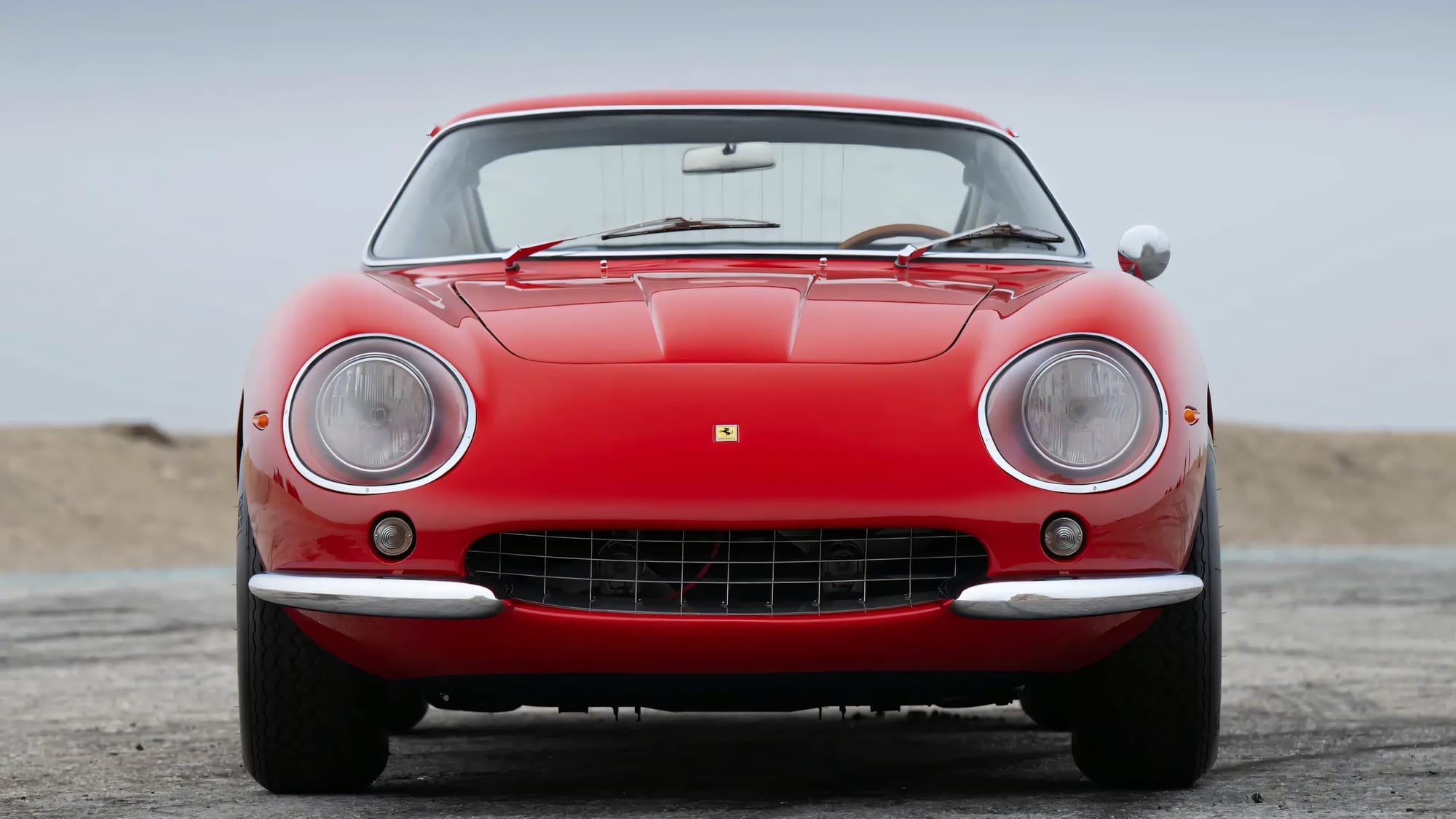
The strengths of the GTB/4 Alloy are real and considerable. The dual-purpose concept - road car that needs almost no preparation to race - was not marketing language but engineering fact, validated by the car's competition derivatives and by the testimony of drivers who drove them in period. Car & Driver, after their encounter with an alloy-bodied example, arrived at the conclusion that it was "the only true dual-purpose gran turismo racing car in the world" - a verdict delivered with conviction, not qualification. The four-cam engine is legitimately one of the finest V12s Ferrari built in the classic era, a direct descendant of racing technology without the fragility that usually accompanies such lineage. The transaxle balance, the all-independent suspension, the thoughtful integration of every system - these were not incidental achievements but the result of Ferrari spending four years relentlessly improving the same fundamental architecture until it was as good as it could be.
But there are genuine compromises, and they deserve acknowledgment. The four-cam engine is mechanically demanding - the valve clearances require checking with a frequency that would horrify a modern owner, and the six Webers need careful synchronisation to deliver the engine's full potential rather than a lumpy approximation of it. The cabin, for all its elegance, is tight by any objective measure; two tall occupants with luggage will quickly discover the limits of the GTB/4's grand touring credentials. The heat management inside the car, common to high-output front-engined cars of this era, can make sustained summer driving an exercise in endurance. And the alloy body, for all its dynamic benefits, demands sympathetic ownership - alloy panels are more susceptible to corrosion at dissimilar-metal contact points, and any accident damage will require skills that grow scarcer with every decade that passes. These are not fatal flaws, but they are the honest context within which the GTB/4 Alloy must be understood.
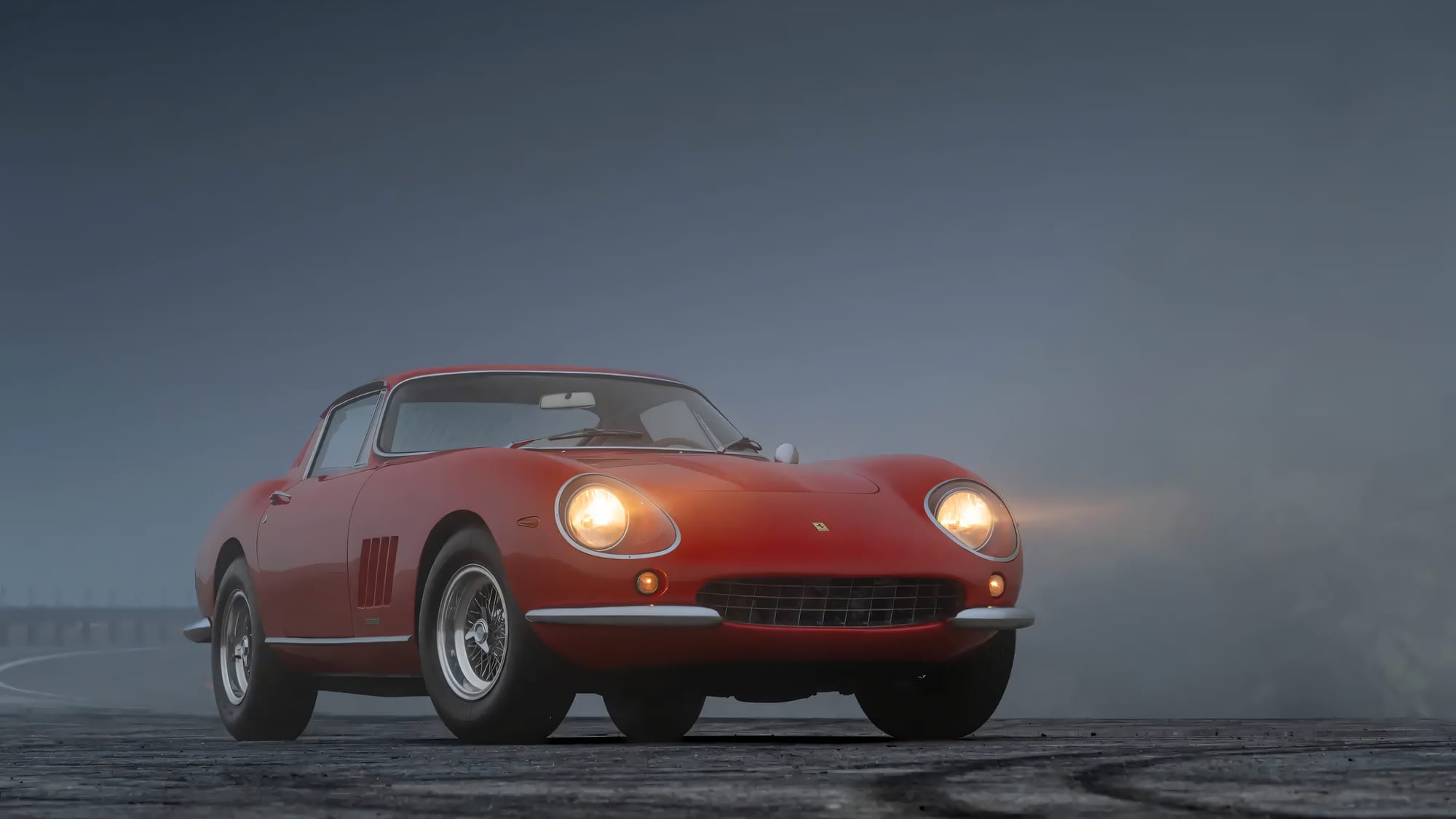
The 275 GTB/4's historical position is secure. It represents the final, fully resolved expression of a lineage that began with the Colombo V12 and ran through the 250 series into the 275, accumulating capability and sophistication at each step until, here, it reached a natural conclusion before the Daytona rewrote the brief entirely. The alloy-bodied cars occupy a particular position within that hierarchy: not racing cars wearing number plates, but road cars built to the same philosophy as racing cars, with the performance to back it up and the documentation to prove it. Antoine Prunet's authoritative account of Ferrari road cars, The Ferrari Legend, singles out the alloy GTB/4s as a category apart - cars that received "special treatment" at the works, placing them above ordinary production even within the already elevated 275 series. That institutional acknowledgment matters.
Critical reception, both in period and retrospectively, has been uniformly serious. Car & Driver's 1967 road test remains the definitive contemporary account - it captures the car at its most relevant, new and in the hands of an owner who understood it, and the conclusions drawn then have only been confirmed by subsequent decades of assessment. Modern collectors and historians have placed the alloy GTB/4 at the apex of closed 275s, above the standard GTB/4, above the competition-derived derivatives, ranked only behind the convertible NART Spider and the handful of factory Speciale cars in terms of rarity and engineering interest. That consensus was not manufactured by the market; it was earned by the cars themselves.
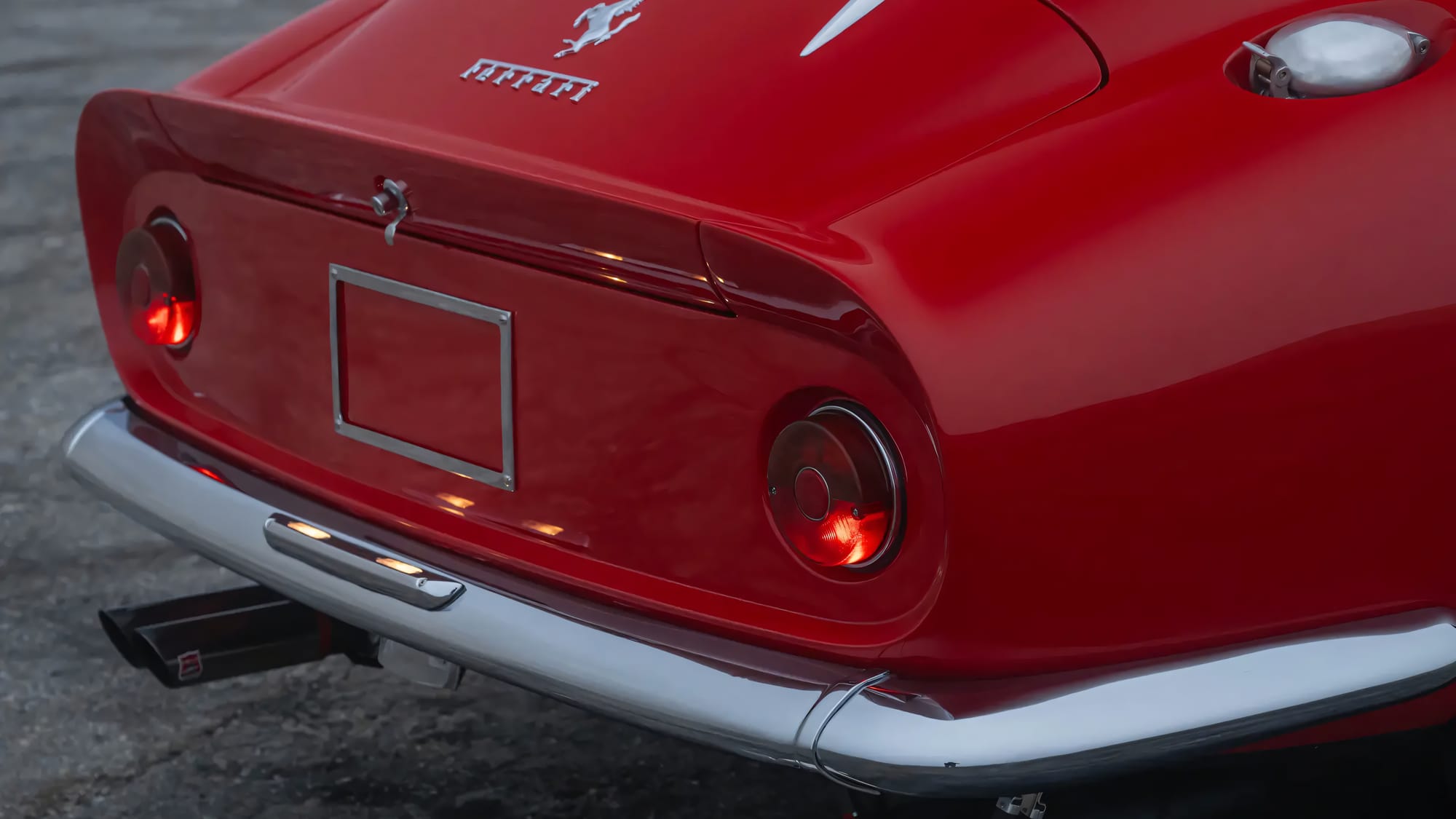
What the 275 GTB/4 Alloy ultimately represents is Enzo Ferrari's conviction - consistent throughout his career, but rarely expressed with such clarity in a road car - that the distinction between racing and driving was a matter of degree rather than kind. The alloy body is not a cosmetic flourish or a collector's eccentricity. It is the logical endpoint of a development program that treated every kilogram as a compromise and every mechanical system as an opportunity for improvement. Sixteen cars were built this way, each one a handmade argument for that philosophy, and none of them has made a weak case.