1964 Porsche 904 GTS: The Race Car You Could Drive Home
The 1964 Porsche 904 GTS was a race-bred legend built to win - one of just 106 street-legal race cars ever made, with 180 hp and 163 mph.
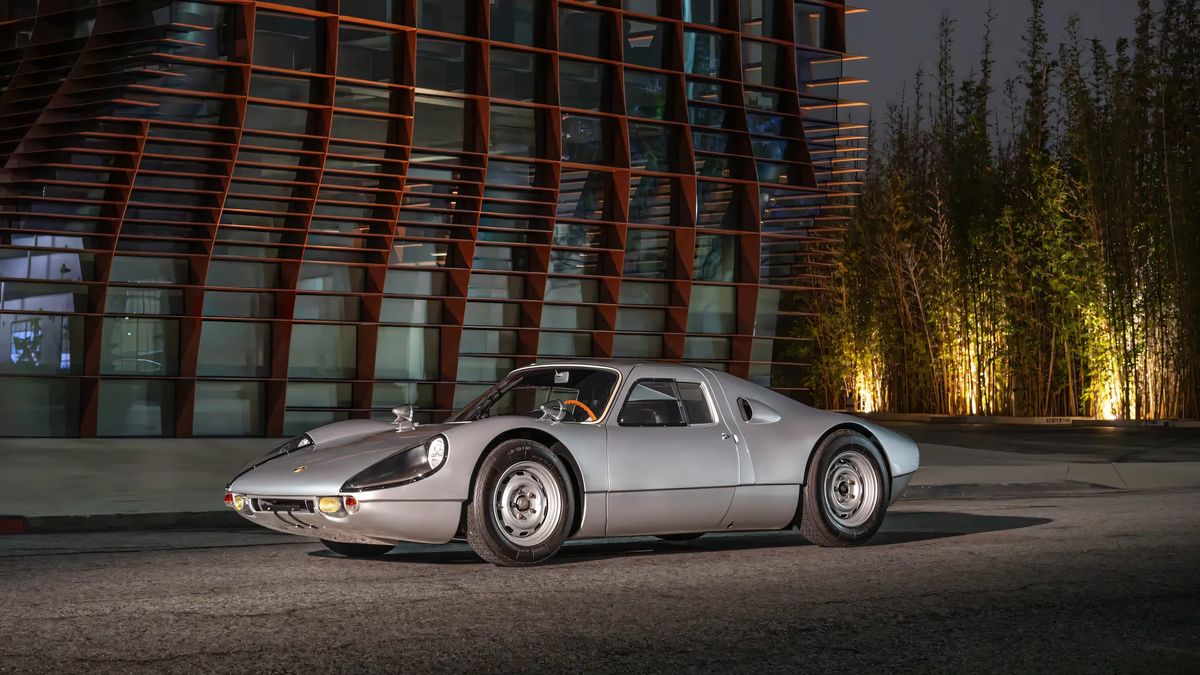
When Porsche quietly withdrew from Formula One at the end of the 1962 season, it looked, at first, like a company retreating to safer ground. In hindsight, it was a calculated act of self-definition. With grand prix racing behind it, Porsche turned the full weight of its engineering resources toward a machine that would become far more consequential: a lightweight, mid-engined GT car unveiled at the Solitude racetrack in November 1963. Porsche engineers called it the 904 internally. They couldn't actually market it as such - Peugeot held intellectual property rights to three-digit numbers with a zero in the middle, forcing the 901 to become the 911 and this car to be sold simply as the Carrera GTS. The name change was the only compromise anyone remembers.
The Carrera GTS arrived at a precise inflection point in Porsche's history, straddling the old world and the new. It was officially the final sports-racing development of the 356 lineage - its engine descended directly from the Fuhrmann-designed Type 547 flat-four that had powered the 550 Spyder and 356 Carrera. But everything around that engine was forward-looking. The 904 was the first Porsche to abandon trailing-arm front suspension and swing-axle rear geometry in favour of proper coil-sprung, unequal-length A-arms at both ends. It sat on a genuine ladder chassis rather than a modified platform, and it wore the first fiberglass body ever fitted to a production Porsche. In one car, Porsche was simultaneously closing out its past and sketching the template for its next three decades of racing machinery.
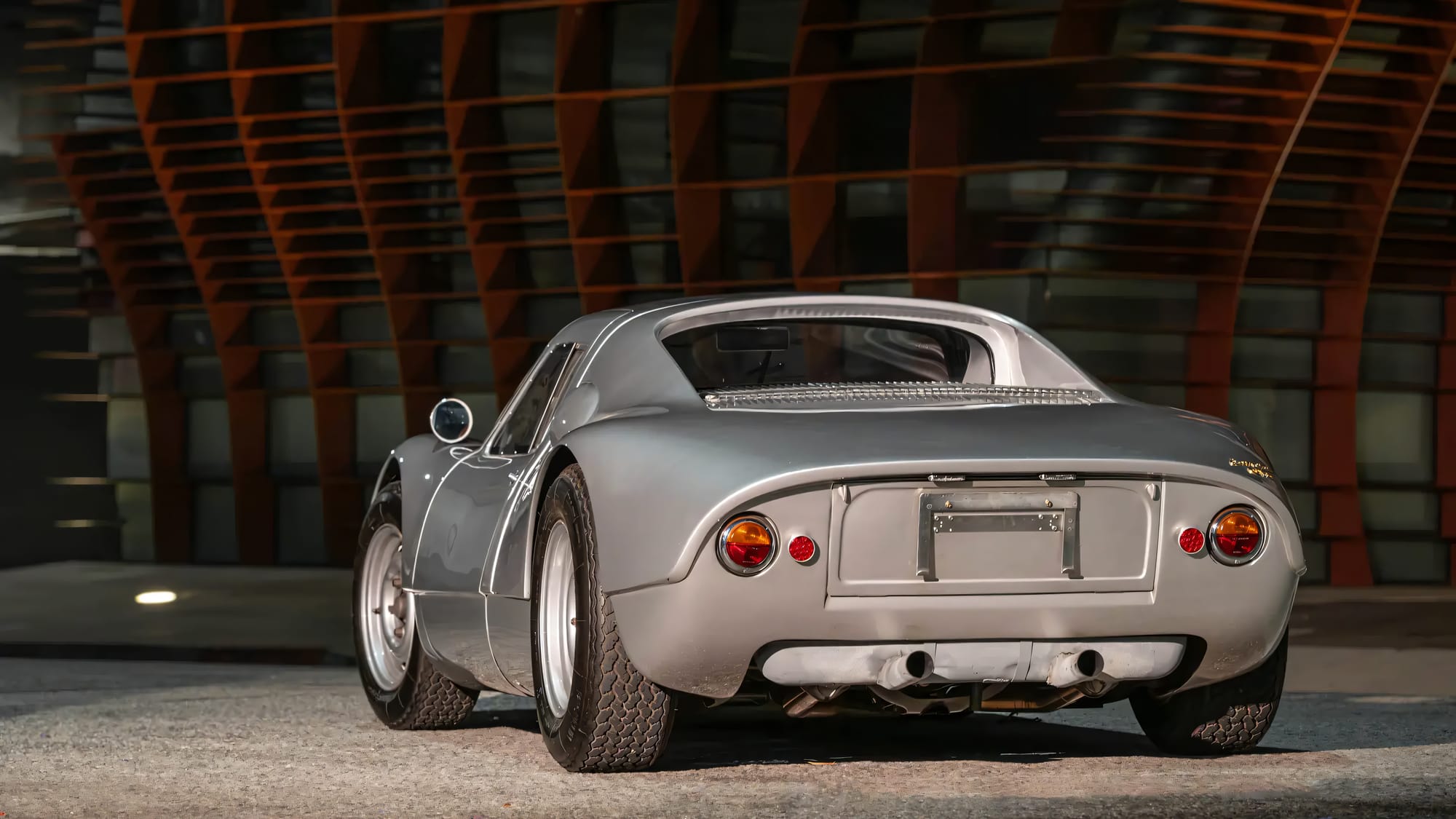
The production scope of the 904 GTS was defined by paperwork as much as ambition. The FIA's Group 3 GT homologation rules required a minimum of 100 road-going examples sold to the public, and Porsche needed that number to compete in the 2-liter class where it stood the best chance of beating far better-funded rivals. The factory built 106 cars - some sources cite 108 - at a rate of four or five per day, priced at $7,245 FOB Stuttgart. Orders comfortably exceeded the minimum; had Porsche wanted to produce more, the customers were there. The production cars were genuine dual-purpose machines, fitted with a heater, a proper interior, and full road equipment, making the 904 GTS the last Porsche race car that could - and regularly did - be driven to the circuit on public roads.
The mechanical heart of the standard car was the Type 587/3, a 1,966cc four-cam flat-four that Ernst Fuhrmann had conceived in 1953 with an ambition to extract an "unheard of" 70 horsepower per liter from an air-cooled four-cylinder. The production version used hemispherical combustion chambers, twin-plug ignition per cylinder, and 46mm-throat Weber carburetors to generate 180 horsepower, with the factory acknowledging it was "probably the most complex four-cylinder ever produced". Four overhead camshafts, dry-sump lubrication, and internals machined to tolerances more typical of aircraft engines than road cars - the Type 587/3 was extraordinarily taxing to assemble and to maintain. That trade-off proved entirely acceptable to anyone who ever heard one on full song.
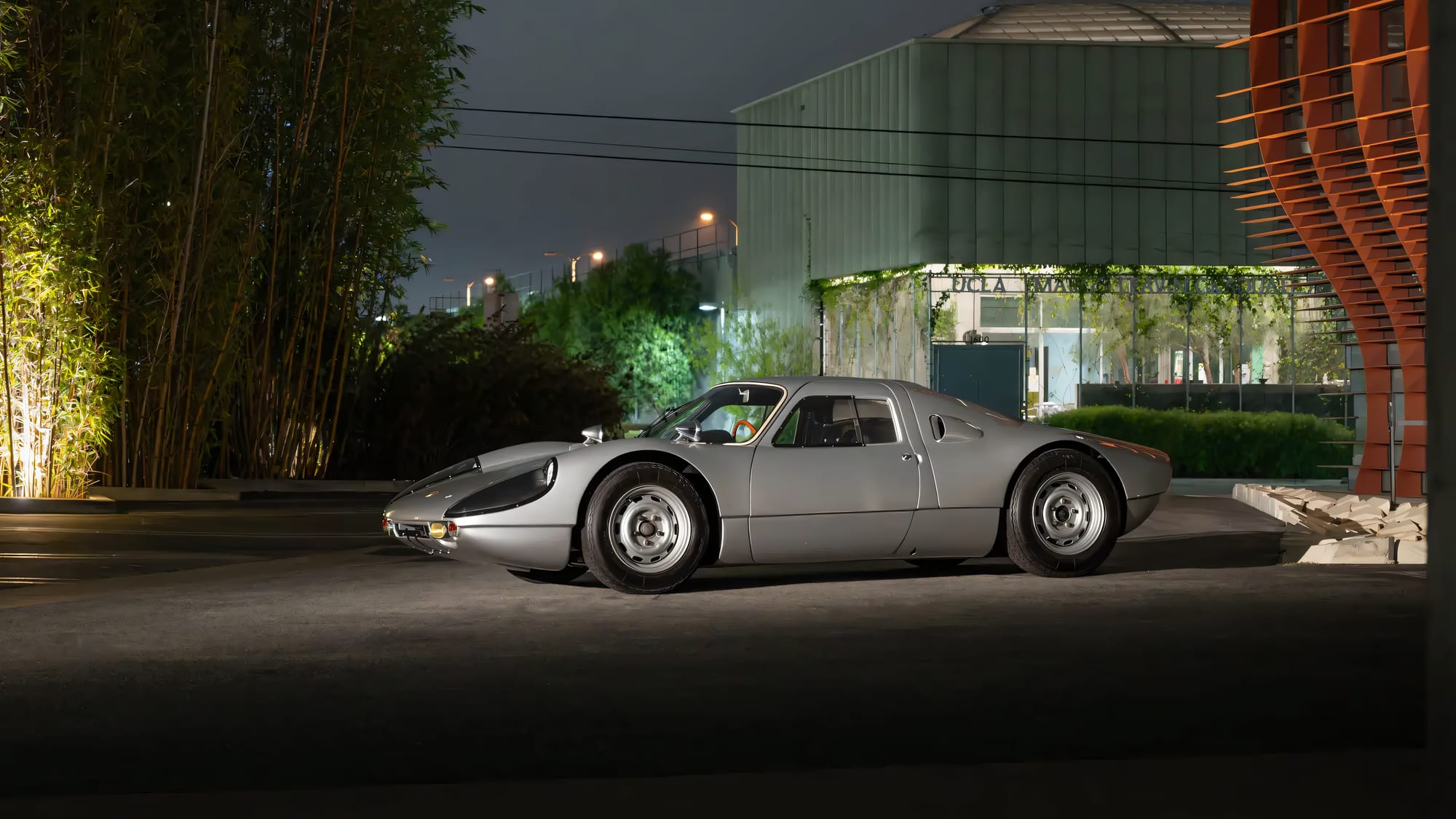
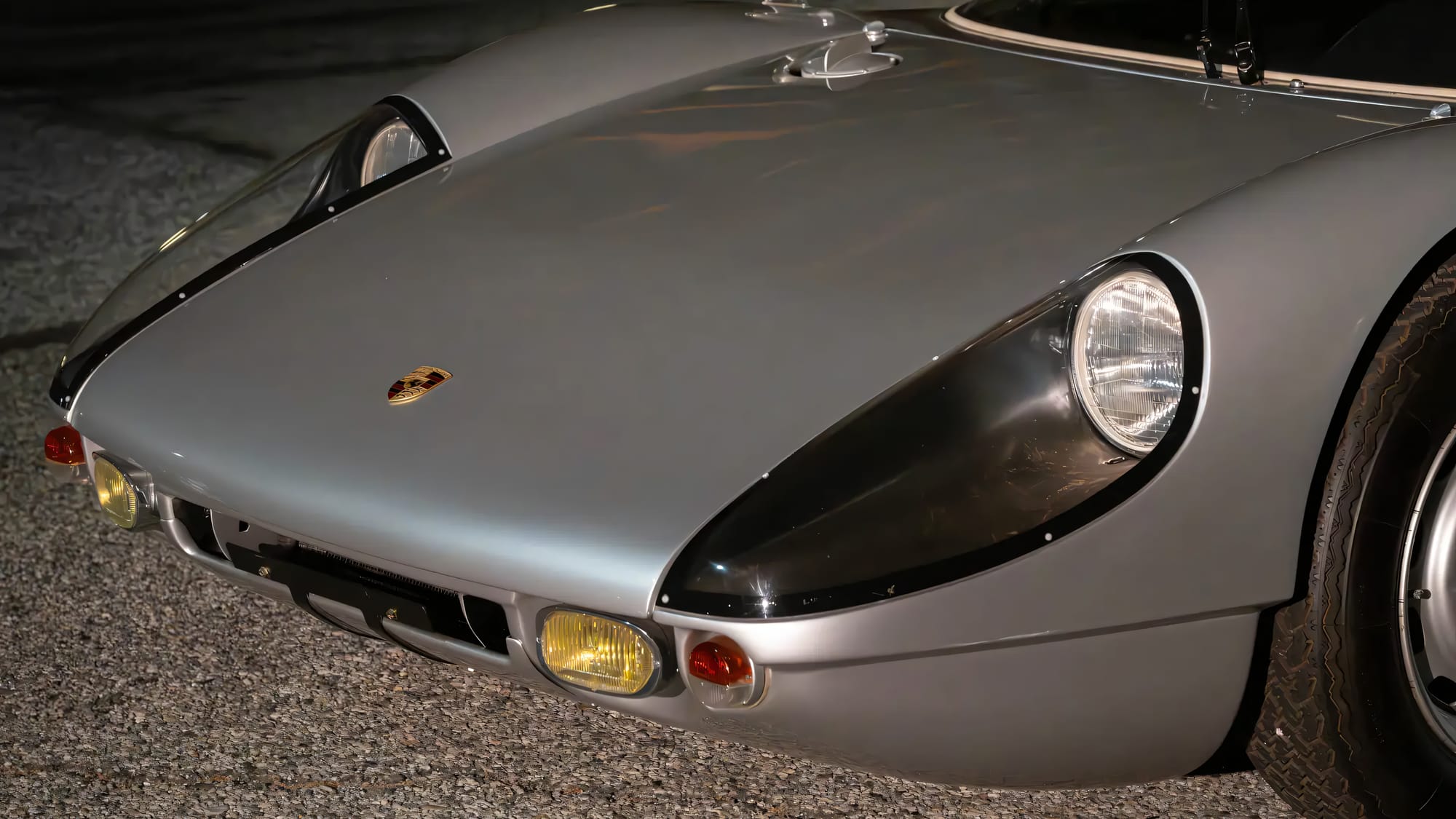
With 180 horsepower motivating just 655 kilograms of car, the arithmetic worked out to 0–60 mph in under six seconds and a top speed of 160 mph. Much of the performance came not just from the power-to-weight ratio but from genuinely considered aerodynamics. Ferdinand Alexander Porsche - Ferry's son, the future designer of the 911 - shaped the body with a sharply sloped low-drag nose and a proper Kamm tail, achieving a drag coefficient of 0.34 and a frontal area of just 1.3 square meters. Every surface exists in service of the air moving around it, and the car's ability to punch above its power class in endurance racing was direct evidence the aerodynamic work had been done rigorously.
The fiberglass body deserves a closer look, because it was simultaneously the 904's greatest manufacturing innovation and its most significant quality control problem. Bodies were produced by spraying chopped fiberglass into molds by outside contractors - a process new to Porsche and imprecise enough that wall thickness varied from car to car. Finished body weights differed meaningfully across the production run, and race-prepared cars had to be individually weighed rather than trusting a standard figure. The steel ladder chassis gained stiffness from the bonded fiberglass body, but bond consistency was itself a variable. This wasn't unique to Porsche - the entire industry was learning fiberglass at the time - but it meant the 904 was never quite the precision instrument its engineering brief suggested. Private racers simply worked around it, as private racers always do.
The factory's own ambitions pushed the 904 family beyond standard specification into three meaningful variants. The 904/6 replaced the four-cylinder with a version of the new 911's 2.0-liter flat-six producing around 200 horsepower, offering a wider powerband suited to endurance distances. Only six were built in this configuration, used exclusively by the works team; one co-driven by Günter Linge and Umberto Maglioli finished third overall at the 1965 Targa Florio. The 904/8 went further still, transplanting the 225-horsepower flat-eight derived from the 1962 Formula One car - a genuinely thrilling proposition that carried a serious hazard. The Type 771 eight-cylinder had a "disturbing habit" of making its flywheels explode, and only a handful of 904/8s were constructed before Porsche wisely reassigned that engine to other projects. The Bergspyder variant, developed specifically for the 1965 European Hillclimb Championship, stripped the coupe to a spare open shell, cutting 120 kilograms from the standard car's weight at the cost of every aesthetic quality the coupe possessed. Gerhard Mitter won at Rossfeld with it in 1965, which was entirely the point.
In the standard coupe, the driving experience balanced the contradictions of a dual-purpose machine with more grace than you might expect. The coil spring suspension - a first for Porsche production cars - gave the 904 more compliant road manners than the 550 or 718 had managed. The mid-engine layout provided near-neutral weight distribution, giving drivers confidence through the kind of long, fast corners where rear-engined Porsches required careful management. The five-speed gearbox offered final drive ratios spanning 4.428:1 down to 3.362:1, the shorter ratios unlocking the top speed capability at circuits where straight-line pace mattered. The steering was direct and unassisted, the cockpit narrow and functional. You sat low, close to the floor, with the engine behind your shoulders making the kind of flat-four wail that carries across a paddock like an air-raid siren. This was not a car that wrapped its driver in comfort. It was a car that communicated with unusual clarity.
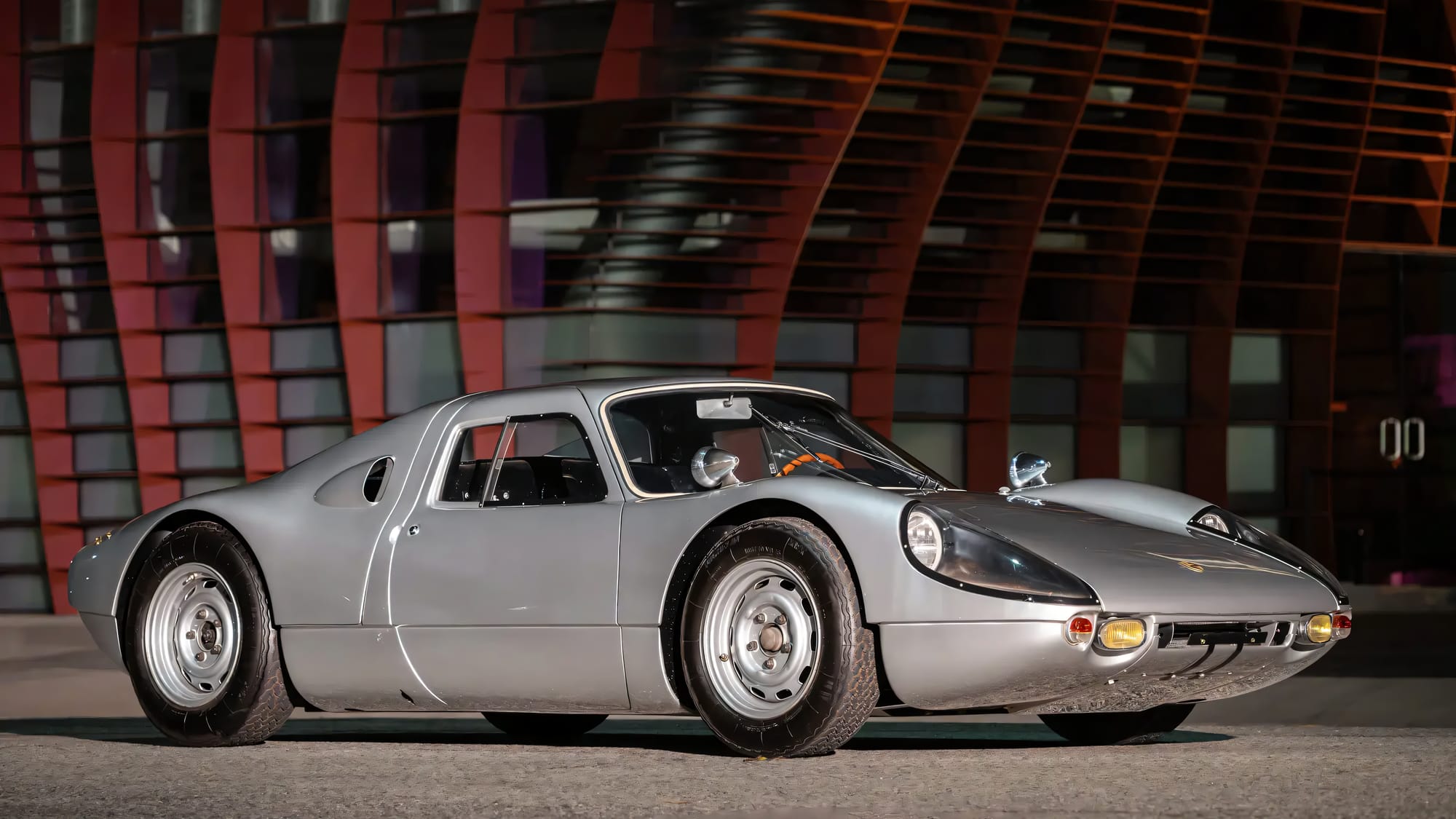
The racing record makes a compelling argument. After an inauspicious debut at Sebring in 1964 with clutch trouble, the 904 came back with an outright 1-2 finish at the Targa Florio against far more powerful machinery. Class wins at Spa, the Nürburgring, Le Mans, Watkins Glen, Sebring, Zandvoort, and Canada followed during 1964, along with the SCCA's C-Production and E-Sports Racing titles. The high point of the 904's reliability mythology came at Reims that year, when a privately owned car driven to the circuit from Stuttgart by its owner won the race outright without requiring a single spare part. The 1965 campaign was equally dominant - class victories at Monza, the Targa, Spa, Daytona, Le Mans, Zandvoort, and second overall in the Monte Carlo Rally from 237 starters with 22 classified finishers. The car won the 2-liter GT category of the Manufacturer's World Championship in both 1964 and 1965, contributing to the 1966 campaign as well.
What the 904 could not do was challenge for overall victories against full-factory prototype machinery. It was a GT car - fast, reliable, and devastatingly efficient within its class - but when Ferrari and Ford deployed their works prototypes at Le Mans in force, the 904 was a class competitor, not an outright challenger. The four-cylinder's complexity was a constant maintenance burden for private entrants without factory support, and the variable fiberglass construction meant each car needed individual assessment before it could be trusted in competition. These were real limitations, not theoretical ones, and they directly explain why the 904's successor, the 906, moved to a proper tubular spaceframe with an unstressed, lighter fiberglass body - Porsche had learned precisely where the bonded construction concept fell short.
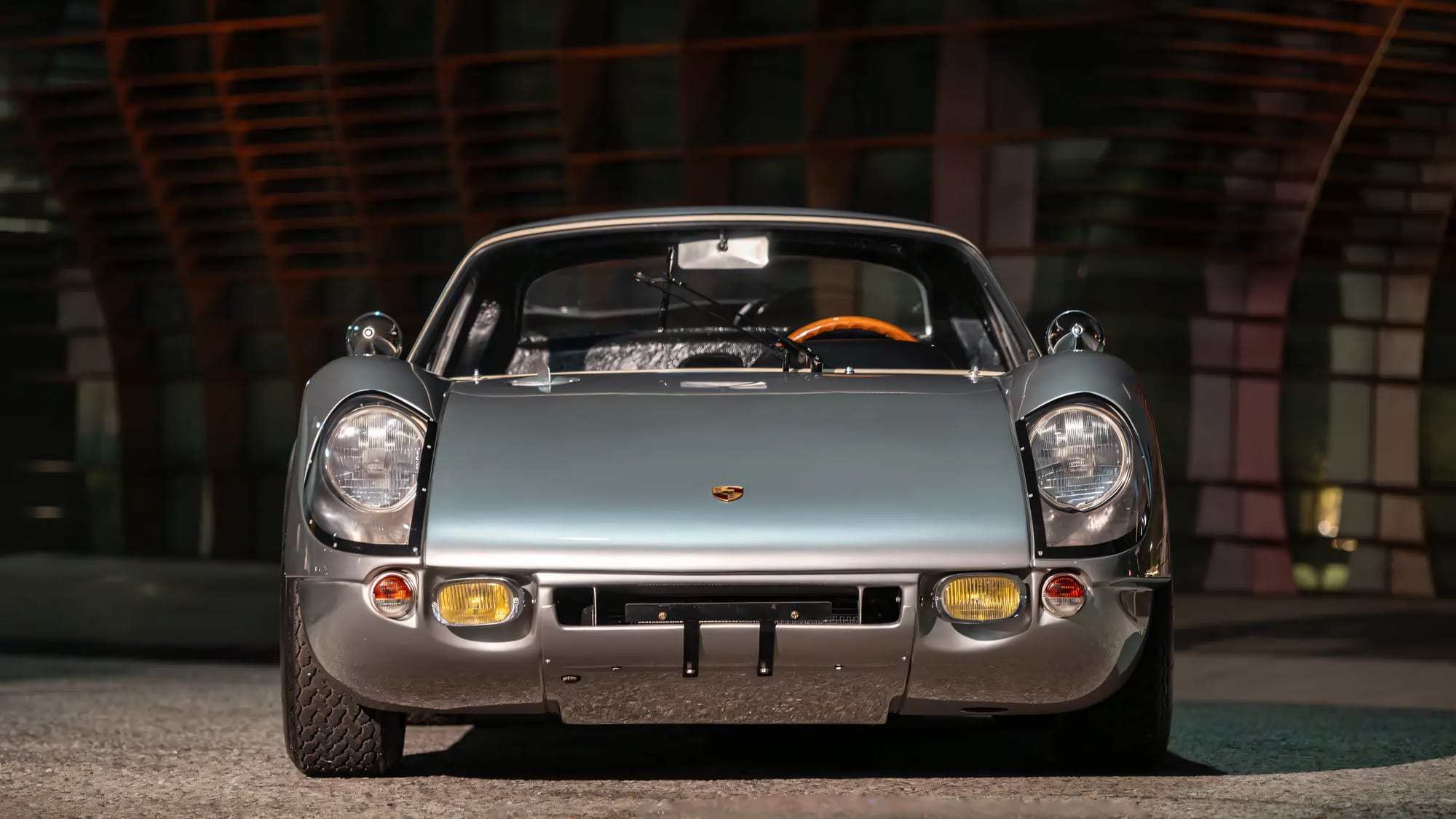
The critical reception in period was unambiguous. Road testers who drove the car on public roads noted that the interior was sparse and the noise level considerable, but acknowledged handling balance exceptional by any contemporary standard - and steering response unlike anything offered by a road car of that era. It sold every homologation unit before the deadline, which said everything about how the market understood the 904's value. At $7,245 in 1964, it wasn't cheap. It was, however, a genuine factory racing car that wore number plates.
The 904's legacy has proven more durable than even Porsche could have anticipated. Its mid-engine layout, fiberglass construction, and aerodynamic philosophy became the template for the 906, the 910, the 908, and ultimately the 917 - the car that ended Ferrari's domination of endurance racing and gave Porsche its first overall Le Mans win. The design lineage runs forward clearly to the 918 Spyder, and the visual DNA - that low nose, the organic roofline, the way the haunches rise and fall without drama - carries through decades of Porsche design. Porsche knew when it built the Carrera GTS that it was building its future. What it may not have anticipated was just how long that future would prove to be, or how completely this small, fiberglass-shelled racer from Stuttgart would define what serious sports car competition looked like for the generation that followed.