1929 Bentley 6½-Litre Sedanca de Ville by H.J. Mulliner
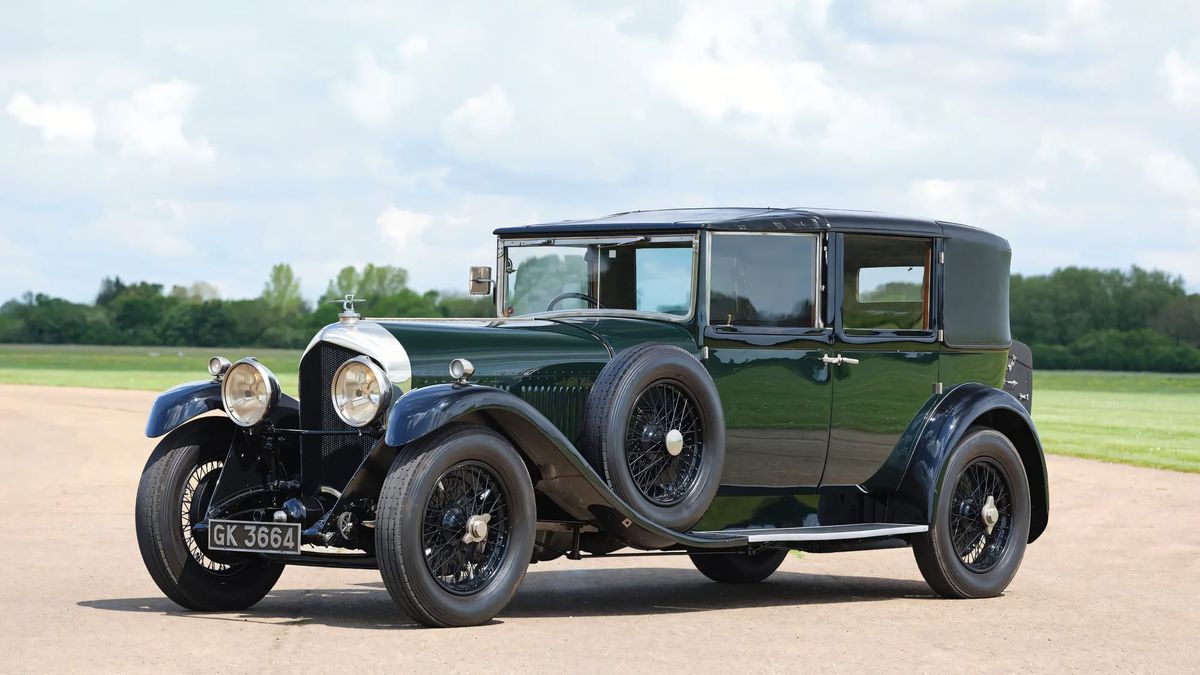
Presented at the Olympia Motor Show in October 1929, the Bentley 6½-Litre Sedanca de Ville by H.J. Mulliner arrived at a peculiar intersection of two entirely different Bentleys - the one W.O. believed in and the one the aristocracy actually wanted to be seen in. It was an argument made in aluminium, leather, and polished ironwork: that the engine which had powered the Bentley Boys to glory at Le Mans could also sit beneath a coachbuilt body of such formal elegance that it would not embarrass a duke stepping out at his club. The answer, as Mulliner rendered it, was more complicated and more interesting than that.
The 6½-Litre chassis had arrived in 1926, conceived specifically to address the shortcomings of the longer 3-Litre cars that had proved sluggish under heavier coachwork. W.O. Bentley's answer was characteristically blunt: more displacement, more torque, and a clean-sheet straight-six of 6,597cc displacing from a 100mm bore and 140mm stroke. The engine retained the overhead camshaft architecture and four valves per cylinder that defined the Bentley engineering philosophy, but the scale was new. In standard tune, it produced approximately 147 horsepower; in the Speed Six form that would win Le Mans in 1929 and 1930, it breathed out roughly 180 bhp, and committed racing engines saw closer to 200.
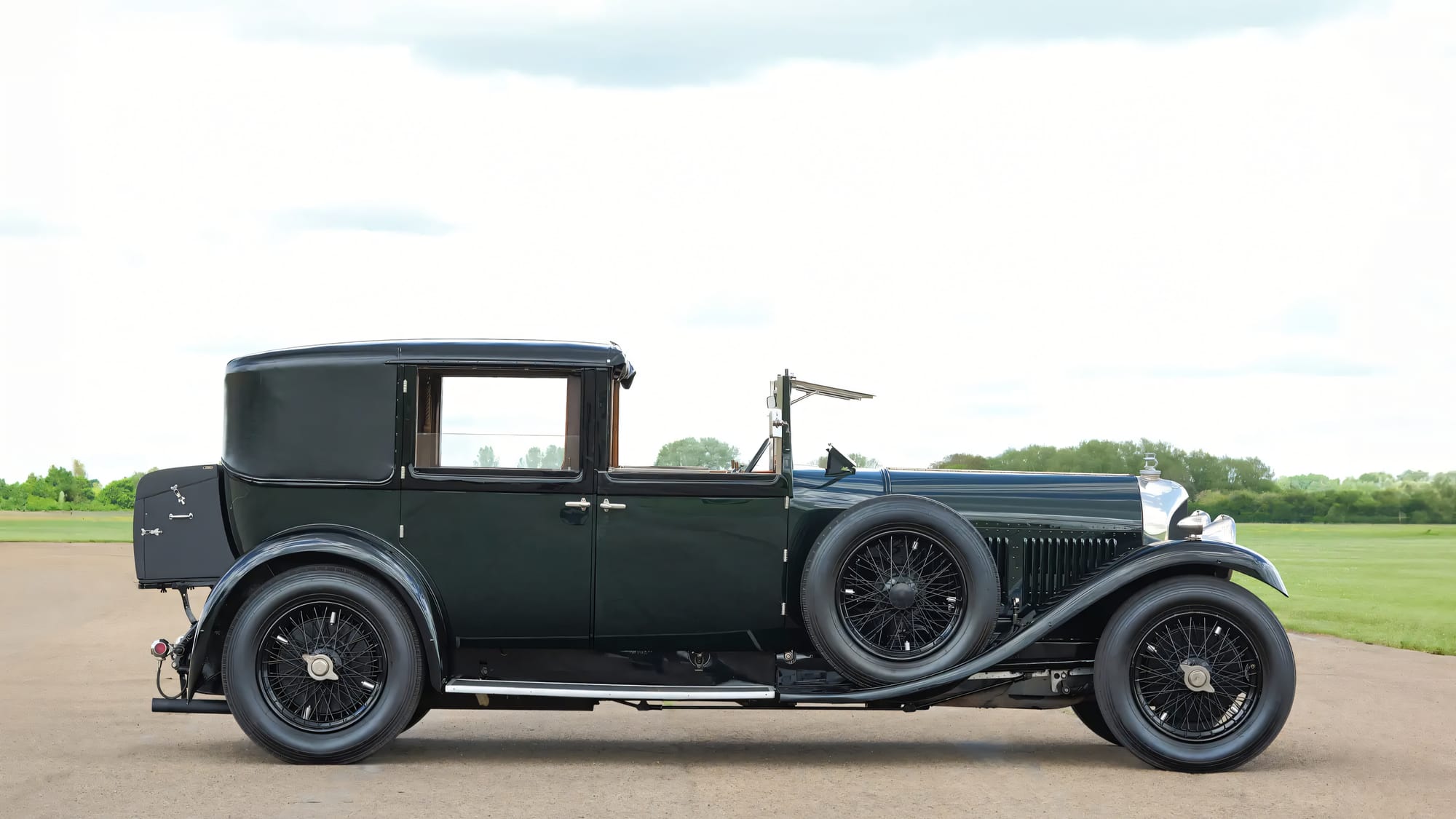
The Sedanca de Ville was not the racing version. It sat on the long-wheelbase chassis at 150 inches - a full foot more than the shorter 140.5-inch option - which was the obvious, perhaps only, sensible choice for coachwork of this formality. The body style itself has a peculiarly divided history in motoring. A Sedanca de Ville is, at its heart, a compromise: a chauffeur-driven car in which the driver's compartment is open or semi-open to the elements while the rear passengers sit enclosed in carpeted, buttoned comfort. It originated in the carriage trade, where the idea of a coachman enduring the weather while his employer did not was simply a social fact. By 1929, that social arrangement was becoming slightly awkward, which is part of what makes this car so fascinating as a period object.
Mulliner addressed the open-driver question with the Barker-patented "de Ville extension" - a folding panel that could close over the front cabin when conditions demanded, giving the car the external appearance of a full limousine. It was a practical solution with aesthetic elegance: the extension, when deployed, presented a clean, unbroken roofline from the A-pillar rearward, and the flowing wings - unusually long even by the lavish standards of the era - gave the whole composition a sense of uninterrupted forward momentum that few show cars of the period could match. The result appeared in The Autocar's Show Number issue on 25 October 1929, where it was sold directly from the Bentley stand by W.O. himself.
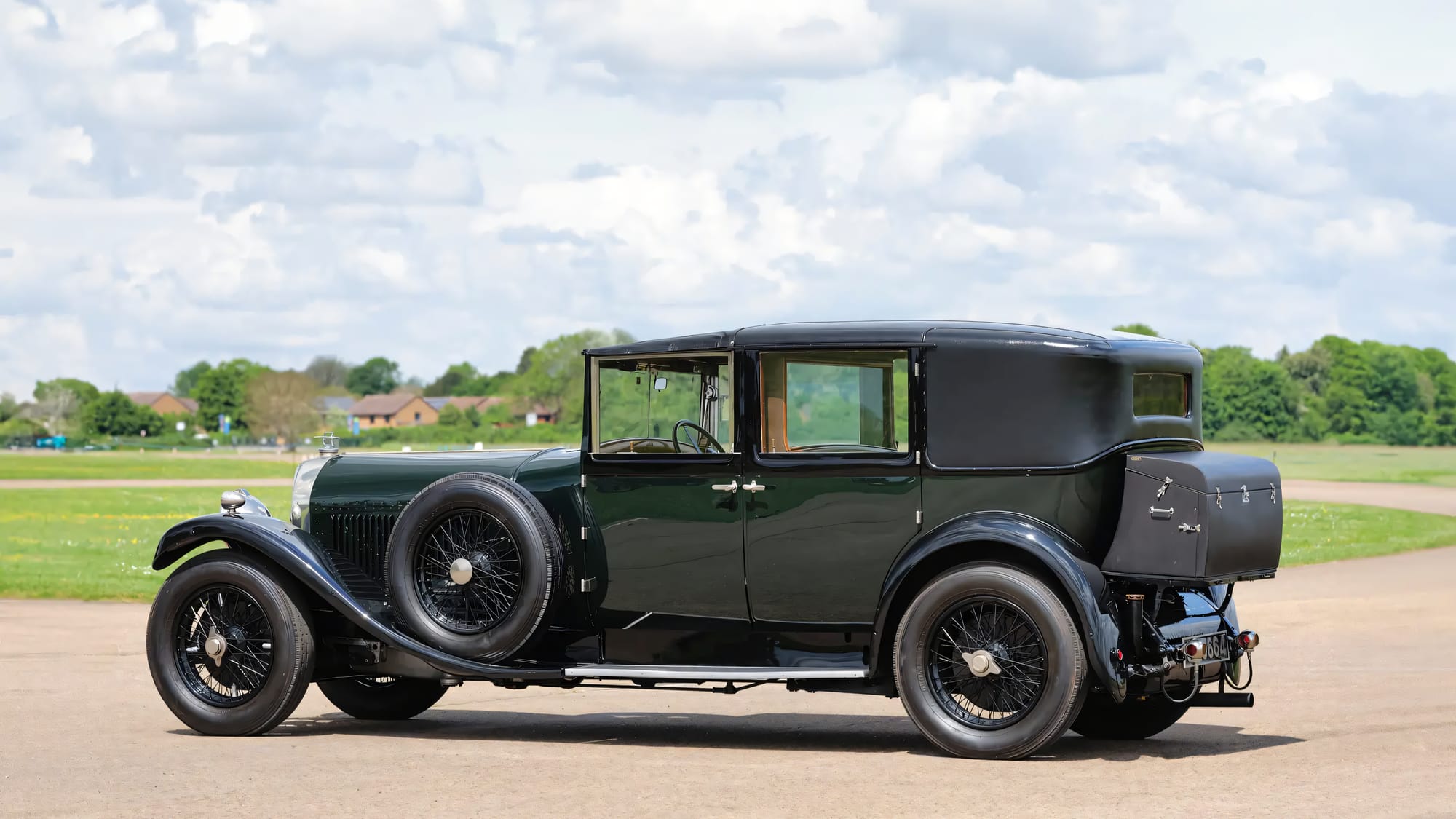
H.J. Mulliner, operating from Chiswick at that point, had been bodybuilding on Bentley chassis since 1923, when the company was commissioned to craft a bespoke two-seater for the Olympia Show - the beginning of a relationship that would see Mulliner clothe over 240 Bentley chassis through the decade alone. The firm's reputation rested on the kind of disciplined craftsmanship that never mistook decoration for quality: tight panel fits, coachwork that aged without catastrophic structural failure, and an eye for proportion that could make a genuinely enormous car look merely grand rather than absurd. The Sedanca de Ville demonstrates exactly that restraint. The coachwork has a neatness - a composed quality - that heavier-handed builders struggled to achieve on such a generous wheelbase.
Mechanically, the 6½-Litre in this configuration was not built for speed in any simple sense, though speed remained entirely possible. The four-speed manual gearbox - the desirable "C" type unit - was coupled to a large plate clutch that replaced the cone clutch of earlier models, and the differential had been substantially uprated to handle the torque the big six generated at low revs. Semi-elliptic leaf springs front and rear, drum brakes all round with servo assistance, and a solid front axle were the mechanical reality beneath the formal coachwork. It is a chassis that rewards patience rather than haste: the engine's torque character means the car pulls cleanly from very low revs, and on period roads, the long wheelbase absorbed surface irregularities with a composure that suited the Sedanca de Ville's social purpose entirely.
The honesty here is worth stating plainly. At roughly three tonnes of fully-dressed coachwork on a pre-war chassis with beam axles and drum brakes, this is not a sporting tool in any meaningful contemporary sense. The brakes are adequate rather than reassuring by modern instinct, the steering demands physical engagement, and the mechanical complexity of the valvetrain - an overhead camshaft system refined but not simplified over the earlier four-cylinder designs - made the car demanding to maintain correctly. Running costs in period were considerable, and the long-wheelbase 6½-Litre was never a car for anyone without a staff to support it. That was, of course, partly the point, but it remains a genuine constraint on what the car is and who it was built for.
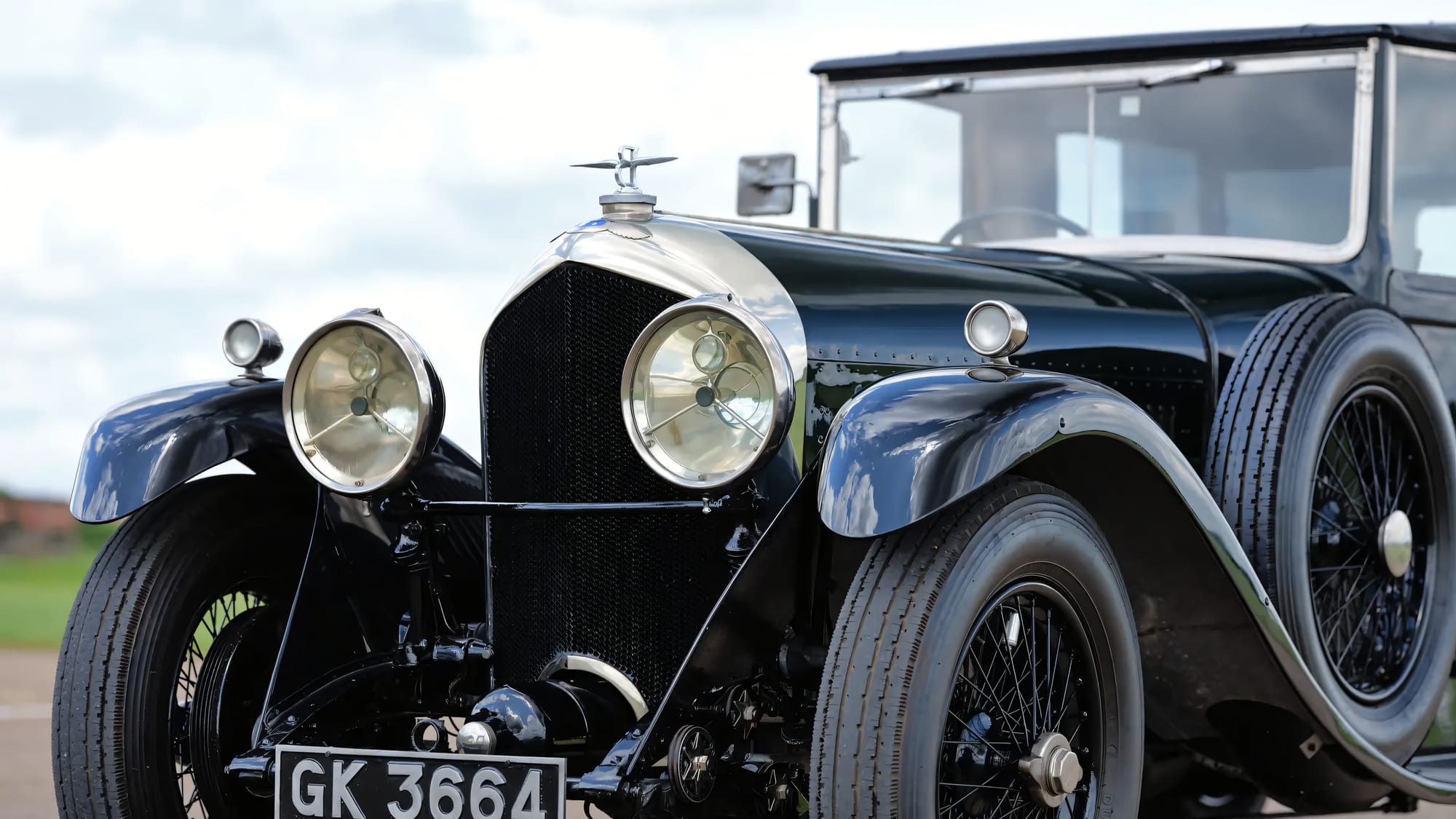
What it represented culturally in 1929 was a very specific moment of tension. Bentley was still an independent company - Rolls-Royce's acquisition would come in 1931 - and W.O. was still navigating between the racing ambitions that had made the brand famous and the commercial reality that formal coachbuilt cars for wealthy patrons were where the actual money lived. The Sedanca de Ville was one of only approximately 20 surviving 6½-Litre Bentleys to retain its original coachwork and engine, suggesting how few were originally commissioned in this specific bodystyle. It was a niche within a niche: the grandest expression of a chassis that also underpinned the most successful racing Bentley ever built.
The critical reception, such as it was in 1929, centred on the coachwork's quality and the engine's refinement rather than on any single dynamic characteristic. Contemporary press descriptions emphasised the "purity of line" and the "clarity of design" - phrases that reflect genuine admiration but also a slightly breathless quality common to show car coverage of the era. Modern auction assessments have been more measured, noting that the design achieves something genuinely difficult: a large, formal, chauffeur-driven body that does not look pompous, carried by an engine that was simultaneously racing at Le Mans.
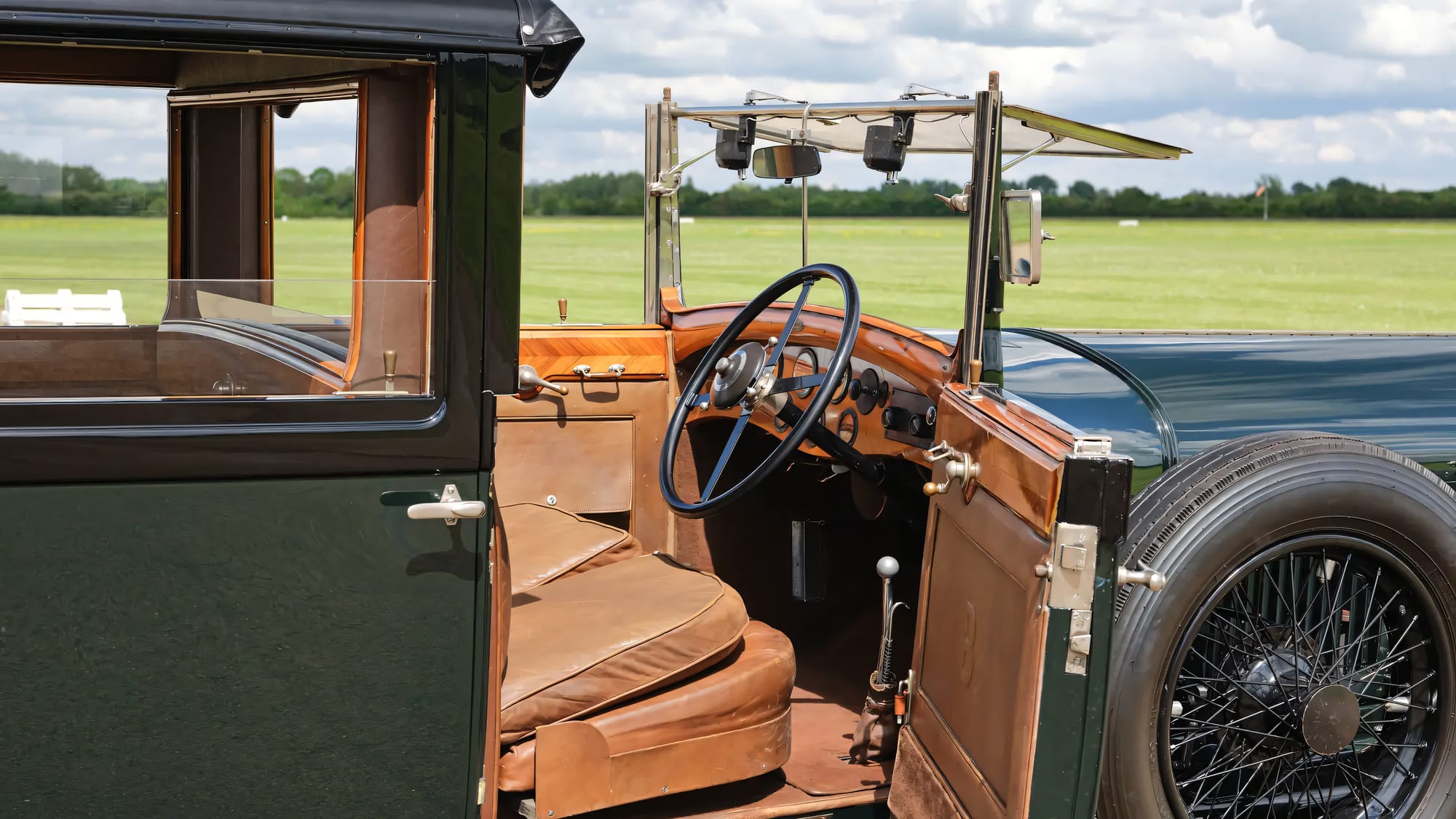
The Bentley 6½-Litre Sedanca de Ville by H.J. Mulliner is, ultimately, a car that embodies a contradiction at its most productive. It asks a racing engine to carry formal coachwork, a sporting chassis to serve a social ritual, and a coachbuilder best known for bespoke commissions to create something suitable for public exhibition. That Mulliner succeeded - that the resulting car appeared in The Autocar, sold from the Bentley stand, survived nearly a century with its original coachwork intact, and was eventually displayed in Bentley's own Mulliner division's factory museum - says something about what genuine craft can achieve when it is matched to genuinely exceptional engineering. It does not resolve the contradiction. It simply makes it beautiful.